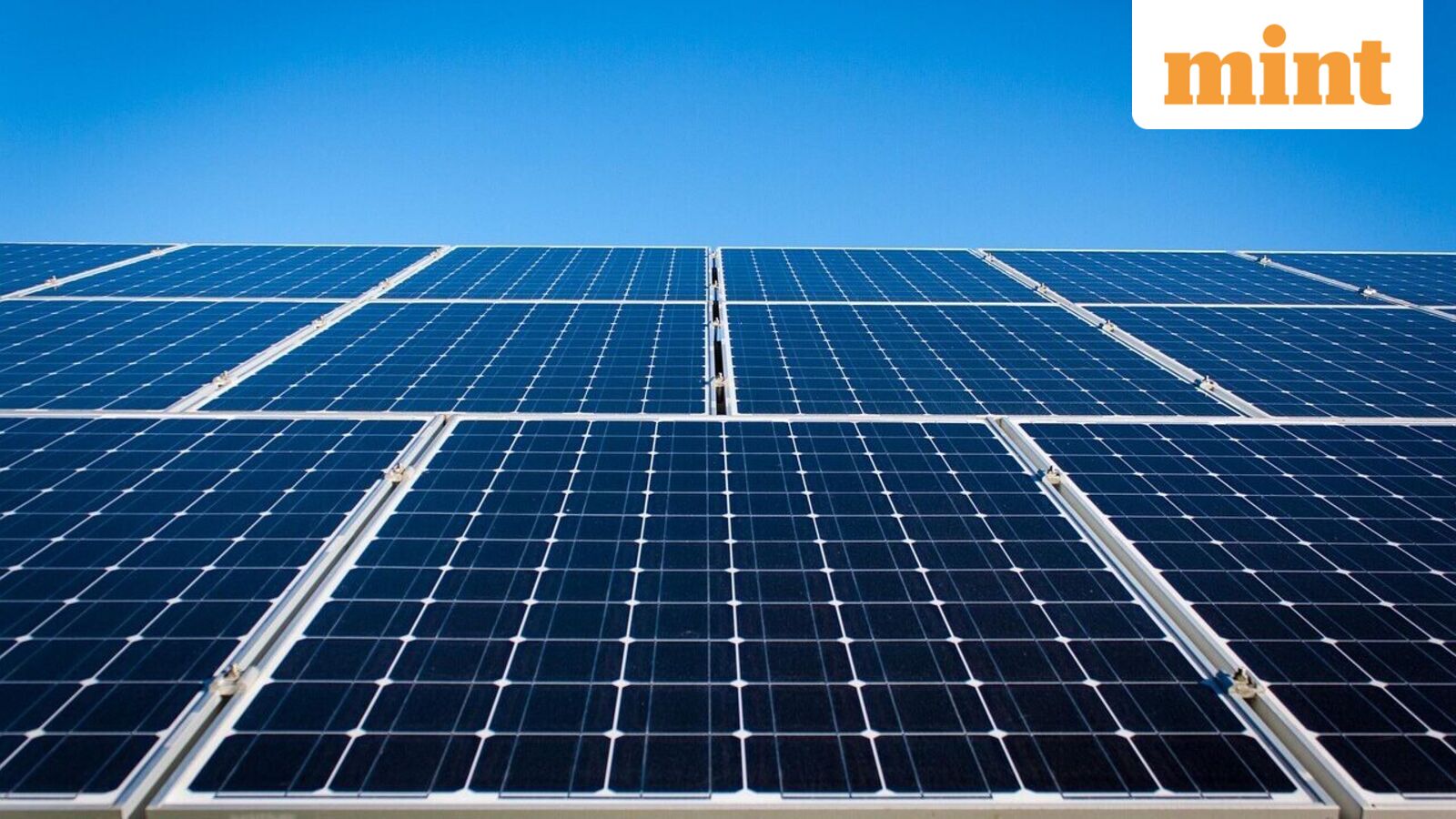
India added over 50GW of non-fossil-fuel capacity in 2025-26, nearly double the prior year. Total non-fossil installed capacity now sits at 280GW, making India the world's third-largest renewable market behind China and the US. The Central Electricity Authority projects peak demand will hit nearly 388GW by 2031-32, with total consumption almost doubling over the decade. Data centre capacity alone is expected to expand several-fold in five years.
The economic case for renewables has shifted. Utility-scale solar tariffs have fallen roughly 82% over the last decade. Solar paired with battery storage has cleared below the average pooled procurement cost of several state distribution companies in recent tenders. A 1GW solar park can be commissioned in under two years; a comparable thermal plant takes five to seven, a nuclear one over a decade. Speed is a competitive moat when capacity must be added faster than at any point in history.
The 500GW non-fossil target for 2030 faces hard constraints, according to the director of Aditya Birla Group, writing in Mint. The first is grid architecture. In April 2025, a cascading blackout hit Spain and Portugal, affecting tens of millions. An expert report blamed voltage fluctuations and gaps in reactive power control – failures of grid design, not renewable generation itself. Spain had generation; it lacked the grid to handle it. India must treat grid modernization with the same national focus once reserved for highways, the director argued. A National Grid Modernization Mission, modelled on the Bharatmala highway program, is the most consequential reform the sector needs.
The second constraint is storage. Solar alone is no longer the destination. The next decade belongs to firm, despatchable, round-the-clock power. That requires battery storage at a scale India has not yet attempted. Global battery prices have fallen sharply and continue to surprise on the downside. With viability gap funding and energy storage obligations – much already in motion – this constraint should resolve within the decade, the director said. Competitive tendering will help drive costs lower.
The third is land and permits. Renewables are an infrastructure business needing large tracts in remote terrain. States that moved fast offered pre-acquired land in dedicated renewable zones, concessional lease terms, and single-window clearances. That model must be replicated.
India imports a majority of its crude oil and a substantial share of natural gas. Every dollar spent on imported fossil fuel leaves the country. Every megawatt of renewable capacity is powered by domestic resources: sunlight, wind, land – no shipping lane, sanctions regime, or geopolitical flashpoint can disrupt it. Recent events in West Asia have underscored the risks of importing fuels. Renewables should be seen as a security strategy with climate benefits, not a climate strategy with security benefits, the director wrote.
The Approved List of Models and Manufacturers framework has matured. List-I for modules is in force. List-II for cells came in mid-2026. List-III for wafers and ingots is on the runway. An energy transition built on imported cells is not a sovereign endeavour. The next phase must balance localization with cost competitiveness.
For investors, the watchlist centers on Indian utilities and grid operators. Companies with exposure to transmission infrastructure and battery storage stand to benefit if the constraints are addressed. The risks are real: a grid failure or a storage scale-up delay could slow the pace. Land acquisition bottlenecks add another layer of uncertainty. The Spain blackout is a reminder that generation capacity without grid resilience is a hollow promise.
National Grid (NGG), a UK utility with a global grid modernization theme, carries an Alpha Score of 56 on AlphaScala's scale, reflecting moderate positioning. The Indian grid story is more acute: the country must add capacity faster than at any point in its history, and the execution speed of renewables is itself a competitive advantage – if the grid and storage pieces fall into place. Land and permitting remain the wildcard.
The director's closing argument: if India solves for grid and storage, and streamlines execution, renewables will emerge as one of India's competitive moats. The next few years will test whether the policy machinery can match the ambition.