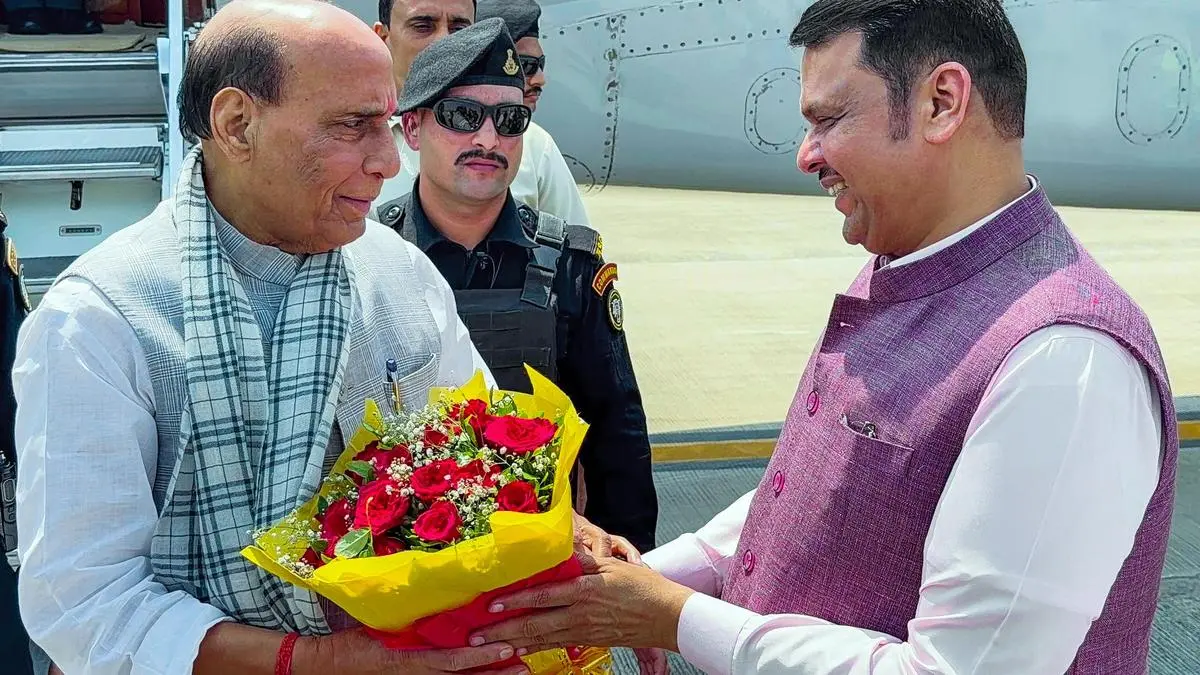
India's defence minister Rajnath Singh flagged off the first batch of Suryastra Universal Rocket Launchers from Nibe Ltd's Shirdi facility on Saturday, fulfilling part of a ₹293 crore emergency procurement order placed in January. The event marks a concrete step in India's push for defence self-sufficiency. For Elbit Systems (ESLT) – the Israeli technology partner – it introduces a new layer of supply chain and geopolitical exposure.
The Suryastra system, developed using technology from Elbit Systems and in-house R&D, successfully completed firing trials on May 18-19 at the Integrated Test Range. The launcher features shoot-and-scoot capability and can fire precision-guided rockets in the 150-km to 300-km class, as well as loitering munitions up to 100 km. The Indian Army could eventually require seven to nine regiments, potentially valued at around ₹6,000 crore in the long term, according to Nibe's Chief Technical Officer Balakrishnan Swamy.
The ₹293 Crore Emergency Order and Its Mechanism
The emergency procurement order was awarded in January to strengthen India's precision firepower. Singh outlined three milestones at the event:
- Inauguration of a modern factory for artillery shells with an annual capacity of 5 lakh shells.
- Laying the foundation stone for a missile complex linked to the Universal Rocket Launching System.
- Signing a contract with US company Black Sky to bring private industry into high-end defence.
Singh stated that private player participation in defence has risen to 25-30% and is expected to climb to 50%. The broader message was clear: India wants to reduce import dependence. "We have experienced that the country which manufactures its own weapons is the one that writes its own destiny," Singh told the gathering.
For Elbit Systems, this means deeper integration into India's defence ecosystem. The company is already Nibe's technology partner for the Suryastra system, and the two are planning a joint venture to establish an ammunition park spread over 2,000 acres in Ahmednagar for producing explosives such as TNT, RDX, and HMX.
Elbit Systems' India Exposure: JV and Supply Chain
Swamy confirmed that products manufactured through the partnership with Elbit will also be supplied to Israeli defence forces. "Today, Elbit Systems is looking for a strategic, trustworthy and sustainable partner considering the current geopolitical situation. They want a facility outside Israel from where they can ensure uninterrupted supplies for their armed forces," he said.
This creates a dual exposure for ESLT: revenue growth from India's orders and a hedge against supply chain disruptions in Israel. The JV's ammunition park will produce high explosives for both domestic and export markets, with European customers already making advance payments for supplies. Swamy said deliveries to Europe are committed to begin from March next year.
AlphaScala's proprietary score for ESLT stands at 57 out of 100, a Moderate rating, reflecting the balanced risk-return profile in the current defence cycle. The stock page is available at ESLT stock page.
Timeline: Drone Demo, Satellite Launch, Ammunition Park
Nibe Group is expanding beyond rocket launchers. The company is developing an indigenous drone with a 1,000 km range, expected to be ready for demonstration within six months. The project draws lessons from the battlefield success of Iran's Shahed kamikaze drones. Separately, the group is entering the space sector, having signed an agreement with an American firm to launch three earth observation satellites aimed at reducing revisit time for intelligence, surveillance, and reconnaissance (ISR) from four hours to less than 90 minutes. One satellite could launch by July or August, subject to clearances.
| Project | Value / Capacity | Timeline |
|---|
| Suryastra rocket launchers | ₹293 crore (emergency order); potential ₹6,000 crore for 7-9 regiments | First batch delivered; trials completed |
| Artillery shell factory | 5 lakh shells per year | Inaugurated |
| Ammunition park (JV with Elbit) | 2,000 acres; TNT, RDX, HMX production | Planning stage; European advances received |
| Indigenous drone (1,000 km range) | Not disclosed | Demo within 6 months |
| Earth observation satellites | 3 satellites; revisit time <90 min | First launch July/August |
Affected Assets: ESLT, Defence ETFs, Gold, Oil
The immediate read-through for ESLT is positive: the JV and export commitments provide a visible revenue pipeline. The stock's Alpha Score of 57 suggests the market has already priced in some of this growth. Defence ETFs with India exposure, such as the iShares India 50 ETF (INDY) or VanEck Defense ETF (DFEN), may see indirect support as India's defence capex cycle accelerates.
Geopolitical risk is the other side. The Suryastra system's precision strike capability and the drone project signal India's intent to project power, which could shift regional dynamics. For gold and crude oil, the effect is indirect: any escalation in South Asian tensions would lift gold as a safe haven and potentially disrupt oil supply routes. The gold profile and crude oil profile are worth monitoring if the India-Pakistan or India-China border situation deteriorates.
Risk Reduction Factors
Several factors could reduce the risk premium for ESLT and the broader defence supply chain:
- Timely execution of the ammunition park JV and drone demo within the stated timelines.
- Stable Indian defence procurement policy – the current government has prioritised indigenisation, a policy shift could slow orders.
- European export deliveries beginning in March 2025 would validate the demand thesis and reduce reliance on a single market.
- Successful satellite launch in July/August would demonstrate Nibe's space capabilities and open another revenue stream.
Risk Amplification Factors
Conversely, the following would worsen the risk profile:
- Geopolitical escalation involving Israel that disrupts Elbit's ability to supply technology or forces India to reconsider the partnership.
- Regulatory delays in India – the ammunition park requires clearances for explosives production, which can be slow.
- Cost overruns on the ₹10,000 crore investment plan – Nibe's capital allocation discipline will be tested.
- Competition from other Indian defence players like Bharat Dynamics or Larsen & Toubro, which could erode Nibe's market share.
For traders, the key decision point is the drone demonstration in six months. If successful, it would confirm Nibe's ability to move up the technology stack and strengthen the case for ESLT as a long-term India play. If delayed or underwhelming, the premium on the stock may fade.
The broader market analysis suggests that defence stocks are pricing in a multi-year capex cycle, the margin for execution error is thin. India's emergency procurement order is a signal, not a guarantee. The next concrete marker is the satellite launch window in July – a miss there would raise questions about Nibe's project management across multiple fronts.
In the meantime, the Suryastra rollout is a reminder that defence self-sufficiency is a slow, capital-intensive process. For Elbit Systems, the India bet is strategic and carries the same execution risk that every emerging-market JV faces. Watch the timeline, watch the regulatory approvals, and watch the drone demo.