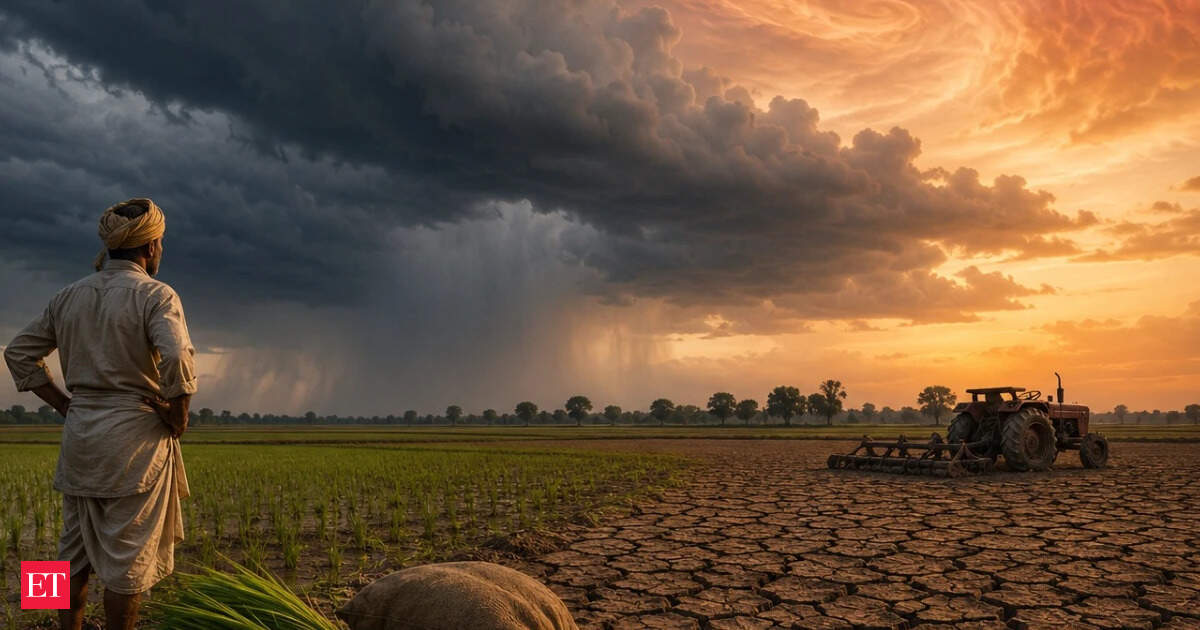
India's monsoon rainfall through mid-June ran 18% below the long-period average, the India Meteorological Department said. The deficit was concentrated in central and western states including Madhya Pradesh and Maharashtra, where sowing of rice and soybeans typically peaks in June.
The weak start coincides with a shift toward an El Niño warm phase. El Niño years historically bring below-normal June-September rainfall, though the relationship is not guaranteed. The 2015 El Niño produced a 14% rainfall deficit and a 3% contraction in farm gross domestic product, according to government data. After that drought, food inflation rose sharply, and the RBI kept rates elevated even while growth slowed, economists noted. El Niño events also tend to bring drier conditions to parts of Southeast Asia and Australia, which could affect global supplies of palm oil and wheat. India's import needs for edible oils may rise just when global production faces headwinds. India is the world's largest exporter of rice and a major exporter of sugar. A poor monsoon could reduce exportable surplus, potentially lifting global prices of these commodities.
Agriculture Ministry data show kharif crop acreage at roughly 60% of the normal area for this point in the season. Rice, the most water-intensive staple, is the biggest laggard. Soybean and groundnut planting in central India is also behind the five-year average pace. Cotton sowing in Gujarat is delayed as well. The delayed sowing raises the risk of lower yields even if rains pick up later. Crops planted late are more vulnerable to pests and diseases, agronomists said.
The transmission to inflation runs through two channels. Food accounts for about 46% of the consumer price index basket, so a poor harvest pushes up domestic food prices directly. Lower output also forces India to import more edible oils and pulses, adding to current account pressure. The Reserve Bank of India's monetary policy committee cited food inflation uncertainty as a key reason for holding the repo rate at 6.5% in June, the committee's statement showed.
The government holds wheat and rice buffer stocks above the mandated norm, which provides some cushion against price spikes. The buffer is concentrated in wheat, not in pulses or edible oils, where India relies on imports from Indonesia and Malaysia. The government could consider cutting import duties on edible oils if domestic prices rise sharply, traders said. The government has also expanded the area under irrigation over the past decade, which reduces the monsoon's direct impact on output. Still, rain-fed areas remain vulnerable. Soybean is a key cash crop in central India, and delayed sowing could reduce yields. Groundnut, another important oilseed, is also affected. Lower production of these crops would increase India's reliance on imported palm oil and soybean oil. The government procures rice and wheat at minimum support prices for its public distribution system. A poor harvest could strain procurement targets and raise subsidy costs. The rupee has already weakened against the dollar this year, and a wider trade deficit from higher edible oil imports could add to the pressure, traders said.
Contingency plans are in place. The agriculture ministry prepared a list of drought-tolerant seed varieties and advised states to delay transplanting where possible. The IMD issues weekly updates on the monsoon trough's position, which traders and procurement agencies track closely.
The next two weeks are critical. The monsoon typically covers the entire country by July 15. If the trough does not advance into central India by then, the window for kharif sowing narrows sharply. A recovery in July rainfall could still salvage the season. 2019 saw a weak June followed by a normal July and August. The probability of a full recovery drops with each dry week, meteorologists said.
For the RBI, the inflation read-through is the immediate concern. The June CPI print, due July 12, will show whether food prices have already begun to reflect the sowing delays. A sustained food inflation spike would complicate the rate path, especially with core inflation still above 5%, economists said. Some economists expect the central bank to hold rates through the rest of the year unless food inflation persists beyond the monsoon season. Higher food inflation could also push up bond yields. The RBI may be forced to keep rates higher for longer, bond traders said.