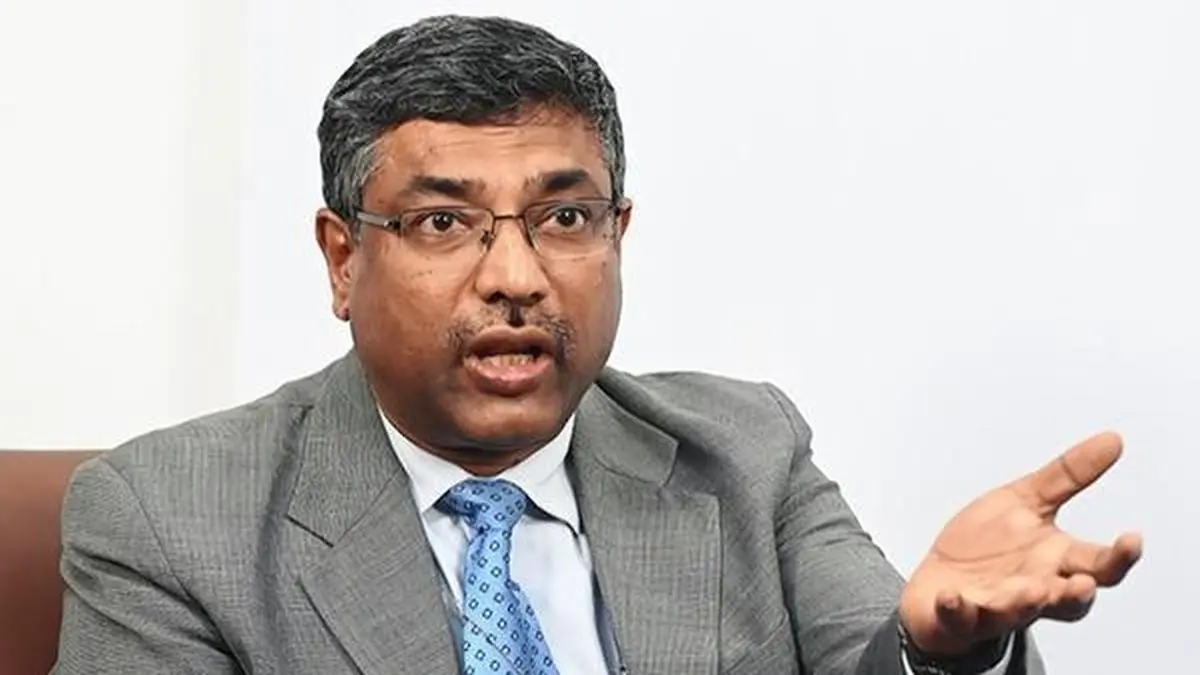
Meity Secretary Krishnan met US Under Secretary Helberg to discuss semiconductor, AI, and critical mineral supply chains. The Pax Silica Summit starts Thursday.
India and the United States discussed building diversified supply chains in semiconductors, artificial intelligence, and critical minerals ahead of the two-day Pax Silica Summit, the Indian embassy in Washington said Wednesday.
Meity Secretary S Krishnan met US Under Secretary of State Jacob Helberg, the host of the Pax Silica initiative. The initiative aims to strengthen security of supply chains in key technology sectors. Krishnan is in Washington to attend the second Pax Silica Summit, which starts Thursday.
The embassy posted on X that the two officials discussed avenues for cooperation in semiconductor manufacturing, AI adoption, and securing access to critical minerals. The first Pax Silica Summit was held last December. India joined the initiative in February on the sidelines of the AI Impact Summit in New Delhi.
Pax Silica is not a trade agreement. It is a pact for economic and military security, built around who controls the artificial intelligence value chain. At its core are semiconductors and critical minerals, resources that have become central to economic competitiveness and national security. The initiative reflects a broader US-led effort to reduce dependence on China in industries considered vital to the future global economy.
The simple read is that India and the US are deepening technology ties, and that benefits companies in semiconductor fabrication, AI infrastructure, and critical mineral mining. The better read is that Pax Silica is a framework, not a contract. Member nations must align on standards, investment, and enforcement. The summit will test whether the signatories can move from pledges to procurement.
For the semiconductor sector, the discussion signals that India is positioning itself as an alternative assembly and packaging hub. The US CHIPS Act has already drawn Indian firms into the supply chain. AI adoption talks suggest joint work on model governance and compute access. Critical minerals cooperation targets lithium, rare earths, and cobalt, where China controls most processing capacity.
Krishnan and Helberg did not announce any new funding or binding commitments. The summit agenda includes sessions on supply chain mapping, investment screening, and technology transfer rules. Member nations that signed the Pax Silica framework will attend.
The initiative's success depends on whether participating countries can build trusted supply chains without creating new bottlenecks. The first summit produced a joint statement but few concrete projects. The second summit will show whether the framework has gained operational weight.
Prepared with AlphaScala research tooling and grounded in primary market data: live prices, fundamentals, SEC filings, hedge-fund holdings, and insider activity. Each story is checked against AlphaScala publishing rules before release. Educational coverage, not personalized advice.