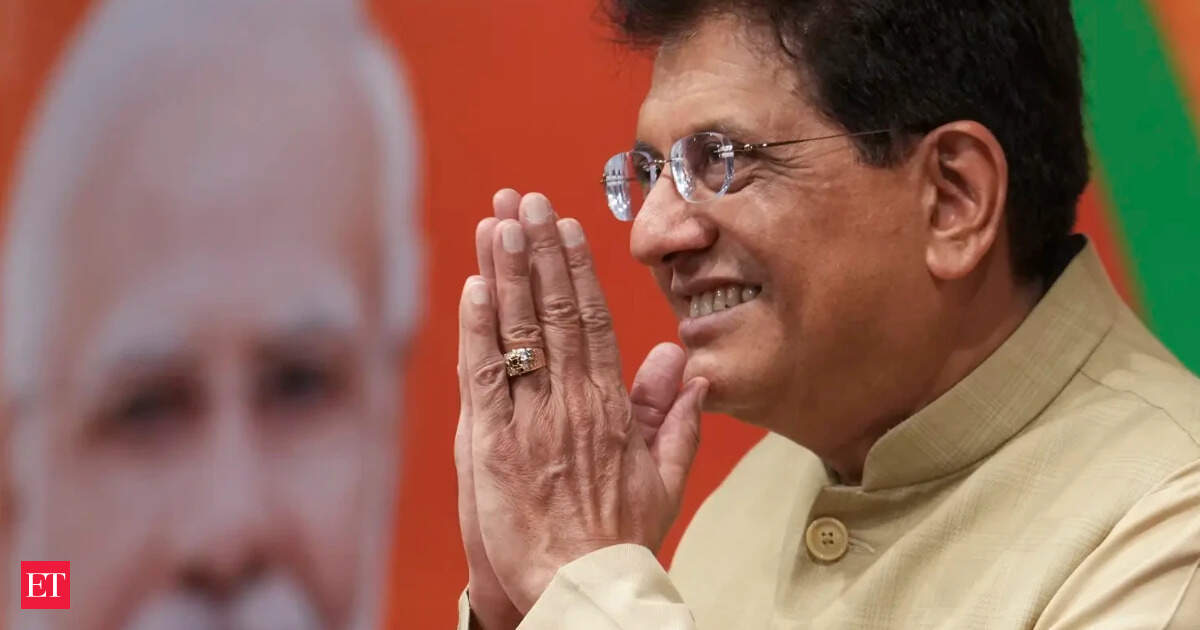
Commerce Minister Goyal leads 150-member delegation to Canada, pushing FTA talks and critical mineral supply for India's battery and electronics sectors. Next marker: post-visit MOUs.
Commerce Minister Piyush Goyal will lead a 150-member industry delegation to Canada next week. The visit puts free trade agreement talks and investment flows back on the bilateral agenda. Discussions center on market access for Indian goods and securing critical minerals from Canada – a supply chain priority for India's electronics and energy transition sectors.
The delegation's focus on critical minerals is the most concrete sector read-through from this trip. Canada holds significant reserves of lithium, cobalt, nickel, and rare earth elements. These inputs are essential for battery manufacturing, defense components, and renewable energy infrastructure. India has been working to diversify away from single-source markets for these minerals. A trade framework with Canada could reduce that dependency.
The strongest read-through is for Indian companies in the battery supply chain, specialty chemicals, and electronics manufacturing sectors. Firms that source raw materials for lithium-ion cells or process rare earths would benefit from a preferential tariff structure or streamlined export protocols. The delegation's size – 150 industry representatives – suggests broad sectoral interest. The mineral access component carries the most structural weight for the energy transition and electronics subsectors.
Both nations have stated targets for significant trade growth. The current base is modest relative to India's trade with other partners. Canadian companies already operating in India are expected to increase their presence, particularly in infrastructure, agri-processing, and financial services. For Indian exporters, improved market access would primarily benefit textiles, pharmaceuticals, IT services, and agricultural products.
The free trade agreement talks have been intermittent for years. This visit signals a renewed political push. A confirmed FTA would require resolution on intellectual property rules, data localization, and agricultural tariffs – areas where previous rounds stalled. The visit itself is a diplomatic signal, not a binding agreement.
The next concrete marker is whether both sides release a joint statement outlining a timeline for FTA negotiations or specific mineral-supply memorandums of understanding. If the delegation returns with signed preliminary agreements on critical mineral access, the sector read-through becomes actionable. Without that, the trip remains a positioning exercise.
Traders tracking the India-Canada trade corridor should watch for post-visit announcements from the Ministry of Commerce. Any filings from Indian companies that name Canadian mineral-supply partners would be the first real catalyst for the affected subsectors. For broader context on how trade policy shifts affect sector positioning, see our stock market analysis and best stock brokers.
Prepared with AlphaScala research tooling and grounded in primary market data: live prices, fundamentals, SEC filings, hedge-fund holdings, and insider activity. Each story is checked against AlphaScala publishing rules before release. Educational coverage, not personalized advice.