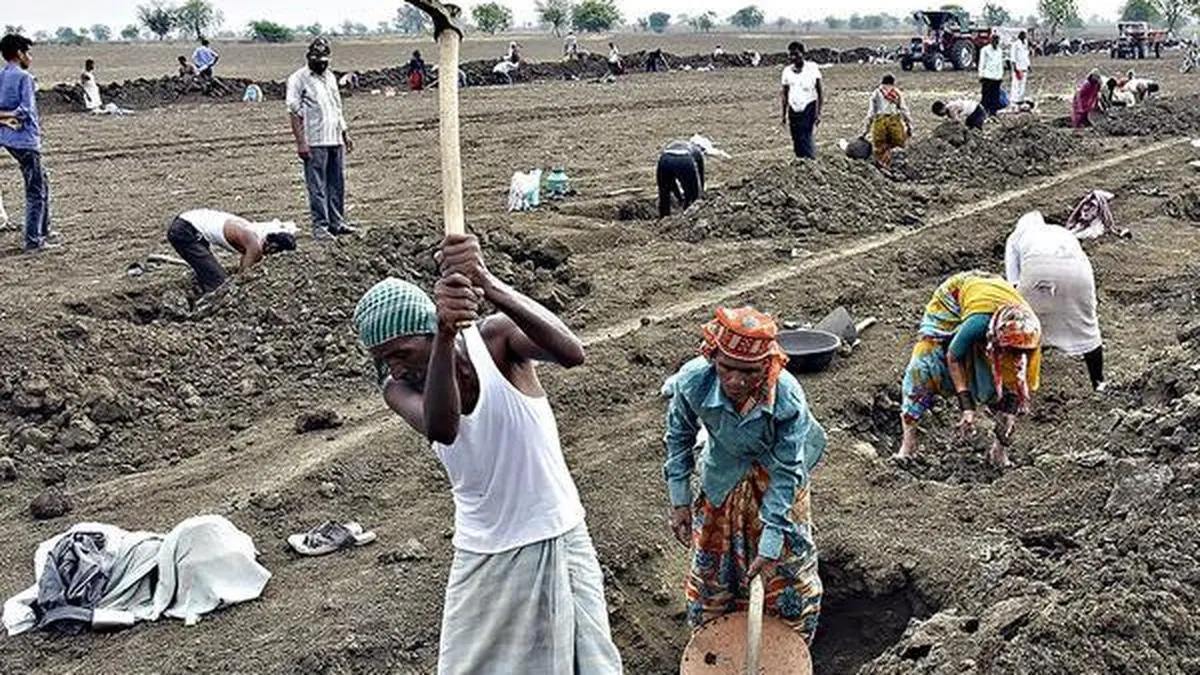
India's new rural jobs law sets a ₹300/day wage floor, with the national average rising to ₹327.4. Opposition parties call the rates inadequate and demand restoration of MGNREGA.
The government notified revised wage rates under the new rural employment guarantee scheme on Wednesday, hours before the law took effect July 1. The national average wage rose to ₹327.4 per day from ₹298.8 under the repealed MGNREGA.
The Centre introduced an interim base rate of ₹300 per day, ensuring no notified wage falls below that level. The average increase across states is over 10%, the government said. Uttar Pradesh, Bihar, Jharkhand, West Bengal, Assam, Arunachal Pradesh and Himachal Pradesh saw wage increases between 15% and 25%. Haryana's notified rate is ₹409 per day, Kerala's ₹401.
The national launch of the Viksit Bharat – Guarantee for Rozgar and Ajeevika Mission (Gramin) Act, 2025 is scheduled for July 2 at Mukkavaripalli village in Andhra Pradesh's Tirupati district, according to an official statement. Existing e-KYC-verified job cards will remain valid until new Gramin Rozgar Guarantee Cards are issued.
Opposition parties criticised the wage rates. Congress said they are far below the 2019 recommendations of the expert committee headed by Anoop Satpathy, which had proposed a national minimum wage floor of ₹375 per day. Congress General Secretary Jairam Ramesh said the party had promised a ₹400/day minimum wage for all workers, including MGNREGA, during the 2024 Lok Sabha campaign.
Communist Party of India general secretary D Raja demanded immediate restoration of MGNREGA to its full potential. Tamil Nadu Chief Minister Vijay wrote to Prime Minister Narendra Modi seeking modifications in the VB-G RAM G scheme.
Congress MP Saptagiri Ulaka, chairperson of the Parliamentary Standing Committee on Rural Development, said the party would continue opposing the new law. "We appeal to the government that the VB-G RAM G be repealed and a strengthened MGNREGA be brought back," he said.
Ulaka argued that MGNREGA was a rights-based, demand-driven employment guarantee scheme. The new law converts it into a supply-driven, government-driven scheme where the Centre decides state allocations based on the 16th Finance Commission's normative formula, he said. He also flagged the new cost-sharing formula: under MGNREGA, the central government covered nearly 100% of labour costs and material costs at a 60:40 ratio. Under VB-G RAM G, combined labour and material costs are now subject to a 60:40 ratio, he added.
Prepared with AlphaScala research tooling and grounded in primary market data: live prices, fundamentals, SEC filings, hedge-fund holdings, and insider activity. Each story is checked against AlphaScala publishing rules before release. Educational coverage, not personalized advice.