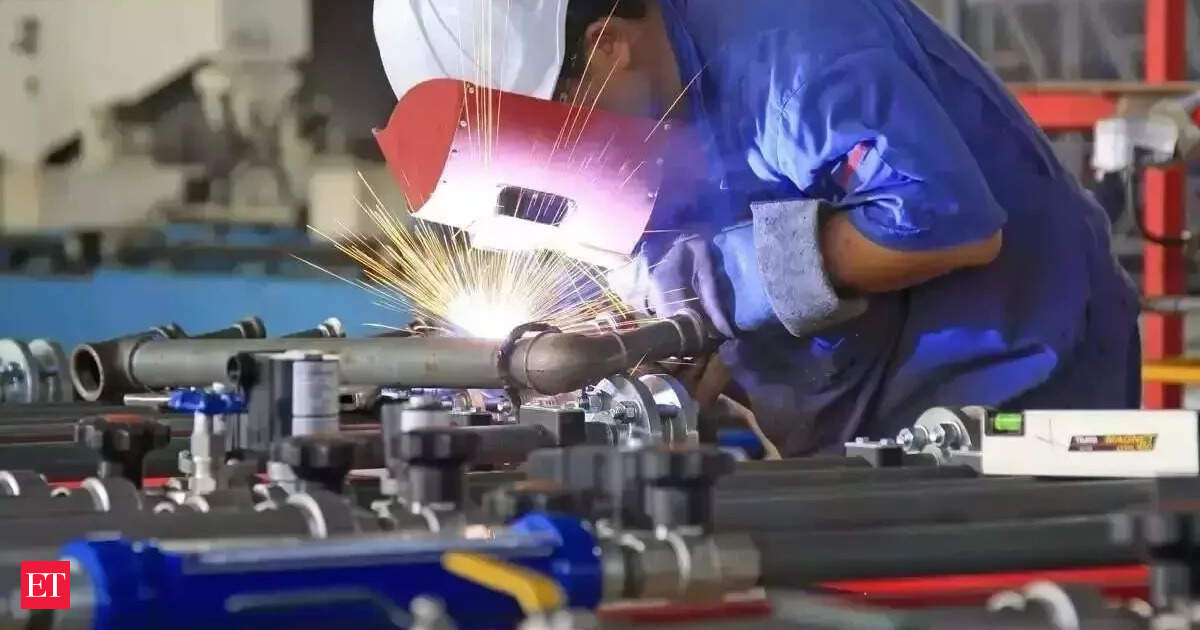
India’s government set up six sector-specific expert groups with a three-week mandate to identify 100 products where domestic manufacturing can replace foreign sourcing. The initiative targets two goals: boost local production for both Indian and global markets, and curb foreign exchange outflow.
The six groups have three weeks to submit their final list. After that, the government is expected to use the product list to adjust basic customs duties, extend production-linked incentive (PLI) schemes, or impose local procurement mandates. The speed of the deliverable suggests the government wants actionable import-substitution candidates, not a broad review. That makes the product list itself the next catalyst for several import-heavy pockets of Indian equities.
Six Expert Groups, 100 Products: Mechanism and Execution Risk
The government did not name the six sectors in the announcement. The logic of import substitution points to categories where India runs persistent trade deficits and where domestic capacity already exists but is underutilised. Likely candidates include electronics components, specialty chemicals, medical devices, industrial machinery, auto parts, and active pharmaceutical ingredients (APIs). Each group will presumably focus on one such vertical.
Execution risk is real. Previous Indian import-substitution drives have often led to cost inflation or quality mismatches. The current macro backdrop – elevated current account deficit pressure, INR volatility, and a global push toward supply-chain diversification – gives this initiative more weight than a routine review. The three-week turnaround means the groups are likely working from pre-compiled data on import volumes, domestic capability gaps, and tariff leverage.
Transmission to Forex and Domestic Manufacturing
If the 100 products are chosen wisely – high import value, domestic capacity within reach – the foreign-exchange impact could be meaningful. India’s merchandise trade deficit runs roughly $20–25 billion per month. Shaving even 5–10% off that through sustained import replacement would directly support the rupee and reduce reliance on portfolio inflows.
For domestic manufacturers, the read-through is two-fold. Companies already producing these target products may face less import competition, improving pricing power and capacity utilisation. Firms importing intermediate goods that land on the list could face margin compression or need to find domestic substitutes. The list itself will separate winners and losers.
Gold and crude oil are not directly affected. A durable reduction in India’s import bill would improve the country’s external balances, a positive factor for INR and a modest headwind for gold from an Indian demand perspective. The broader market analysis context matters: India’s GDP trajectory already sets up a policy crossroads for the RBI, and import discipline adds another variable to the central bank’s rate calculus.
Next Decision Point: The Product List within Three Weeks
The three-week submission date is the first concrete deadline. After that, expect a phased announcement of which products get tariff adjustments or PLI expansions. The government may also invite industry comments before finalising tariffs, creating a window for lobbying and stock-specific positioning.
For now, the initiative is a directional signal: India is serious about import substitution under the current macro constraints. Traders should watch for sector-specific leaks or industry body statements that reveal which products made the list. The gap between the list and actual policy implementation will determine whether the market prices the impact as a one-off or a structural shift.