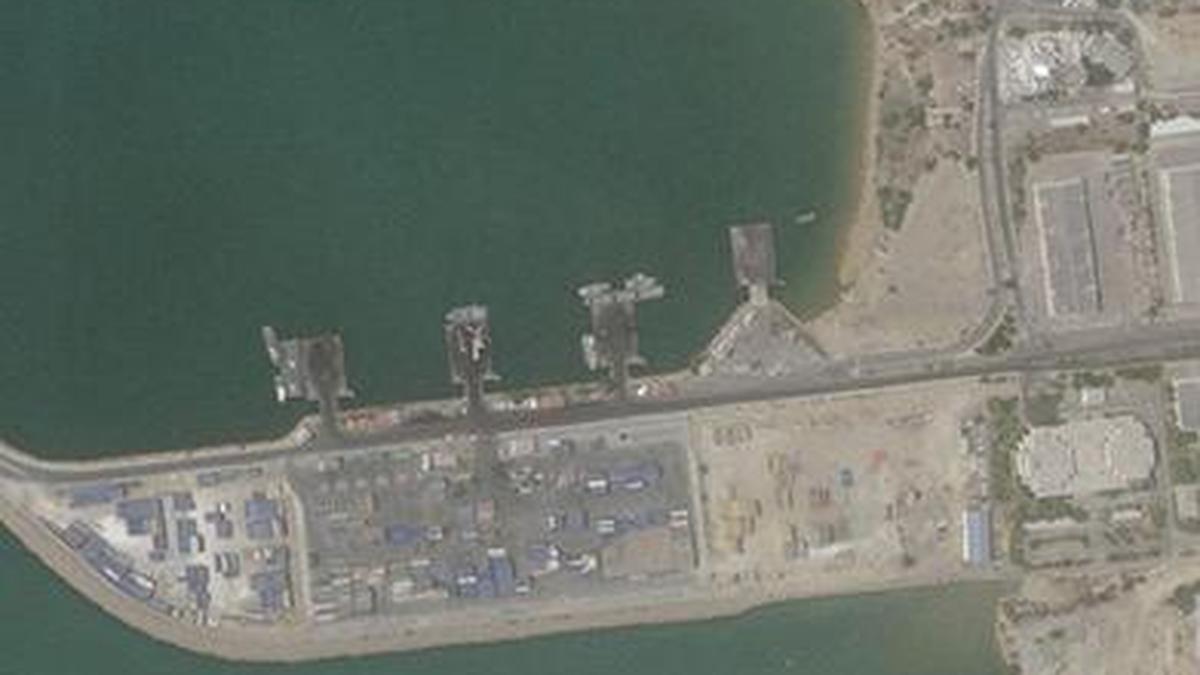
India hands control of Chabahar's Shahid Beheshti terminal to Iran after US sanctions waiver expired, shielding SBI and Union Bank of India from OFAC penalties while preserving rights to resume operations.
India is finalising the handover of operations at Chabahar Port’s Shahid Beheshti terminal to the Iranian government, after a US sanctions waiver expired in late April, sources said. The move aims to shield Indian banks from potential Office of Foreign Assets Control penalties while preserving India’s rights to resume control once sanctions lift.
“India is taking the US sanctions against Iran seriously. We do not want SBI or Union Bank of India to be sanctioned by OFAC and kicked out of SWIFT, as it would affect millions of Indians,” a source tracking the development told Businessline. “That is why we are handing over control of the Shahid Beheshti terminal to the Iranians and asking them to operate it for the time being.”
The decision follows a conditional waiver that ran from October 29, 2025 through April 26, 2026. Before that, the US revoked a broader exemption on September 16 of last year, effective September 29. Without a new waiver, any Indian bank managing the terminal directly would face exposure to secondary sanctions, including potential loss of SWIFT access. State Bank of India and Union Bank of India are the two lenders most exposed, the source said.
India wants to get back control of the terminal when the sanctions are lifted. “The two sides are currently working out the terms under which India can resume operations at a later stage,” the source said. That includes safeguards to ensure the facility remains operational and that India’s long-term rights are preserved.
Chabahar carries strategic weight beyond the terminal itself. It gives India access to Afghanistan and Central Asia without crossing Pakistan. The Shahid Beheshti terminal is also a link in the International North-South Transport Corridor, which connects India with Central Asia, Russia and Europe. Losing operations there would leave a gap in that corridor.
India’s financial commitment to the port runs deep. It pledged $85.21 million and a $150 million credit line in 2016. In May 2024, India Ports Global Ltd. signed a 10-year contract with Iran’s Port & Maritime Organization to run the terminal, adding a $120 million equipment commitment. Those investments are at risk if the terminal falls idle or is damaged.
The bigger problem right now is traffic. “We need someone to dock at the terminal for the terminal to work. That is not happening,” the source said. Most foreign carriers are avoiding Chabahar because of US sanctions. Because it is a cargo terminal rather than an oil terminal, activity has slowed further during the Iran-US conflict. Fewer ships means less revenue and less reason for partners to keep the berths active.
The source added that India’s Shipping Ministry and Ministry of External Affairs are in dialogue with Iran’s Shipping Ministry and Ports and Maritime Organization. The goal is to keep operations going and protect the facility from damage amid the ongoing firings and bombings. India wants the project to stay active, not mothballed, so it can resume quickly when sanctions ease.
Any escalation in the Iran-US war would make that harder. Direct damage to port infrastructure is one risk. A further contraction in shipping traffic is another. If the terminal stops receiving vessels entirely, restarting operations after sanctions lift would require new contracts, new carrier relationships, and possibly new equipment. The $120 million equipment commitment already made could be stranded.
On the upside, a diplomatic resolution between the US and Iran would open the door for India to reclaim operations under agreed terms. The source said India is working to ensure the contract terms allow a smooth transition back. That could happen within months of a sanctions lift, though no timeline is set.
For now, the handover to Iranian control is the main event. The source said India is treating the US sanctions threat as serious enough to cede daily operations rather than risk SWIFT access for two of its largest state-run banks. The question is whether the terminal can generate enough activity under Iranian management to stay viable until the geopolitical cycle turns.
Prepared with AlphaScala editorial tooling from the source reporting linked above. Indexable analysis may include a cited Alpha Score value. Publishing checks screen each story before release. Educational coverage, not personalized advice.