India Deploys 100 Officers for Rural Jobs Overhaul Launch
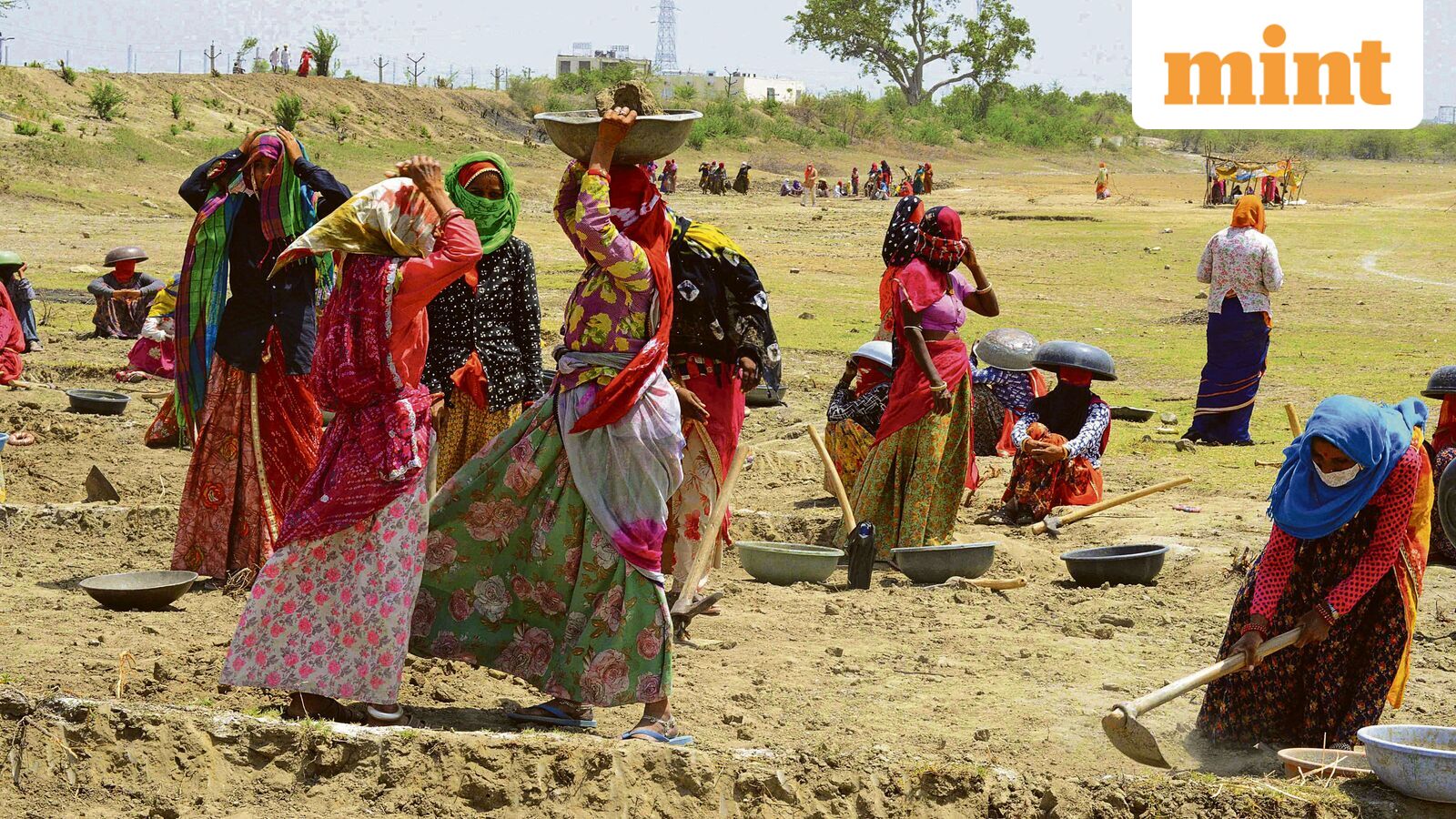
India deploys 100 officers to help states transition to the new VB-G RAM G rural employment framework, replacing MGNREGA from 1 July. Over 26 million people sought work in June alone.
The Indian government is sending more than 100 area officers across the country to help states and union territories shift to the new rural employment framework, the Viksit Bharat–Guarantee for Rozgar and Ajeevika Mission (Gramin), or VB-G RAM G. The deployment is one of the final steps before the 1 July launch.
The officers will work with state governments, district administrations, and field-level staff to support implementation, build local capacity, and handle operational issues, the ministry of rural development said in a statement on Friday. Rural development secretary Rohit Kansal said the mechanism is meant to strengthen coordination between the Centre and states as the new framework takes effect.
“The officers have already undergone orientation on key aspects of the Act, including implementation procedures, institutional arrangements, technology platforms and support systems available to states,” Kansal said.
The officers will assess implementation readiness, facilitate knowledge-sharing, and help resolve issues during the transition, according to the ministry. The goal is uniform implementation and institutional support in the programme's early months.
VB-G RAM G replaces the Mahatma Gandhi National Rural Employment Guarantee Act (MGNREGA) as the government's primary rural employment framework. It broadens the scope by integrating livelihood promotion, rural infrastructure creation, climate resilience, and technology-enabled governance into a single structure.
The transition comes as demand for rural employment remains high. Official data show 17.44 million people were employed under the scheme in April, rising to 27.40 million in May. Another 26.84 million people had availed employment up to 19 June.
The Centre has approved an interim allocation of ₹95,692 crore as the central share for FY27. All states and union territories have been onboarded onto the DBT-SPARSH platform for direct benefit transfers. Nearly 93% of active workers have completed e-KYC formalities, and a face authentication-based attendance system has been rolled out nationwide.
Twenty-seven states and union territories have made budgetary provisions for the programme, the ministry said. Six have notified their state-specific schemes under the new framework. The rest are in advanced stages of finalising implementation plans.
Rural rights activists said the scale of demand makes a smooth transition critical.
“The government must ensure that the transition to VB-G RAM G does not disrupt employment or wage payments for rural workers. With more than 26 million people already seeking work in June alone, the priority should be to strengthen implementation at the grassroots rather than merely changing the scheme's architecture,” said Ashish Kumar Singh, president of Citizen Forum, a civil rights group in Bihar’s Katihar district.
Drafted by a large language model from the source reporting linked above, then screened by automated publishing checks. It is not read by a journalist before publication. Some articles cite our Alpha Score. Verify prices and figures against the original source. Educational coverage, not personalized advice.