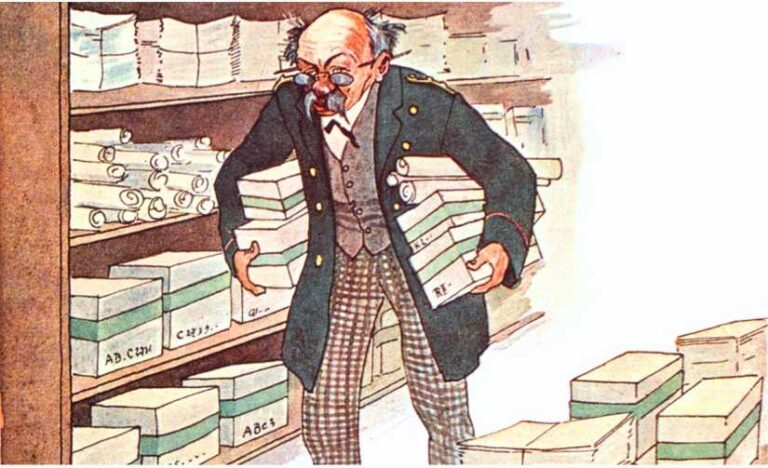
India's government chatbots are supposed to answer citizens' questions. Instead, they return file links.
Take Asksarkar, the government's flagship chatbot. Ask it about startup schemes. The response lists Pradhan Mantri Awas Yojana, a housing program, and Swachh Bharat Mission, a sanitation drive. Neither has anything to do with startups. Ask about AI policy. The first result is a 170-page PDF. The second links to Wikipedia's page on the US Defense Advanced Research Projects Agency. The third points to the IndiaAI Mission website.
Askdiksha, the Ministry of Railways' chatbot, handles ticket requests by redirecting to IRCTC's portal. The user scrolls and selects manually. Both services render in mobile-phone width even on a full desktop screen.
The pattern is consistent across most government chatbots, according to a report from The Ken. They function as search engines for government websites, not as conversational interfaces. They cannot complete transactions, pull personalized data, or resolve queries that cross departmental boundaries.
The reason is not the AI layer. India's vendors can build copilots. The problem is the data layer.
India's public data infrastructure runs on PDFs, scanned documents, and legacy databases that were never designed for machine reading. A chatbot that can parse natural language still cannot parse a scanned circular from 1998. State-level databases compound the problem. Each state maintains its own records in its own format. Central government systems do not talk to each other. A chatbot trained on one ministry's data has no access to another ministry's records, even when the citizen's question crosses departmental boundaries.
For AI vendors selling to the government, the sale is the easy part. The hard part comes after: making the data usable. That requires digitizing decades of paper records, standardizing formats across ministries, building APIs between systems, and maintaining the infrastructure. Most of that work falls outside the AI contract entirely.
The government's Digital India initiative has pushed for data digitization since 2015. Progress has been uneven. Some ministries have modernized. Others still run on paper. The AI push has exposed the gaps rather than closed them.
Vendors who win government AI contracts often spend more time on data cleanup than on model development. The copilot is ready. The data is not.
The sector readthrough is straightforward. Indian IT services companies with large government contracts – firms like Tata Consultancy Services, Infosys, and Wipro – face a structural bottleneck. Their ability to deliver on AI projects depends on the government's data readiness, not on their own AI capabilities. Until the underlying records are digitized, standardized, and interconnected, the chatbots will keep returning PDFs.
A senior IT executive familiar with government contracts told The Ken that data cleanup typically adds 12 to 18 months to project timelines. The AI model itself takes three to six months to build. The rest is wrestling with paper.
For investors tracking India's digital transformation, the metric to watch is not the number of chatbot deployments. It is the pace of data digitization across ministries. The Ministry of Electronics and IT has set a target of completing legacy document scanning by 2026 for central agencies. State-level timelines remain undefined.
Until that work is done, the copilots will keep pointing to PDFs.