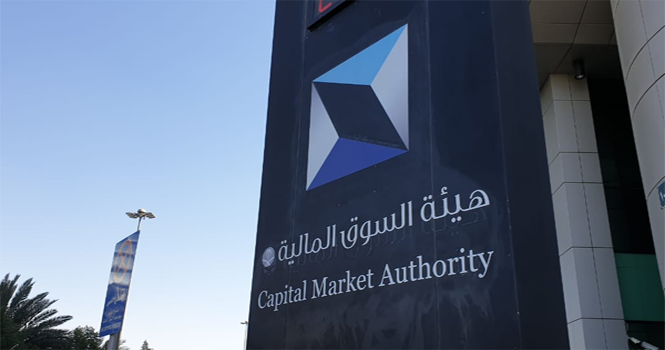
Saudi Arabia's CMA requires early adoption of IFRS 18 by early 2027. Companies on local GAAP face the biggest overhaul as income statements get a defined operating profit line.
The Capital Market Authority board voted to require all listed companies in Saudi Arabia to adopt IFRS 18 starting in early 2027, moving the deadline ahead of the standard's general effective date for annual periods. The decision applies to every entity under CMA oversight, including those that currently report under local GAAP or earlier versions of IFRS.
IFRS 18, published by the International Accounting Standards Board in April 2024, replaces IAS 1 and introduces a new structure for the income statement. Companies must present a defined operating profit subtotal and classify income and expenses into one of five categories: operating, investing, financing, income taxes, and discontinued operations. The standard also requires more detailed disaggregation of operating expenses and forces management-defined performance measures to be reconciled to the most directly comparable IFRS subtotal.
The early adoption mandate gives listed firms roughly 18 months to overhaul their financial reporting systems, train accounting teams, and align internal data collection with the new classification rules. For companies that already use IFRS through IAS 1, the shift is largely procedural – a re-labeling of line items and a new subtotal calculation. For those still on local accounting standards, the transition is more fundamental. Revenue and expense categories often follow different definitions, and the chart of accounts may not map easily into the five required categories.
Accounting professionals in the region said the CMA's move aligns Saudi reporting requirements with international norms and reduces the gap between local filings and global peers. The standard's emphasis on disaggregation and defined subtotals should make financial statements more comparable across sectors. That could change how analysts model earnings and assign valuation multiples, particularly in industries where operating profit was previously a discretionary label.
For investors, the change means income statements will look different starting in 2027. Operating profit will be a fixed line item. Management's own performance measures – often presented alongside or in place of IFRS metrics – will require a reconciliation to the IFRS-defined subtotal. That added transparency could narrow the information gap between company presentations and audited results. Companies that currently highlight adjusted EBITDA or non-GAAP profit without clear IFRS ties may face more scrutiny.
The CMA has not yet published detailed implementation guidance. That absence creates some near-term uncertainty for compliance teams trying to gauge the exact format required. Companies that delay system upgrades risk producing financial statements that do not meet the new presentation rules, which could trigger regulatory scrutiny or restatements.
The board's decision is final and does not require additional approvals. Listed companies should begin assessing the impact on their chart of accounts, financial reporting software, and disclosure controls before the end of 2025.
Prepared with AlphaScala research tooling and grounded in primary market data: live prices, fundamentals, SEC filings, hedge-fund holdings, and insider activity. Each story is checked against AlphaScala publishing rules before release. Educational coverage, not personalized advice.