Back to Markets
Stocks● Neutral

Hypoglossal Nerve Stimulation Adoption Marks Shift in Regional Sleep Apnea Treatment

Hypoglossal Nerve Stimulation Adoption Marks Shift in Regional Sleep Apnea Treatment
AONCOSTAS

The successful implementation of HGNS surgery in Thailand marks a significant shift in sleep apnea treatment, signaling potential growth for neuro-stimulation medical device adoption in the Asian market.

AlphaScala Research Snapshot
Live stock context for companies directly referenced in this story
Alpha Score
55
Moderate

Alpha Score of 55 reflects moderate overall profile with moderate momentum, moderate value, moderate quality. Based on 3 of 4 signals — score is capped at 90 until remaining data ingests.

Alpha Score
45
Weak

Alpha Score of 45 reflects weak overall profile with strong momentum, poor value, poor quality, weak sentiment.

Consumer Staples
Alpha Score
58
Moderate

Alpha Score of 58 reflects moderate overall profile with moderate momentum, moderate value, moderate quality, moderate sentiment.

Consumer Cyclical
Alpha Score
47
Weak

Alpha Score of 47 reflects weak overall profile with moderate momentum, poor value, moderate quality. Based on 3 of 4 signals — score is capped at 90 until remaining data ingests.

This panel uses AlphaScala-native stock data, separate from the source wire linked above.

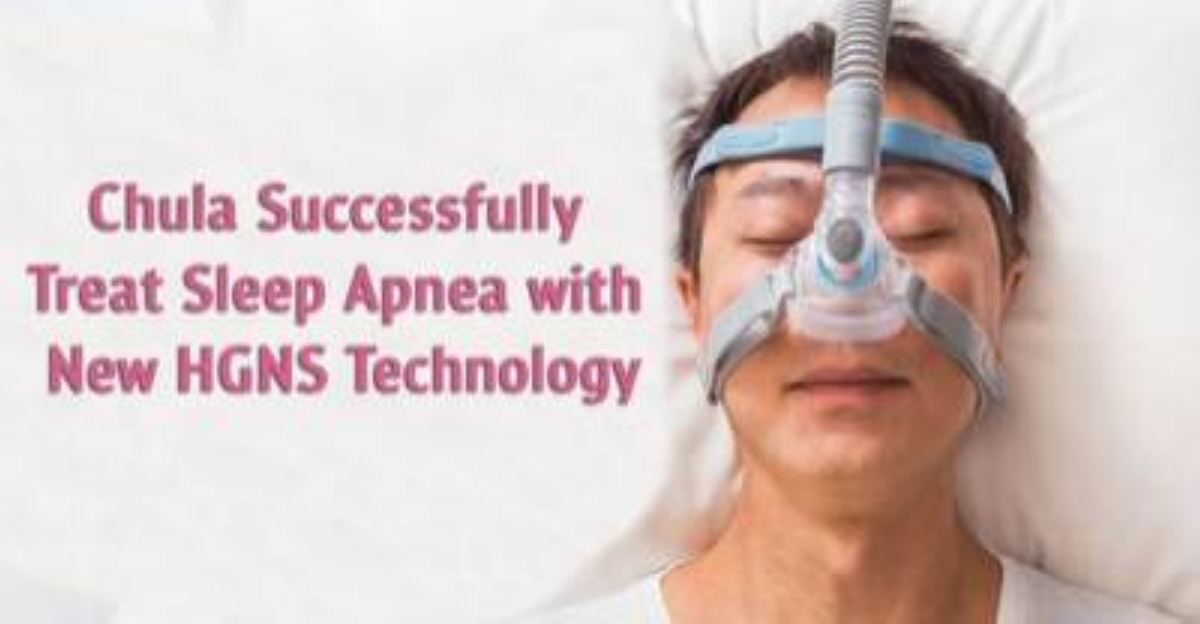
The successful deployment of Hypoglossal Nerve Stimulation (HGNS) at King Chulalongkorn Memorial Hospital signals a transition in the clinical management of obstructive sleep apnea across Asia. By completing the fourth such procedure in the region, the Excellence Center for Sleep Disorders has established a new technical benchmark for treating moderate to severe cases that have historically proven resistant to standard interventions. This development moves the needle on surgical options for patients who cannot tolerate traditional continuous positive airway pressure therapy.

Clinical Efficacy and Patient Selection

The HGNS technique functions by stimulating the hypoglossal nerve to prevent airway collapse during sleep. Unlike traditional surgical approaches that often involve tissue removal, this method utilizes a neuro-stimulation device to maintain airway patency. The focus on moderate to severe patient cohorts suggests a shift toward more targeted, device-based interventions in the medical technology sector. As surgical teams gain proficiency with this hardware, the barrier to entry for hospitals looking to offer advanced sleep disorder treatments will likely decrease.

This surgical milestone reflects broader trends in medical device integration, similar to the Neuro-Symbolic AI Integration Shifts Mental Health Tech Standards seen in other specialized health sectors. The ability to standardize these procedures across different hospital systems is a critical factor for the long-term adoption of neuro-stimulation technology. The success of these initial procedures in Thailand provides a proof-of-concept for regional health systems that are currently evaluating the cost-benefit profile of importing advanced sleep-related medical hardware.

Infrastructure and Regional Scalability

The expansion of HGNS capabilities in Asia relies on the availability of specialized training and the procurement of specific stimulation hardware. As this technique moves from experimental status to a standard of care, the supply chain for neuro-stimulation components will face increased demand. The following factors define the current operational landscape for this procedure:

  • Patient eligibility is strictly limited to those with moderate to severe obstructive sleep apnea.
  • Procedural success depends on the integration of neuro-stimulation hardware with existing surgical protocols.
  • Regional adoption is currently limited by the number of trained surgical teams capable of performing the implantation.

While the medical community focuses on patient outcomes, the financial implications for the medical device sector are tied to the rate of institutional adoption. Hospitals that successfully integrate these procedures are better positioned to capture market share in the growing sleep medicine segment. This shift mirrors the capital allocation patterns seen in other high-growth sectors, such as the OpenAI DeployCo Venture Signals Shift in Enterprise AI Capital Allocation, where infrastructure development precedes widespread market penetration.

Future updates from the Excellence Center will likely focus on long-term patient monitoring and the durability of the stimulation devices. Investors and clinical stakeholders should monitor the publication of longitudinal data regarding device battery life and patient compliance. The next marker for this technology will be the establishment of formal reimbursement pathways for HGNS procedures within the Thai public health system, which would provide a roadmap for broader regional scaling.

How this story was producedLast reviewed Apr 22, 2026

AI-drafted from named sources and checked against AlphaScala publishing rules before release. Direct quotes must match source text, low-information tables are removed, and thinner or higher-risk stories can be held for manual review.

Editorial Policy·Report a correction·Risk Disclaimer