Crypto▲ Bullish
HSBC Survey: Crypto Allocation Drops to 6% Even as 45% of Wealthy Plan to Add
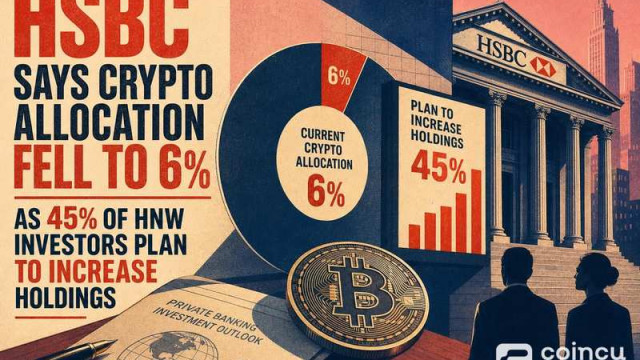
HSBC surveyed 9,993 affluent investors across 10 markets. Average crypto allocation fell to 6% from 7% a year earlier. 45% plan to add exposure over the next 12 months.
Continue with
HSBC's latest affluent investor survey shows a split picture. The average crypto portfolio weight fell to 6% in 2026 from 7% a year earlier, HSBC said. Yet 45% of the 9,993 high-net-worth respondents across 10 markets plan to increase their crypto holdings over the next 12 months.
Cash and cash equivalents took the largest global allocation at 19%, followed by equities at 16% and fixed income at 14%, according to HSBC's full report. Against those weightings, a 6% crypto position looks like a satellite holding rather than a core allocation.
The forward-looking figure runs against the drop in current exposure. Another 40% of respondents said they intend to keep their crypto allocation stable. Combined, roughly 85% plan to hold or add rather than cut.
Current allocation and future intent measure different things. The 6% describes money already deployed; the intention figures describe what investors say they mean to do next. A stated plan is not an executed trade, and survey intent can soften if volatility or risk controls intervene.
The measured read is stability, not a surge. A large share of affluent investors intends to add exposure even after average weights fell, which suggests the allocation compression reflects rebalancing rather than a wholesale retreat from the asset class.