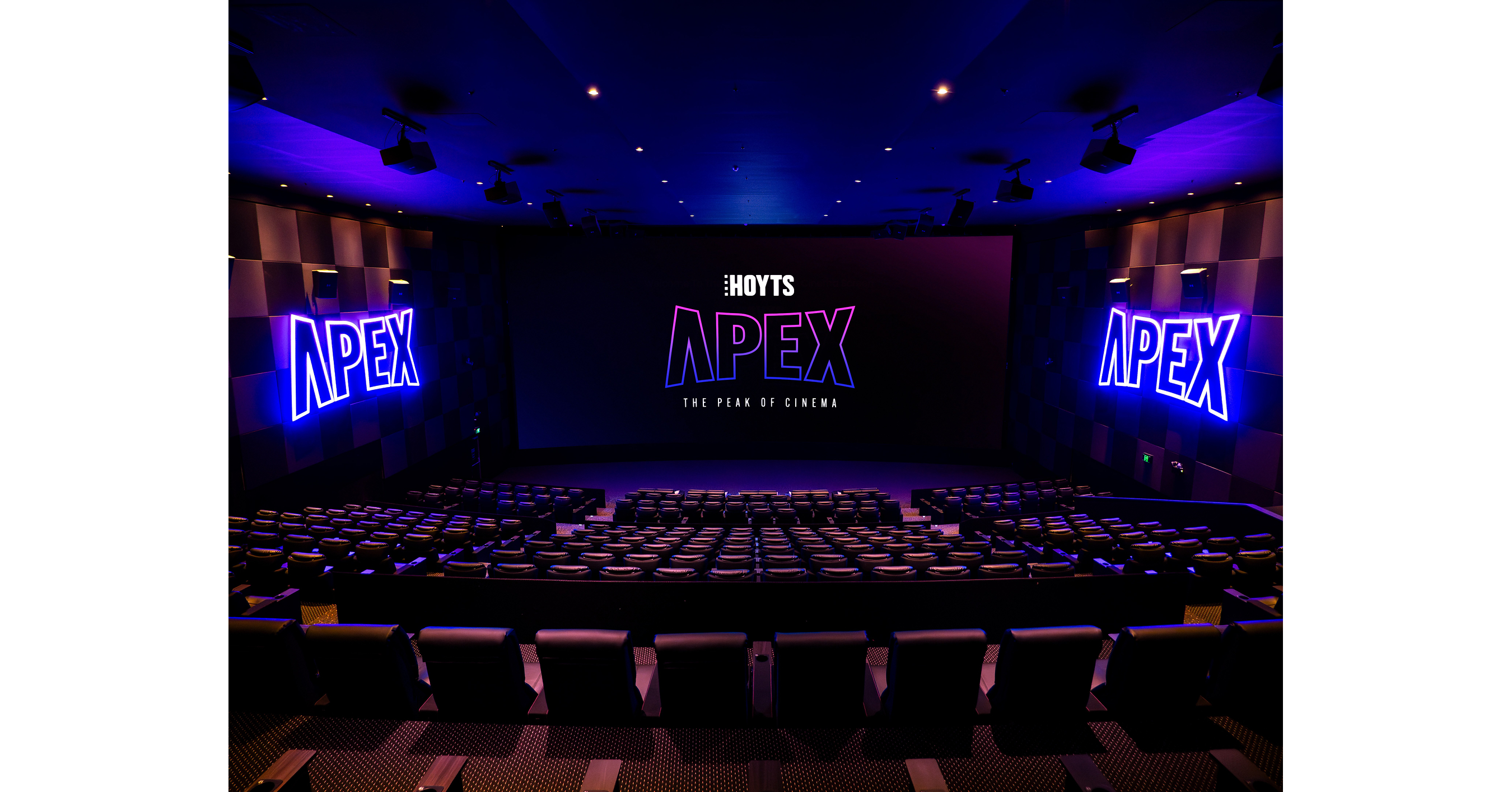
HOYTS APEX uses curved, micro-perforated LED screens that let sound pass through the display, fixing the misalignment between audio and picture that traditional cinema projectors create.
HOYTS opened two versions of its new APEX premium cinema format this week, one at Melbourne Central and one at Karrinyup, Australia. The visual hook is the Tricorne Premium LED screen – a curved, acoustically transparent display that replaces the traditional projector and screen setup. The Karrinyup screen measures 25 meters wide by 11 meters tall, which GDC Technology claims is the largest cinema LED screen in a working multiplex. The Melbourne screen is 21 meters by 9 meters.
This is not just a bigger TV.
The core technical shift is the micro-perforated LED panel. Each panel contains thousands of tiny holes that let sound pass directly through the screen, so the speakers sit behind it rather than to the sides. That aligns the sound origin with the picture, fixing a persistent compromise of traditional cinema – speakers beside the screen create a mismatch between where the audio appears to come from and where mouths are moving. Dolby Atmos object-based audio then maps sounds to specific coordinates in the room, and the screen's transparency means the speakers can be placed in their ideal positions without obstruction.
The screen itself uses HDR with DCI-P3 color coverage and a 160-degree viewing angle. GDC's chairman, Dr. Man Nang Chong, said the setup offers "30 times better picture contrast and millions more pixels than traditional cinema projection." The higher contrast is measurable – traditional projectors struggle with black levels because some light always leaks from the bulb, even in dark scenes. LED panels can turn individual pixels off entirely, producing true black. That distinction matters most in sci-fi, horror, and any film that relies on shadow detail.
The curved geometry wraps the viewer's field of view, reducing edge distortion compared to a flat screen of the same width. The panels themselves are ultra-thin and tile without visible seams, which was an engineering requirement for a seamless 25-meter surface.
HOYTS CEO Damian Keogh emphasized the combination of curved LED, Dolby Atmos, and seating design. The APEX format is the chain's top premium tier. HOYTS runs about 500 screens across Australia and New Zealand and has operated since 1909, so the investment in a new format is a signal about where the chain sees future premium revenue coming from.
The simple read
Bigger screen. More pixels. Higher contrast. These are incremental upgrades that follow the standard projection arms race – wider, brighter, louder.
The better read
The acoustic transparency is the structural change. Traditional cinema sound relies on speakers placed behind a perforated screen, the perforations degrade image sharpness and brightness. Most premium large-format screens – IMAX, Dolby Cinema – compromise either sound origin or image clarity at the screen surface. The micro-perforated LED panel solves both in one piece of hardware. That is why this matters for cinema design architects, equipment buyers, and exhibitors considering retrofits. It is not a deluxe TV. It is a new category of projection surface.
A second hidden detail is the content flexibility. The LED panels are natively bright and color-accurate enough to handle live sports, gaming broadcasts, and high-frame-rate HDR feeds. Laser projectors that produce equivalent brightness often require expensive retrofit and still cannot match full-off black. If the multiplex industry shifts toward alternative content – e-sports, live events, concerts – the LED setup has a cost-of-operation advantage because it does not need a projection booth, a cooling system for a high-wattage bulb, or periodic lamp replacements.
What would confirm this is more than a showcase
GDC and Tricorne need to sell additional screens to other chains at comparable scale. A single two-screen rollout proves the technology works at HOYTS. A second chain installing a similar setup in North America or Europe would signal that multiplex operators view this as a standard, not a one-off. DCI certification is already done, so that box is ticked.
What would weaken the thesis
If the upfront cost per screen is so high that the total-cost-of-ownership math only works for a flagship auditorium, the format stays a niche upgrade rather than a mainstream replacement. Laser projection has been improving contrast and HDR support year over year, and it uses existing screen and speaker infrastructure. A laser retrofit costs less than a full LED wall, which may matter more for chain-wide deployment.
GDC also supplies media servers and audio processors for traditional cinemas, so the company has an incentive to sell LED as a premium add-on rather than a full replacement. That is a rational business decision. It means the technology may move slower than the press release implies.
HOYTS APEX is a meaningful technical proof-of-concept. The acoustic transparency and the size of the installation – 24 million pixels on the Karrinyup screen – are not marketing fluff. They are real engineering thresholds. Whether the rest of the industry follows depends on cost per seat and whether the alternative content pipeline justifies the switch.
Prepared with AlphaScala research tooling and grounded in primary market data: live prices, fundamentals, SEC filings, hedge-fund holdings, and insider activity. Each story is checked against AlphaScala publishing rules before release. Educational coverage, not personalized advice.