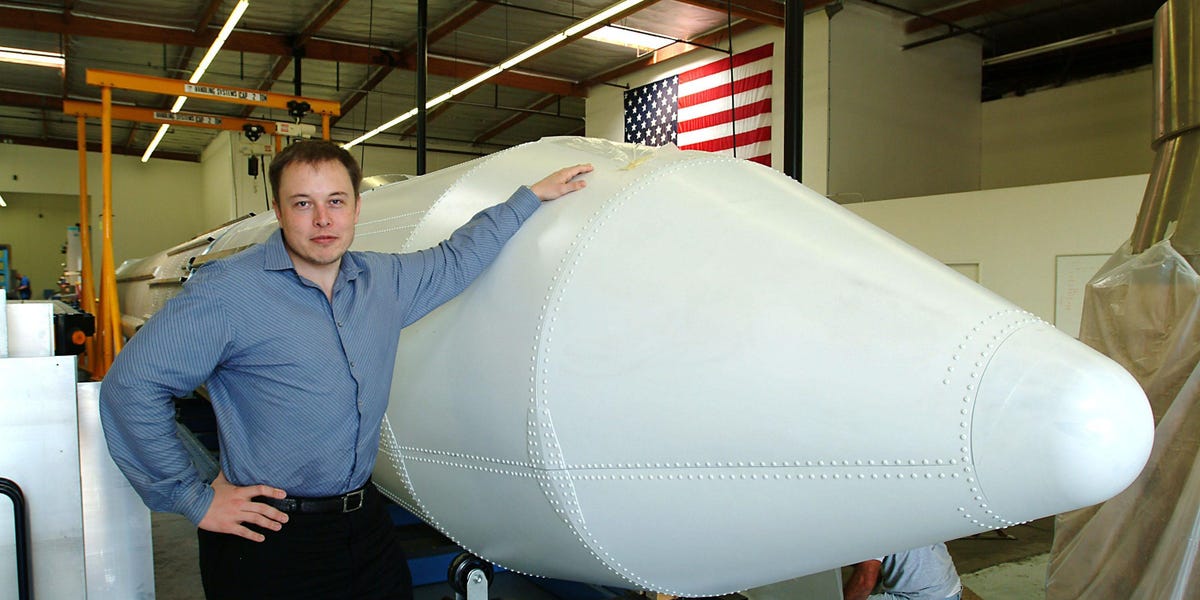
SpaceX went from 10 employees and a mariachi party to a $180B valuation and 100+ launches a year. The cost-per-kilogram milestone drove the shift.
Nearly 25 years ago, a mariachi band played at a SpaceX party while Elon Musk posed for a photo. The rocket company's head count was single digits back then. Today it employs more than 13,000 people and has pushed the cost of launching a kilogram to low-Earth orbit below $1,500, about one-tenth the industry average before Falcon 9.
The path was not linear. The first three Falcon 1 launches failed. The fourth worked in 2008, saving the company from bankruptcy. That launch won a $1.6 billion NASA contract for cargo resupply missions, a turning point that gave SpaceX the revenue base to develop the Falcon 9 and Dragon capsule.
Falcon 9's first successful flight in 2010 and its first commercial cargo mission in 2012 proved reusability could work. By 2015, SpaceX landed an orbital-class rocket booster for the first time. That achievement cut the cost per flight by roughly 70% on the reused side and forced competitors like United Launch Alliance and Arianespace to restructure their pricing.
Starlink, the satellite internet constellation, provides the cash flow that funds Starship development. With more than 7,000 satellites in orbit and 5 million subscribers, Starlink generates an estimated $10 billion in annual revenue. That internal revenue stream means SpaceX does not rely on government contracts alone to fund its next generation of hardware.
Starship's April 2025 catch of the Super Heavy booster by the launch tower's mechanical arms – the "chopsticks" – was the most dramatic technical milestone since the first Falcon 9 landing. It demonstrated the rapid-reusability cycle Musk has targeted from the start. The next step is orbital refueling, which would allow Starship to carry payloads to the moon and Mars without staging.
SpaceX now launches more than 100 rockets a year from five pads across Florida, Texas, and California. That cadence gives it an order-of-magnitude advantage over any competitor in launch frequency. For investors tracking the space economy, the key metric is not any single rocket but the cost curve: each iteration of Starship is aiming for a 10x reduction in cost per ton to orbit.
The mariachi band is long gone. The startup that almost died in 2008 now makes more profit quarterly than most aerospace companies make in a year.
Prepared with AlphaScala research tooling and grounded in primary market data: live prices, fundamentals, SEC filings, hedge-fund holdings, and insider activity. Each story is checked against AlphaScala publishing rules before release. Educational coverage, not personalized advice.