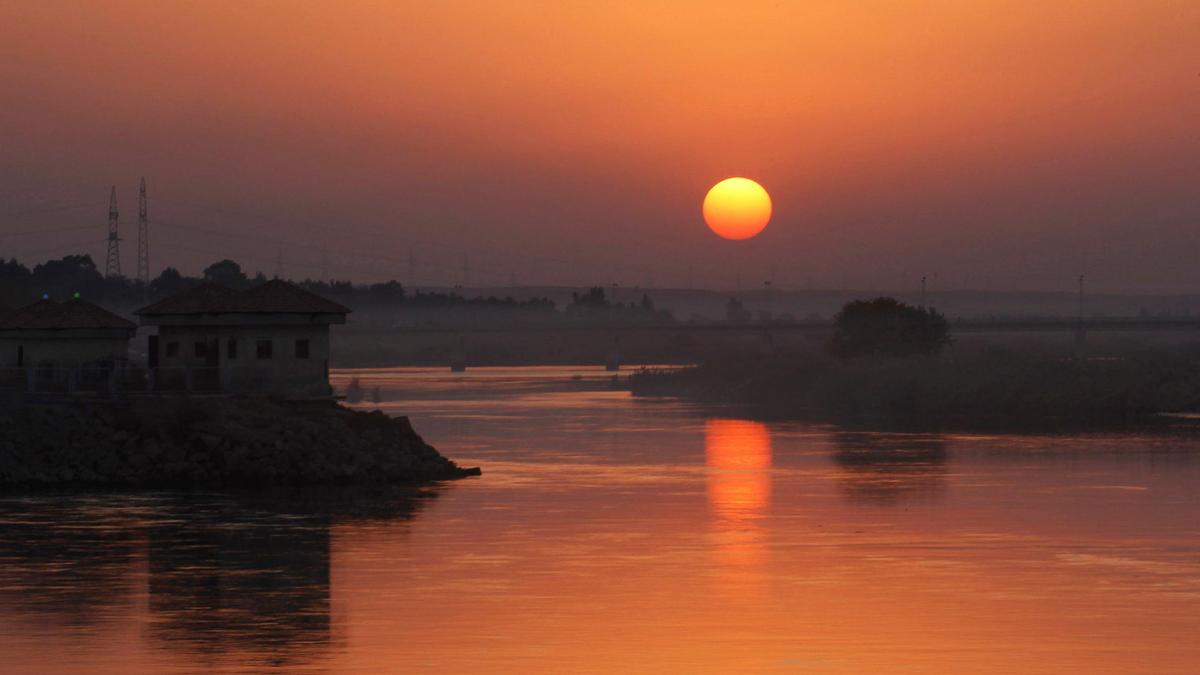
The Euphrates River formed between 3.6 million and 1.6 million years ago when two separate river systems in the Taurus Mountains merged, according to a study published Wednesday in Nature Geoscience. The finding came from seismic imaging data originally collected by oil and gas companies to identify gas reserves under the Mediterranean.
The study identified two predecessors of the modern-day Karasu and Murat rivers in Turkey. Tectonic activity in the earthquake-prone region forced the Murat precursor to divert toward the Persian Gulf. The Karasu precursor later joined it, forming a single powerful river system that eventually became the Euphrates.
Chevron Corp. geologist Andrew Madof co-authored the study alongside University of Western Australia geoscientist Simon Lang. The team used subsurface seismic images to spot buried channel-like features dating to the Messinian salinity crisis, a period more than 5 million years ago when large parts of the Mediterranean had dried up.
Lang compared the technique to ultrasound imaging. "We use it to image buried gravels, sands, mud, limestone and salt that have been compacted and turned into rock," he said. The channels had flow rates exceeding the modern-day Nile and Tigris-Euphrates systems.
By working backward from the buried features, the scientists traced them to onshore Turkey. Geological data from valley sediments and coal deposits now uplifted in the Taurus Mountains showed that the present-day Karasu and Murat rivers were the original sources. The "somehow" behind the cut-off western valleys and the merger, Lang said, was tectonic activity across eastern Anatolia.
The discovery matters because the Euphrates floodplain hosted some of humankind's earliest milestones: the first cities like Uruk and Babylon, the invention of cuneiform writing, and the rise of agriculture. The river runs 1,700 miles from Turkey through Syria and Iraq before emptying into the Gulf.
For the energy sector, the study demonstrates how exploration data can answer questions far removed from oil and gas. Seismic surveys that Chevron runs to find gas prospects also reconstruct ancient landscapes. Lang noted that the Amazon River provides a parallel: it used to flow west toward the Pacific until the Andes rose and reversed its course.
The flow of the Euphrates and Tigris now joins near Basra to form a delta on the Persian Gulf. "They have filled in a large area of Mesopotamian plain upon which early agriculture developed, including early city-states and the development of cuneiform writing," Lang said.
Chevron's CVX stock page data shows a Mixed Alpha Score of 49/100.