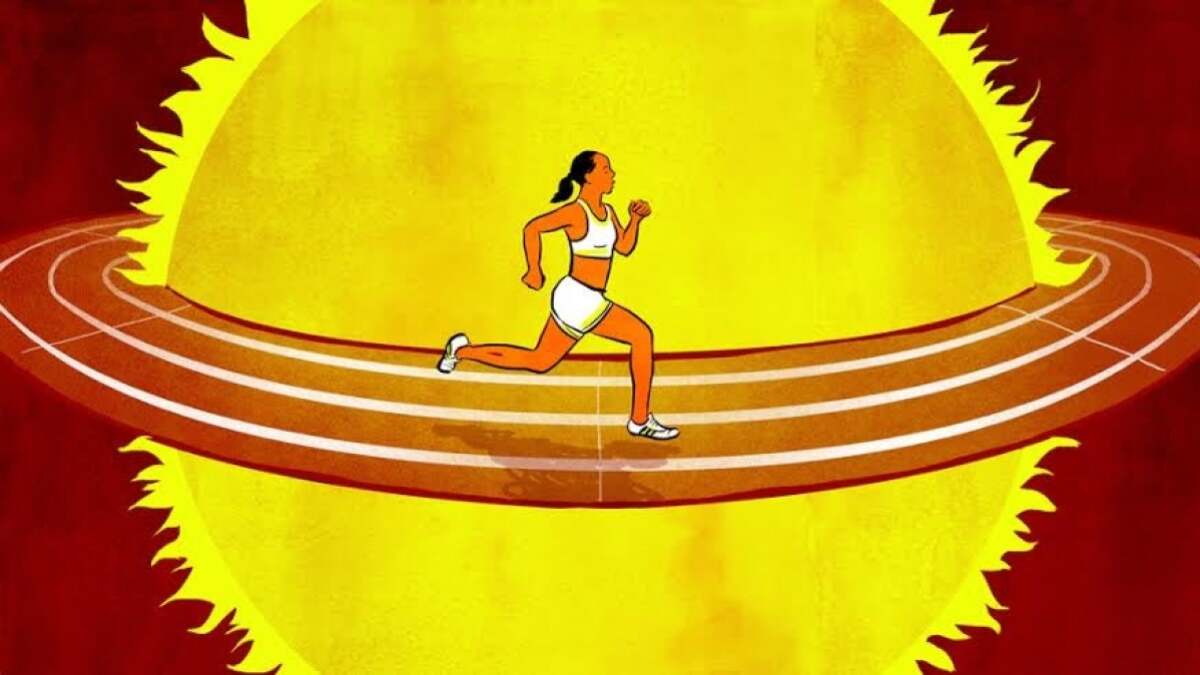
Two weeks of deliberate heat exposure can increase blood volume, improve performance, and make hot runs feel less awful. The U.S. Army protocol and recent research show how.
Nobody likes a sluggish, sweaty run. On days when the sun is set to "broil," the air-conditioned treadmill looks a lot better than the asphalt. The human body can adapt to exercising in the heat, though. After a few weeks those temperatures start to feel normal, and research suggests you get a small performance boost when the weather cools back down.
Hot workouts carry real danger, so you already know the common-sense rules: drink to thirst, stop if you feel nausea or dizziness, and stay inside if the heat index is too high. Beyond the basics, the body's response to heat is more interesting than just "sweat a lot and feel bad."
Exercise raises your core temperature. Add a hot day on top of that, and your body has to work hard to cool itself. Your heart pumps blood to muscles for movement and to your skin for cooling – both at once. That dual demand is partly why you feel so exhausted.
Your brain also steps in early. A study in the European Journal of Physiology had cyclists ride at 95°F and the same trial at 59°F. They were slower from the start, even before they overheated. The brain seems to pull back effort proactively to conserve energy in the heat.
Once core temperature hits about 104°F, the body puts the brakes on hard. In a Journal of Applied Physiology study, cyclists stopped at that temperature regardless of starting conditions. That's the line where serious heat illness sets in, so the shutdown makes sense. The study also found that athletes who kept cool with a water-cooling jacket lasted longest. You can mimic that effect with ice-cold drinks or pouring water over your head. It's only temporary relief, so adaptation is the real solution.
The heat affects runners differently depending on physical size, not just how fit they are. Larger people generate more heat from muscle and retain more from fat insulation. Smaller people generate less heat and have more skin surface to dissipate it. That's why petite runners tend to place better in hot races.
Fitness is actually a mixed bag. Fitter athletes produce more body heat because they can work harder. Short of changing your body composition – which takes months – the best fix is simple: spend more time exercising in the heat.
Heat training increases your blood volume. More blood means your body can send some to the skin for cooling while still supplying muscles. The effect has been compared to a mild, legal version of blood doping. The science is still debated on exactly how it works, the evidence is strong enough that safely attempting heat adaptation is worth it.
One study in the European Journal of Applied Physiology found that people who made no special effort to exercise in the heat showed no improvement in heat tolerance from spring to fall. Adaptation requires deliberate work.
OSHA recommends that workers on their first day in the heat do only 20% of their usual workload, ramping up to 100% within a week. The U.S. Army's training protocol aims for at least two hours in the heat each day, including cardiovascular exercise. If two hours feels too much, start with what you can handle and work toward that benchmark. After about two weeks you should be significantly better adapted.
If the weather doesn't cooperate, use a sauna after your workout. Fifteen to thirty minutes in the sauna after your core temperature is already elevated from exercise promotes heat adaptation. Skip the workout and you'll need to add about 20 minutes to the sauna time for the same effect.
You can take a few days off from the heat and keep the adaptation. After a week of avoiding heat you start losing it. The Army estimates you lose about 75% after three weeks. To maintain during cool weather, wear extra layers during workouts, or return to the sauna protocol.
The confirming factors that your adaptation is working: your heart rate during a hot run drops, you sweat earlier and more evenly, and you don't feel like stopping after 20 minutes. What would invalidate the adaptation: nausea, dizziness, or a core temperature spike. If symptoms hit, stop and cool down. The two-week investment in heat exposure gives you a real edge. You'll still feel hot, you'll still run slower than in cool conditions. You'll be able to push harder before your body temperature hits dangerous levels. That alone is worth the effort.
Prepared with AlphaScala research tooling and grounded in primary market data: live prices, fundamentals, SEC filings, hedge-fund holdings, and insider activity. Each story is checked against AlphaScala publishing rules before release. Educational coverage, not personalized advice.