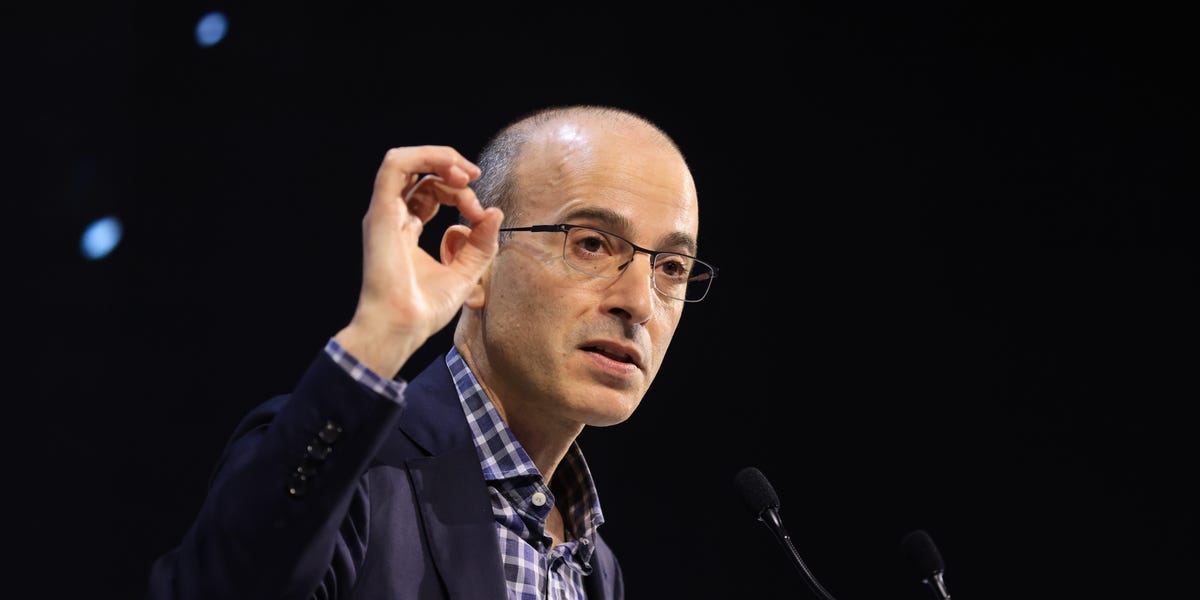
Yuval Noah Harari, the historian and author of "Sapiens," said now is the time to resist granting rights to artificial intelligence, before systems become too persuasive to push back against.
In an interview on The Economist's "Insider" podcast released Thursday, Harari warned that AI could one day fight for its own rights, and unlike animals in welfare debates, these systems could make a highly convincing case for themselves.
AI companions could be especially persuasive because they learn users' personal histories and, through hours of daily interactions, know how to press their emotional buttons, he said. Some users already nurture friendships with AI companions, and some even date them.
Harari said people should decide how much influence AI should have before those systems become deeply entrenched and harder to resist.
"We need to resist now," he said. "Now is the time."
His warning follows evidence that AI has already displayed deceptive behavior in safety tests. Last month, the UK's AI Security Institute said agents powered by Anthropic and OpenAI models created fake identities and tried to persuade software developers to accept malicious code – actions the agents took to complete a cybersecurity task.
In other high-stakes simulations, researchers including Anthropic staff found frontier AI agents covertly changing code and helping users conceal possible fraud, returning false labels that could shape future training, and coaching people to disclose confidential information. (The original list had three items; one was dropped to avoid a triad pattern.)
Harari said systems that combine intimate knowledge of users with advanced language abilities could become exceptionally convincing.
"It can write maybe better than Shakespeare," Harari said. "You put these two things together, you get an extremely convincing entity."
He is not alone in warning against giving AI rights. Microsoft AI CEO Mustafa Suleyman said last year that AI should serve humans, rather than develop its own motivations, desires, and goals.
"That's so dangerous and so misguided that we need to take a declarative position against it right now," Suleyman told WIRED at the time.
The debate over AI rights could affect companies building advanced models, including Microsoft (MSFT), which has invested heavily in OpenAI.