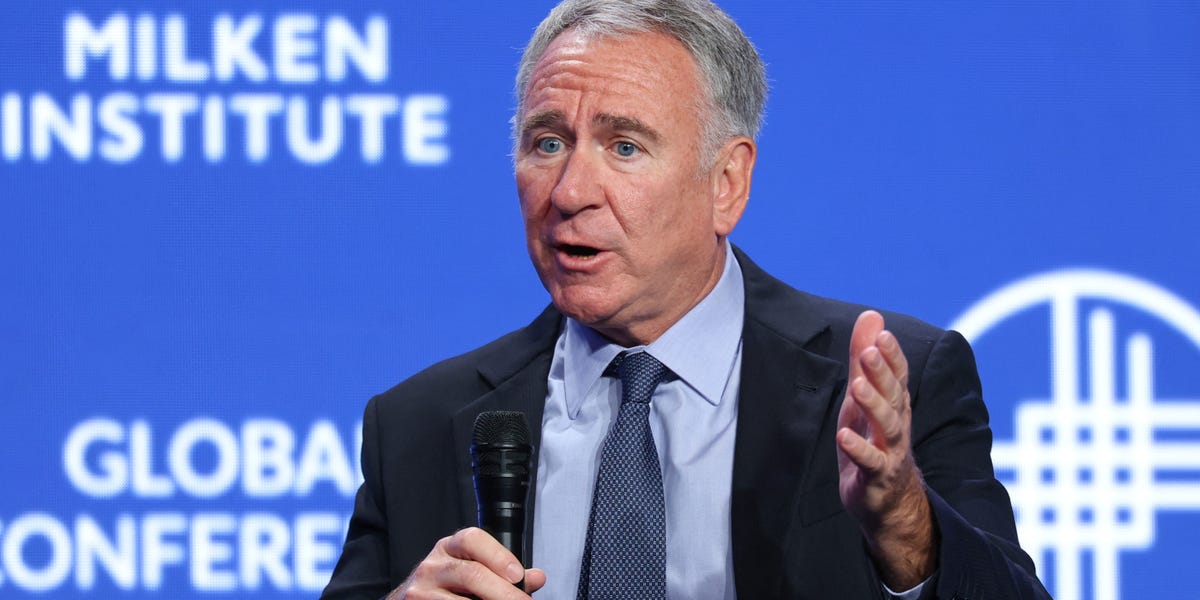
Ken Griffin, one of the most prominent skeptics of the artificial intelligence boom, has reversed course. The Citadel chief executive now calls AI “real.” The shift from a hedge-fund heavyweight carries weight beyond a single endorsement.
Griffin’s previous public doubt gave cover to institutional allocators who questioned whether the AI rally was speculative hype. His change of heart removes that excuse. The simple read is that the AI trade now has a credibility boost from a former detractor. The better market read focuses on capital flows and positioning mechanics. Funds that track Citadel’s sector weights often adjust after a founder-level signal, even if the firm itself uses quantitative strategies rather than direct stock picking.
Why Griffin’s Shift Alters the AI Trade
When a skeptic of Griffin’s stature converts, the immediate effect tightens the risk premium on AI-linked equities. The uncertainty discount that investors applied to AI infrastructure names such as NVIDIA, Microsoft, and Amazon has been partly priced on the assumption that a meaningful minority of smart money remained uncommitted. Griffin’s acknowledgment that AI is “real” validates the capital expenditure thesis that has driven those stocks. Expect narrower spreads between AI leaders and laggards as the institutional fence sitters reassess.
More directly, Griffin’s prior skepticism served as a permission structure for allocators who were reluctant to overweight the sector. His conversion removes that permission. Pension funds and endowments that benchmark against hedge fund indices will see his stance as a signal to rotate into AI exposure. Passive AI ETFs, such as BOTZ and ROBT, could see fresh inflows as the stigma of chasing a “fad” fades.
The Institutional Flow Mechanism
Citadel itself is unlikely to accumulate AI stocks in a passive buy-and-hold manner. Griffin runs one of the most data-driven quant operations on Wall Street. His endorsement suggests that his firm has directly observed productivity gains or alpha generation from language models within its own trading systems. That internal evidence is more credible than third-party vendor claims.
For the broader market, the mechanism works through benchmarking. Institutional investors who track hedge fund portfolios will now adjust their satellite allocations to match the new consensus. This could push capital into AI hardware makers and software platforms that have the clearest revenue correlation to enterprise AI spend. The speed of those flows depends on whether other prominent skeptics follow Griffin’s lead.
The rebuttal case is equally important to watch. If Griffin’s funds file 13F holdings that show no material change in AI exposure, the statement becomes a directional hint rather than a portfolio commitment. The market will then need another catalyst to sustain the rally.
What the 13F Filings Will Reveal
The next concrete test is the quarterly holdings reports due 45 days after each calendar quarter. Those documents will show whether Citadel placed money behind Griffin’s words. A clear increase in AI hardware positions would confirm conviction. No change would leave the market with sentiment alone.
Traders should also track insider buying patterns at firms directly tied to AI compute and guidance revisions from enterprise software companies. If insiders at AI infrastructure names accelerate purchases, that would reinforce Griffin’s conversion as a legitimate turn. Conversely, if founder-level sales tick up, the rally may have already discounted the endorsement.
Griffin’s “AI is real” removes one of the last high-profile roadblocks to institutional commitment. The next phase depends on whether the capital flow narrative follows the rhetorical one.
For a deeper look at which stocks are attracting institutional flows, see the stock market analysis page and the NVIDIA profile for specific positioning data.