Greenspan Dies at 100: The Fed Chairman Who Defined Boom and Bust
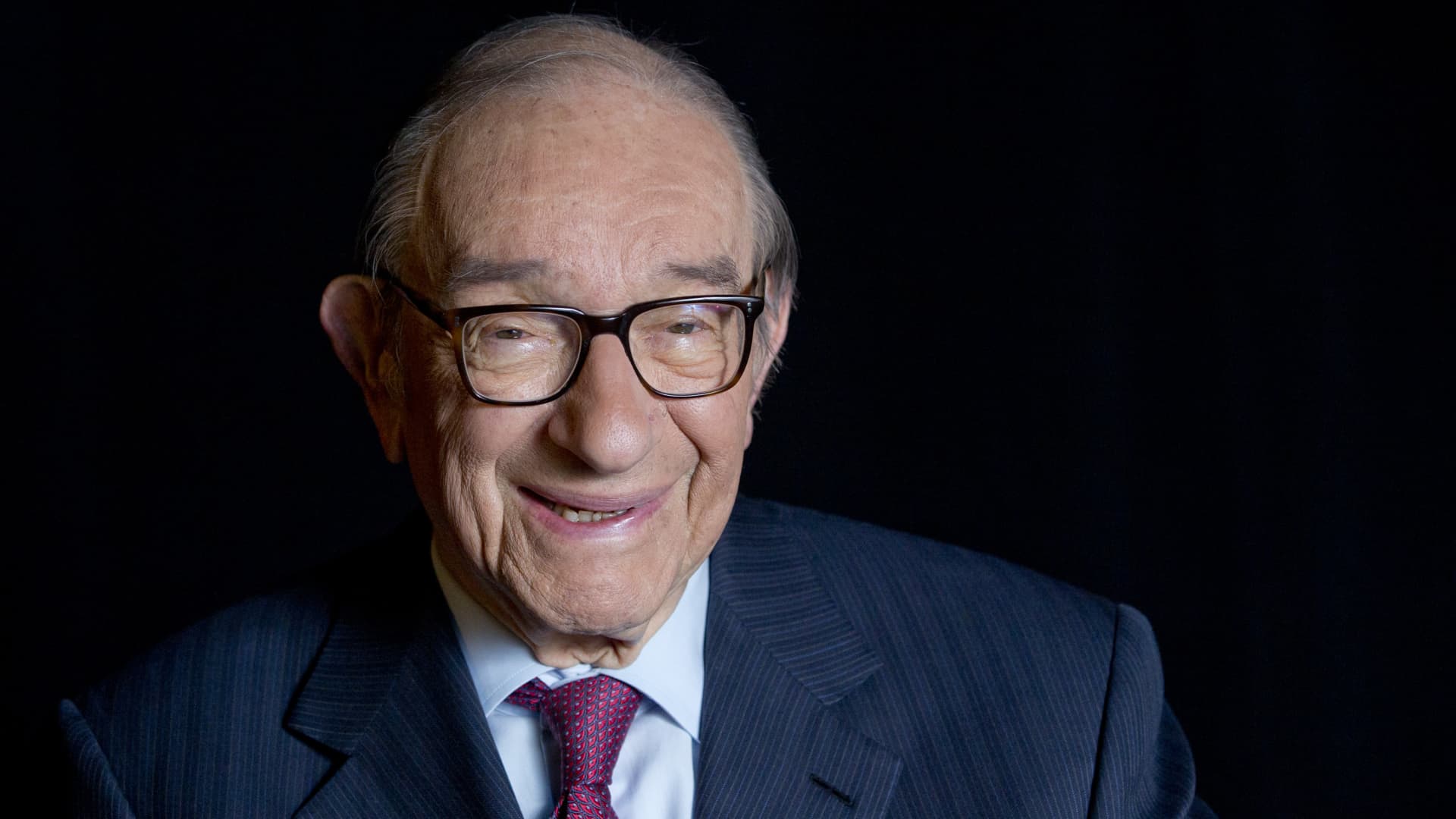
Alan Greenspan, the longest-serving Fed chairman of the modern era, died at 100. His 'irrational exuberance' speech and easy-money policies still echo in today's markets.
NEWS CORP currently carries an Alpha Score of n/a, giving AlphaScala's model a neutral read on the setup.
Alan Greenspan, the Federal Reserve chairman who presided over the longest peacetime expansion and coined the phrase "irrational exuberance," died Monday at 100. His wife of 29 years, NBC News correspondent Andrea Mitchell, said the cause was complications of Parkinson's disease.
For traders, Greenspan's death closes a chapter that still shapes how asset markets behave. The "Greenspan put" – the Fed's pattern of easing policy whenever markets faltered – became a template for central bank intervention, one his successors have struggled to escape. That legacy is a market that expects a safety net, and that expectation itself influences volatility and valuation.
Greenspan took the Fed's helm in August 1987, succeeding Paul Volcker. Sixty-nine days later, Black Monday crushed Wall Street. The Dow Jones Industrial Average sank 22.6% in a single session. The next day, Greenspan pledged the Fed's readiness "to serve as a source of liquidity to support the economic and financial system." The central bank cut short-term rates to encourage banks to lend on normal terms. The Dow regained half its losses within two days.
That moment earned him the nickname "Maestro" from supporters. Critics later said the same easy-money reflexes – the "Greenspan put" – fostered the conditions that brought on the Great Recession. Greenspan defended the low-rate policy in his 2007 memoir "The Age of Turbulence." "I believed then, as now, that the benefits of broadened homeownership are worth the risk," he wrote.
He was born March 6, 1926, in Washington Heights, New York, to Jewish parents. His father was a stockbroker and financial analyst. During the Great Depression, his allowance was a quarter a week. Greenspan played clarinet and saxophone, briefly attended Juilliard, and played in Woody Herman's jazz band before earning economics degrees from New York University. He received his Ph.D. at 51.
A free-market proponent, Greenspan was introduced to Ayn Rand by his first wife, artist Joan Mitchell. That marriage ended after less than a year. In 1997 he married Mitchell, 20 years his junior, in a ceremony officiated by Justice Ruth Bader Ginsburg.
His most famous market moment came Dec. 5, 1996, in a televised speech. "How do we know when irrational exuberance has unduly escalated asset values, which then become subject to unexpected and prolonged contractions as they have in Japan over the past decade?" he asked. The Tokyo stock market, then open, sank 3%. Other markets tumbled, then recovered and climbed until the dot-com bust.
Greenspan acknowledged he used convoluted language deliberately. "It's a language of purposeful obfuscation to avoid certain questions coming up, which you know you can't answer," he told CNBC in 2007. "So, I proceed with four or five sentences which get increasingly obscure."
After the 2008 crisis, Greenspan's reputation suffered. He admitted to CBS's "60 Minutes" that he knew about questionable subprime lending practices but did not grasp their scale until late 2005 or 2006. In a 2013 interview with the Associated Press, he reflected on the limits of risk management: "Fear and euphoria are dominant forces, and fear is many multiples the size of euphoria. Bubbles go up very slowly as euphoria builds. Then fear hits, and it comes down very sharply."
In January 2026, during Trump's second term, Greenspan signed a joint statement with other former Fed and Treasury officials denouncing a criminal probe of Fed Chair Jerome Powell. "The reported criminal inquiry into Federal Reserve Chair Jay Powell is an unprecedented attempt to use prosecutorial attacks to undermine that independence," the statement read.
His five terms at the Fed included the 1997 Asian crisis, the 1998 Russian default, the Long-Term Capital Management bailout, the Sept. 11 attacks, and the dot-com boom and bust. Through it all, he focused on fighting inflation over promoting full employment. By the time he retired in 2006, his tenure was the second-longest in Fed history, four months short of William McChesney Martin's.
"Fear and euphoria are dominant forces, and fear is many multiples the size of euphoria," he told the AP in 2013. The quote is a fitting epitaph for the man who, more than any other central banker, taught markets to expect a lifeline.
Drafted by a large language model from the source reporting linked above, then screened by automated publishing checks. It is not read by a journalist before publication. Some articles cite our Alpha Score. Verify prices and figures against the original source. Educational coverage, not personalized advice.