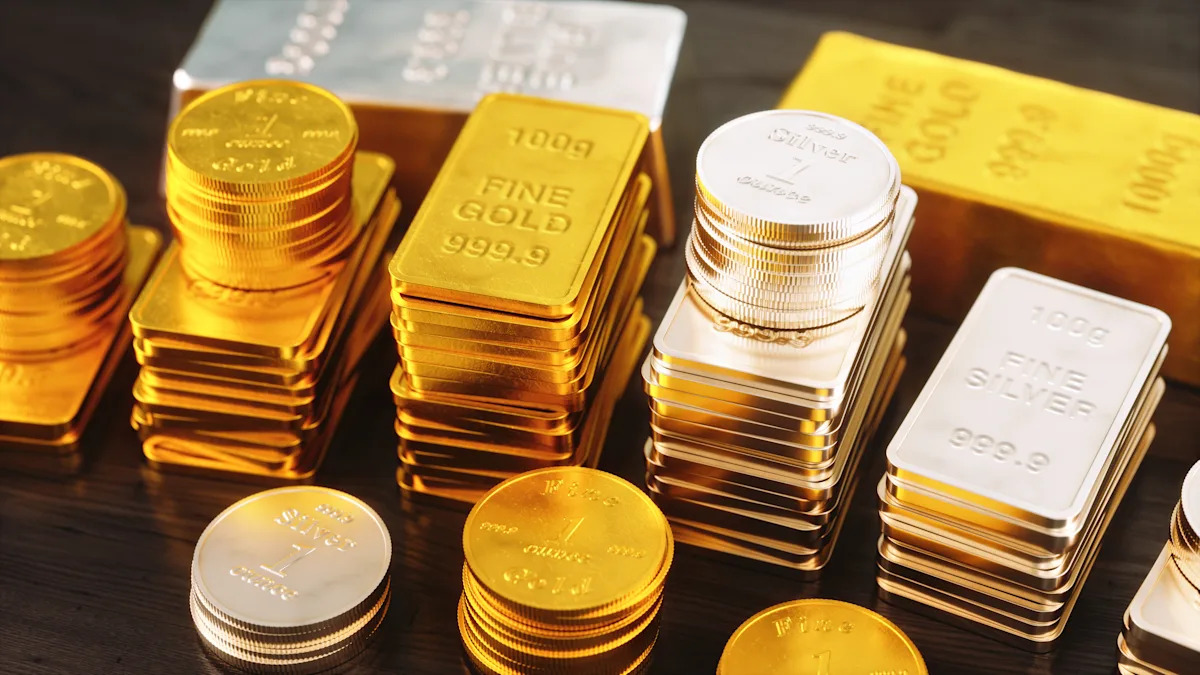
Gold futures opened lower Wednesday and extended losses through the early hours. The August contract hit $4,183.80 by 6:28 a.m. ET, down 1.8% from Tuesday's opening price and 0.2% from Tuesday's close. That is the lowest level for gold since March 23. Before that, the metal had not traded in the $4,100 range since December 2025.
The selloff followed an exchange of military strikes between the U.S. and Iran overnight. The strikes continued a pattern of escalation that keeps the Strait of Hormuz effectively closed. That route carries about 20% of the world's oil and natural gas. A prolonged disruption would keep energy prices elevated and add to inflation pressures. That scenario has historically driven gold higher as a hedge. Wednesday's drop suggests traders are instead positioning ahead of the consumer-price index report due at 8:30 a.m. ET.
The CPI print is the next concrete catalyst. A hot number would strengthen the case for the Federal Reserve to hold rates steady or delay cuts. That would raise real yields, increasing the opportunity cost of holding gold. A soft print, by contrast, could revive rate-cut expectations and weaken the dollar, pulling gold back toward $4,300. The dollar's response to the CPI will also matter. A stronger dollar on risk-aversion would add another headwind.
Gold's year-over-year gain has fallen sharply. On Jan. 29, gold's one-year return stood at 95.6%. That gain has since dropped to near its lowest level in over a year.
Primary Exposure: Gold ETFs and Miners
The two largest gold ETFs, SPDR Gold Trust (GLD) and iShares Gold Trust (IAU), sit at the center of the selling. Both carry weak Alpha Scores: IAU at 29/100 and GLD at 28/100. Those scores reflect the crosscurrents between geopolitical tailwinds and rate-driven headwinds. The ETFs are heavily traded and liquid, which means large positions can exit quickly. That liquidity itself can accelerate the decline when institutional holders unwind.
Gold mining stocks face a double hit from lower gold prices and higher input costs tied to inflation and supply-chain disruption. Large-cap miners such as Barrick Gold and Franco-Nevada typically trade with leverage to spot prices. A 1.8% drop in futures often translates into a larger percentage move in their share prices.
The CPI Report and Geopolitical Risk
The risk eases if the U.S. and Iran signal de-escalation or a ceasefire that reopens the shipping channel. That would remove the inflation-premium support for gold and leave rate expectations as the dominant driver. A soft CPI print would weaken the dollar and lower real yields, likely reversing the slide.
The risk worsens if the strikes escalate further, especially if they draw in other regional players or disrupt oil production directly. That scenario would reignite safe-haven buying and could push gold through recent highs. A high CPI print that cements hawkish Fed expectations would pressure gold further, potentially taking it below $4,100.
The gold profile page tracks the metal's price action and the factors driving it. The CPI report lands at 8:30 a.m. ET. The first 30 minutes of volume after the release will show whether the overnight breakdown was a positioning flush or a genuine shift in sentiment.