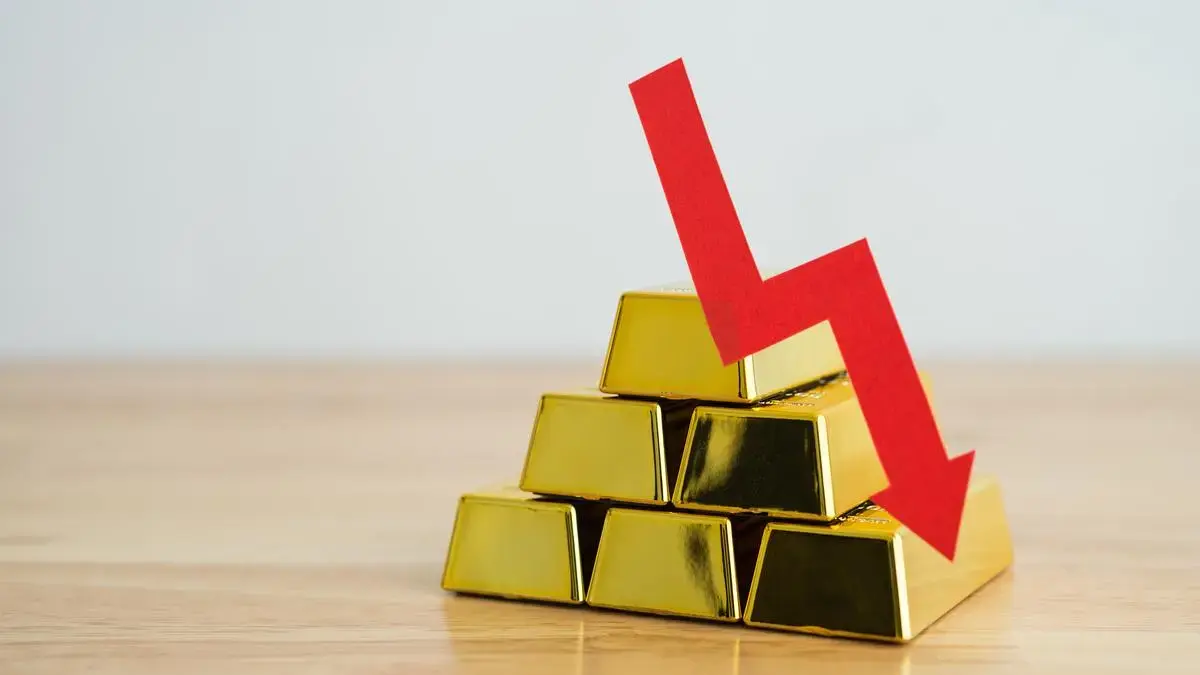
Spot gold dropped 0.8% Thursday to near $4,650 per ounce and weakened further toward $4,610 on Friday, putting the metal on track for a weekly loss of nearly 2%. The April US CPI print hit 3.8%, the hottest reading since May 2023, erasing remaining expectations of Federal Reserve rate cuts. Benchmark 10-year Treasury yields surged to one-year highs. A stronger dollar, record equity flows, hawkish Fed commentary, and India’s sudden import-duty hike turned a macro headwind into a multi-front selloff.
For traders, the move is not a simple rates-up, gold-down script. This is a layered unwinding of the rate-cut narrative, a withdrawal of safe-haven flows, and a physical-demand shock. The next directional cue will come from US industrial production data: a strong print extends the decline, a weak one could revive the growth-scare bid that has been absent all week.
The Inflation Print That Killed Rate-Cut Hopes
The April CPI report reset the conversation around the Federal Reserve’s next move. Headline inflation accelerated to 3.8%, driven largely by energy costs tied to the Iran conflict and disruptions in the Strait of Hormuz. The print landed at a moment when markets were already questioning the disinflation trend, and it delivered a definitive answer: price pressures are re-accelerating.
CPI Details and the Energy Component
Energy accounted for the majority of the upside surprise. Core measures also firmed, confirming that the improvement in underlying inflation had stalled. The breadth of the increase moved the Fed’s 2% target further out of reach and anchored the view that the first rate cut is not coming in the near term.
Rate Hike Odds Enter the Conversation
The CME FedWatch tool showed rate-cut expectations largely evaporated following the week’s inflation reports. Renisha Chainani, Head of Research at Augmont, noted that markets have now fully unwound expectations of a Fed cut, with some positioning beginning to reflect the possibility of a rate hike by December.
“Markets have fully unwound expectations of a Fed rate cut, with some positioning now reflecting the possibility of a rate hike by December.”
CME Group, which operates the exchange behind the FedWatch tool, carries an Alpha Score of 65 (Moderate). That shift in rate expectations is the core mechanism behind gold’s decline. When the market prices a hike instead of a cut, the entire term structure of real yields adjusts, and gold, which pays no income, reprices lower to stay competitive with yield-bearing alternatives.
Dollar and Yield Pressure Squeeze Gold from Two Sides
A stronger US dollar compounded the yield move. The dollar index pushed higher as rate differentials widened in favour of the greenback, making dollar-denominated gold more expensive for foreign buyers. Higher nominal and real yields raise the holding cost; a stronger dollar reduces outright demand.
Record S&P 500 and the Vanishing Safe-Haven Bid
A record rally in the S&P 500 further dampened safe-haven demand. When equities deliver strong returns, the marginal dollar flows away from defensive assets like gold. The equity rally is itself a bet on economic resilience, which undermines the recession-narrative bid that had supported gold earlier in the cycle.
Hawkish Fed Comments Cement the Higher-for-Longer View
Hawkish remarks from Kansas City Fed’s Jeffrey Schmid and Cleveland Fed’s Beth Hammack reinforced the view that rates could stay higher for longer. Their comments removed any residual hope that the central bank might look through the energy-driven CPI spike. The message was explicit: inflation will not be treated as transitory, and the policy response will be to hold or to hike, not to ease.
Geopolitical Risk: A Stagflationary Impasse
Geopolitics normally adds a risk bid to gold. This week, it did not. US President Trump met Chinese President Xi Jinping in Beijing, with discussions covering trade, Iran, and the Strait of Hormuz situation. Xi warned that mishandling the Taiwan issue could severely damage bilateral relations. The meeting signalled a potential diplomatic off-ramp for Hormuz tensions, reducing the urgency of a geopolitical hedge even as the underlying conflict continues to drive energy costs higher.
The Hormuz Disruption’s Double-Edged Impact
Chainani pointed out that the primary driver remains the ongoing Iran conflict and the sustained closure of the Strait of Hormuz, which has materially disrupted global energy supply chains. That disruption is the very force that pushed up energy costs and, by extension, the CPI print. The same event that should be bullish for bullion feeds inflation, which forces the Fed to stay hawkish. That dynamic turns a potential tailwind into a headwind.
Diplomatic Overtures Reduce the Urgency to Hedge
The Trump-Xi meeting, while producing no immediate resolution, lowered the perceived probability of a near-term military escalation. Gold’s risk premium contracted as a result. A sustained diplomatic track would further erode that premium; a breakdown in talks would bring it back in force.
India’s Import Duty Shock Disrupts Physical Demand
Physical demand, a traditional backstop for gold prices, took a direct hit this week. India raised gold and silver import duties to nearly 15% from around 6% and imposed a quantity restriction of 100 kg on gold imports. The moves are aimed at protecting forex reserves. They will weigh on jewellery demand in one of the world’s largest bullion-consuming nations.
Duty Hike Mechanics and Quantity Caps
- Import duty raised from ~6% to nearly 15%.
- Quantity restriction: gold imports capped at 100 kg.
- Future advance authorisation issuances now conditional on at least 50% fulfilment of prior export obligations.
The duty increase alone is steep enough to alter the economics of importing gold into India. Combined with the quantity restriction, it creates a significant barrier for bullion dealers and jewellery manufacturers. The tighter authorisation rules further limit the flow of gold into the domestic market, even for re-export purposes.
MCX Price Action and Domestic Premiums
Domestic premiums, which had been elevated on strong festival and wedding-season demand, are likely to compress as the higher duty chokes off imports. On MCX, gold traded around ₹1,61,978 per 10 gm, down 0.13%, after opening with a gap-down and slipping below the ₹1,60,000 mark in early trade on Friday. The gap-down reflects the immediate repricing of the duty shock. Physical demand is at risk of softening further as higher retail prices meet price-sensitive buyers. For more on gold’s macro and physical drivers, see the gold profile.
Technical Lines: The $4,500–$4,780 Range and the Next Catalyst
Chainani’s technical assessment places gold in a $4,500–$4,780 range with no clear directional bias, recommending a “buy-on-dips, sell-on-rallies approach.” That range-bound view is consistent with a market that has lost its bullish catalyst but has not yet broken down into a full-scale bear trend.
Silver’s Support at $80
Silver, having pulled back after testing resistance at $90, is expected to find firm support at $80. The silver-gold ratio may widen further if industrial demand concerns resurface, though for now the metal is tracking gold’s macro-driven decline rather than its own industrial story.
US Industrial Production as the Next Binary Event
Markets now await US industrial production data. A strong print would confirm the reflation narrative and add pressure on gold. A weak number could introduce the growth-scare element that has been missing, potentially reviving safe-haven demand and putting a floor under prices. The energy-driven inflation spike ties directly to events in the crude oil profile. For traders, this data point is the next binary event that will either validate the selloff or open a window for a relief rally.
The Forces That Would Halt the Decline – and the Ones That Would Accelerate It
Three Reversal Triggers
A reversal requires one of three developments. First, a downside surprise in US industrial production that shifts the narrative from reflation to stagflation. Second, an escalation in the Strait of Hormuz that disrupts supply enough to trigger a genuine growth scare rather than just an inflation impulse. Third, a sudden dovish pivot from a Fed official, unlikely though not impossible if financial conditions tighten too quickly. Any of these would bring buyers back into the $4,500–$4,600 zone.
What Breaks Gold Below $4,500
A break below $4,500 would be the clearest signal that the selloff has further to run. Confirmation would come from:
- A strong industrial production print.
- Further hawkish Fed commentary.
- A resolution of Hormuz tensions that removes the last geopolitical bid.
In that scenario, the next support levels sit at the 200-day moving average and the $4,300 area, where physical demand from price-sensitive buyers in China and India could re-emerge – provided the import duty shock does not keep Indian buyers on the sidelines. The broader commodities setup and risk-event map are tracked on the commodities analysis page.
Markets now wait for the industrial production release to decide whether gold’s slide extends toward $4,500 and below, or whether a growth scare finally gives the metal the bid that geopolitics alone could not sustain.