The Milliman Medical Index for 2026 landed last week with a number that changes the calculus for employer-sponsored GLP-1 coverage. The annual cost of insuring a family of four has eclipsed $35,000, rising 7.2% between 2025 and 2026. Of that total, Milliman estimates the family's “expected employee contribution plus out-of-pocket costs” at 58%, or about $15,000.
Pharmacy spending is the fastest-growing component, climbing 14.8% year-over-year for the average person. GLP-1 drugs for diabetes and weight loss are the primary driver. That growth rate puts employers in a familiar position: when healthcare costs rise, companies shift more of the burden to workers through higher premiums, larger co-payments, and stricter deductibles.
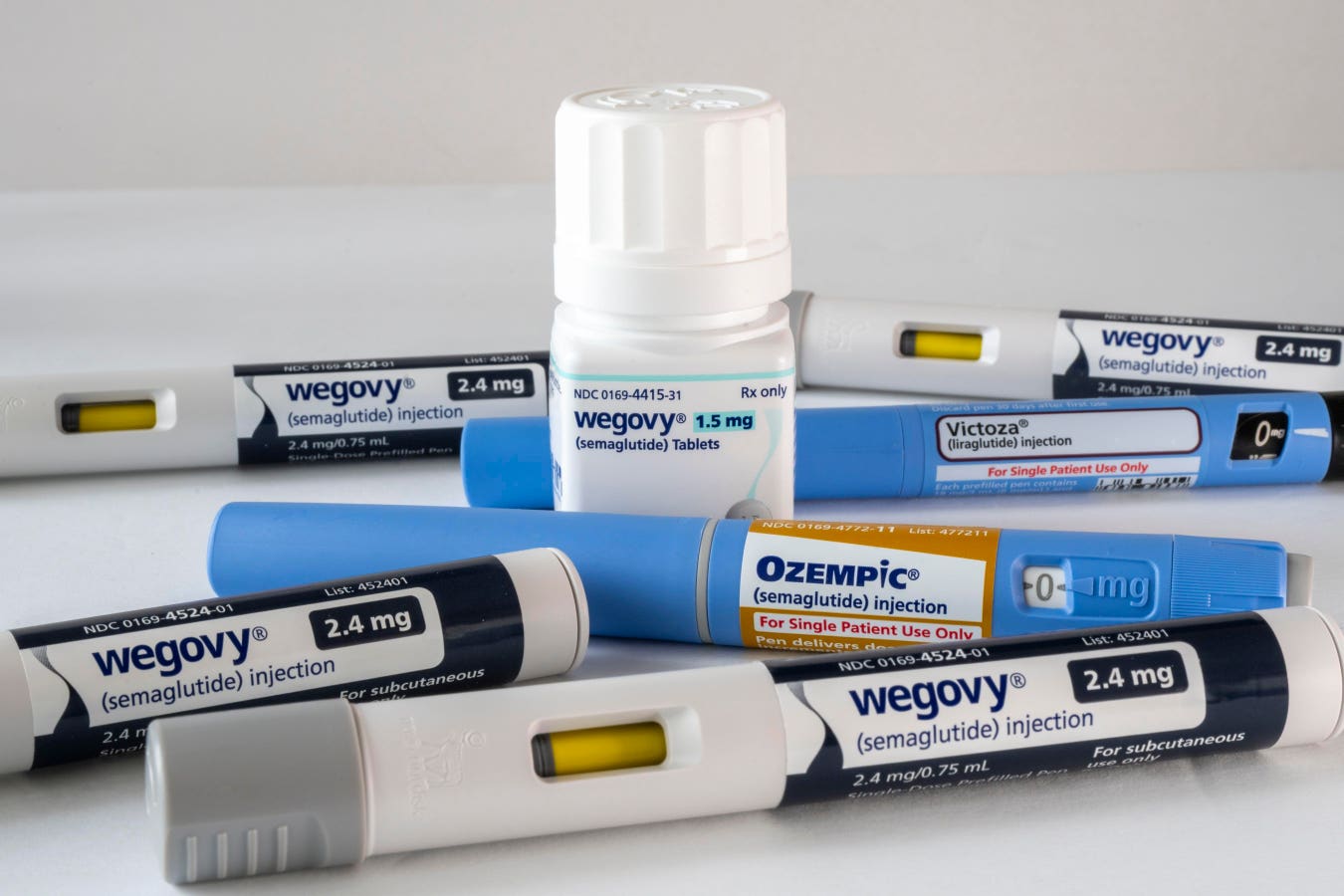
The data point is not just a benefits headline. It has direct implications for the revenue trajectories of Eli Lilly (LLY) and Novo Nordisk (NVO), the two dominant manufacturers of GLP-1 therapies. Their stocks have rallied on demand expectations. The Milliman report, combined with two separate employer surveys, suggests the access picture is tightening.
2026 Milliman Index: $35,000 Family Cost, 14.8% Pharmacy Spike
The Milliman analysis pegs prescription drug costs at 13% of total 2026 family health spending, or $4,700. That share is rising faster than any other healthcare category.
The quote comes directly from Milliman's published report. The language is measured. The signal is clear: employers will respond.
Employer Response: Utilization Management and Coverage Caps
When the underlying cost pool expands, the employer's instinct is to manage utilization rather than eliminate coverage outright – at least initially. The Business Group on Health published a report last August that mapped the likely responses:
- Requiring utilization management protocols before a GLP-1 script is filled
- Mandating prescriptions from specific providers (e.g., endocrinologists rather than primary care)
- Enforcing participation in a weight management program as a condition of coverage
- Demanding that vendor partners deliver “sustainable, cost-effective financial models” for the drug class
The report also noted that the percentage of employers covering GLP-1s for conditions other than diabetes will stagnate as companies try to stabilize costs.
A separate Business Group on Health analysis from earlier this year quantified the stagnation: only 72% of employers currently covering GLP-1 drugs for weight management said they were likely to continue that coverage in 2027. One in ten said they likely would not.
That 10% exit rate, combined with tighter utilization rules among the 72%, creates a demand friction that does not show up in prescription volume forecasts assuming linear adoption.
Payer Priority Shift: Specialty Drug Costs Overtake Total Cost of Care
The pressure is not just from employers. Health plans are also reprioritizing. A Pharmaceutical Strategies Group (PSG) survey released at the Asembia ASX26 conference in Las Vegas last month collected responses from 228 health benefits executives at health plans, employers, and unions.
The result: 43% of plans ranked management of specialty drug costs as their top goal, compared with 41% who prioritized managing total cost of care. Specialty drugs – a category dominated by GLP-1s, oncology biologics, and autoimmune therapies – have overtaken overall cost management in the payer hierarchy.
Morgan Lee, vice president of research and marketing at PSG, made that statement in the survey release. The shift toward integrated pharmacy and medical benefits and reassessment of rebate reliance suggests that the current high-list-price, high-rebate model for GLP-1s may face structural pressure.
Investor Angle: Revenue Growth vs. Net Price Realization
For investors watching Eli Lilly and Novo Nordisk, the Milliman and PSG data points create a tension. The demand narrative for GLP-1s remains robust: obesity prevalence, clinical trial expansions, and FDA label updates continue to widen the addressable market. The access gate, however, is tightening.
A rising employee co-pay shifts the cost burden to the patient. Higher out-of-pocket costs reduce adherence, especially for weight-management indications where insurance coverage is already less generous. If a substantial subset of the 72% of covering employers imposes utilization management or cost hurdles, the net price realization per script could fall even as gross prescription volume rises.
That dynamic matters for earnings models. Lilly's Mounjaro and Zepbound and Novo's Ozempic and Wegovy all carry list prices above $1,000 per month before rebates. If employer cost-shift forces patients into higher deductibles or coinsurance, abandonment rates at the pharmacy counter will climb.
The 10% of employers that said they will likely drop weight-loss coverage by 2027 is a small percentage today. It sets a precedent. If the Milliman trend persists – pharmacy costs rising nearly 15% annually – that 10% exit rate could grow.
Key Numbers to Track
- 72%: employers likely to continue GLP-1 weight-loss coverage through 2027
- 10%: employers likely to drop that coverage
- 43%: health plans ranking specialty drug cost management as top priority
- 14.8%: annual pharmacy cost growth per the Milliman index
- $4,700: per-family prescription drug spend in 2026
What Would Confirm or Weaken the Access Thesis
A confirmation of the access-tightening thesis would be a series of employer formulary updates in the next open-enrollment cycle that increase co-pay tiers or add prior authorization for weight-loss GLP-1s. A weaker signal would be a headline deal where a large employer or health plan expands coverage in a bet that rebates offset the cost.
Investors should also watch the Congressional Budget Office score of any federal GLP-1 coverage expansion for Medicare or Medicaid. A federal mandate would bypass employer cost-shift mechanics entirely and change the demand curve. So far, the cost estimates have kept that possibility at a distance.
For now, the data points in one direction. Employer healthcare costs are rising. GLP-1s are the largest contributor inside pharmacy. The traditional employer response – shift more cost to the employee – is already being telegraphed in surveys and utilization management proposals. Revenue growth for Lilly and Novo Nordisk is not in question. The question is how much of that growth leaks to lower net pricing or lower adherence.
That makes the next earnings call from each company, and any formulary access commentary from managed care organizations, more important than a single prescription tracker.