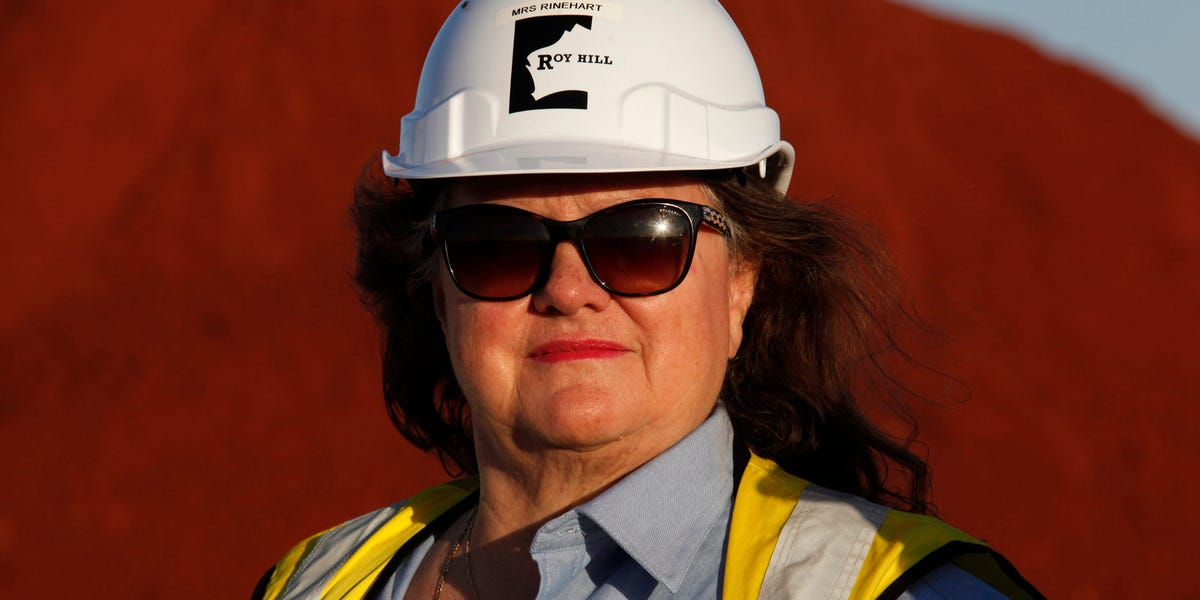
Gina Rinehart's SpaceX stake positions her mining empire for asteroid extraction. Starship's falling launch costs change the economics of space mining.
Gina Rinehart, Australia's richest mining billionaire, has taken a direct equity stake in Elon Musk's SpaceX. The investment is not purely financial, according to people familiar with the deal. It positions her mining empire for a future where raw materials come from space.
SpaceX has identified asteroid mining as a potential future opportunity, the people said. The company is developing Starship, a heavy-lift rocket designed for deep-space missions. Retrieving valuable metals from asteroids would require that kind of launch capacity. Rinehart's Hancock Prospecting holds vast iron ore and lithium assets. Bringing space-derived minerals to Earth could disrupt the very commodity markets her company dominates.
Rinehart is betting that SpaceX will solve the transportation problem. Once Starship is operational, the cost per kilogram to orbit is expected to fall sharply. That changes the economics of asteroid extraction. The timing matters. Space mining has been a theoretical concept for decades. Now the hardware is real, and the cost curve is bending.
The size of Rinehart's investment was not disclosed. The deal was structured as a direct equity stake in SpaceX, the people said. SpaceX remains one of the most valuable private companies in the world, with a valuation estimated at roughly $180 billion in its most recent tender offer. Rinehart's entry signals that the world's largest mining fortunes see a path to revenue beyond Earth.
Hancock Prospecting did not comment on future plans. The company's existing portfolio includes copper, nickel, and rare earths, all critical for electrification. Asteroid mining would expand that into platinum group metals, nickel-iron, and potentially water for space fuel depots. SpaceX's internal roadmaps have long included refueling in orbit, a capability that asteroid water could support.
For now, the move is a hedge. Rinehart's wealth comes from terrestrial extraction. A space-based supply chain would take a decade or more to build. The bet says she expects that timeline to shrink. Starship's first orbital test flights are ongoing. The rocket's payload capacity is orders of magnitude larger than anything currently flying.
SpaceX has identified asteroid mining as a potential future opportunity, according to people familiar with the company's internal discussions. Rinehart's investment gives her a seat at the table if that discussion becomes real.
Prepared with AlphaScala research tooling and grounded in primary market data: live prices, fundamentals, SEC filings, hedge-fund holdings, and insider activity. Each story is checked against AlphaScala publishing rules before release. Educational coverage, not personalized advice.