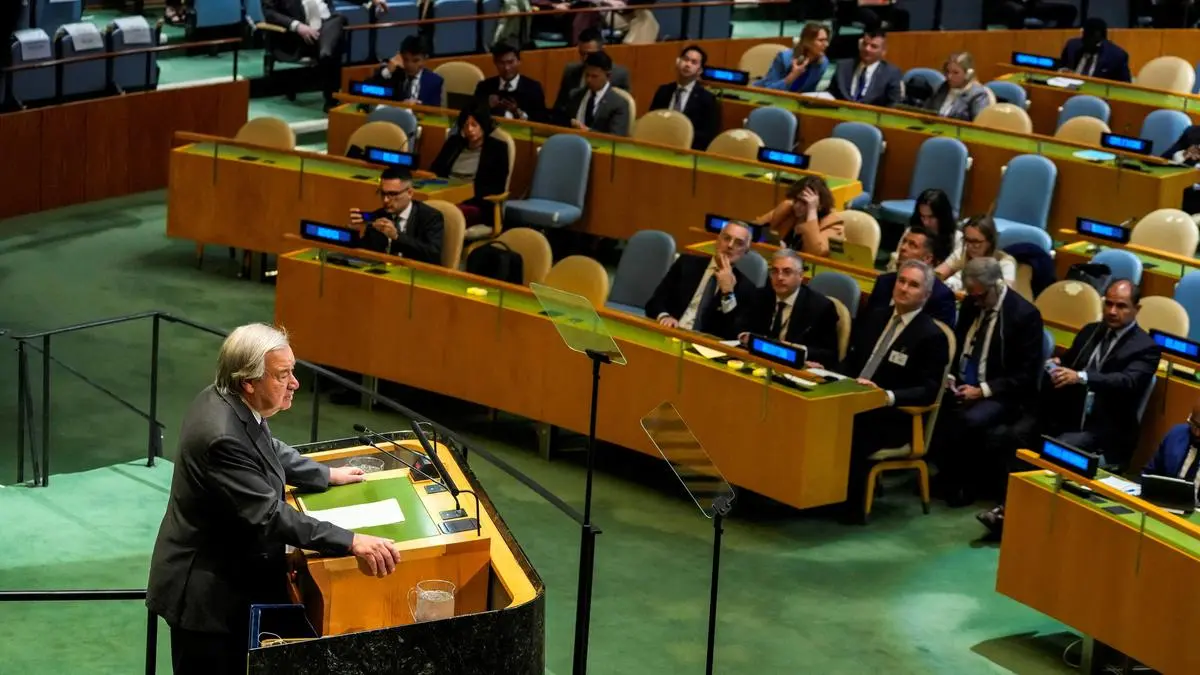
The diplomatic standoff between the United States and Iran at the United Nations review of the Treaty on the Non-Proliferation of Nuclear Weapons has introduced a new layer of uncertainty into global security and energy markets. The public confrontation over Tehran's nuclear program signals a hardening of positions that complicates the existing framework for regional stability. As the review process commences, the immediate impact is a heightened sensitivity toward supply chain security and the potential for renewed volatility in energy-sensitive sectors.
Escalating Diplomatic Friction and Regional Risk
The clash at the UN serves as a primary indicator that the diplomatic window for de-escalation is narrowing. For investors, this shift necessitates a reassessment of risk premiums associated with assets exposed to Middle Eastern operations. The rhetoric exchanged during the treaty review suggests that the status quo is increasingly fragile. When diplomatic channels fail to mitigate nuclear proliferation concerns, the secondary effects often manifest in the form of increased regional military posturing or the tightening of sanctions, both of which have historical precedents for disrupting energy flows.
This development is particularly relevant for firms with significant infrastructure or logistical dependencies in the region. The potential for a shift in regional financial oversight remains a critical concern for multinational entities operating under these conditions. As discussed in Security Operations and the Shift in Regional Financial Oversight, the intersection of geopolitical tension and corporate governance is becoming a primary driver of risk assessment for institutional capital.
Sectoral Read-Through and Energy Stability
The energy sector remains the most immediate vector for market reaction to these diplomatic developments. Any escalation in rhetoric or tangible policy shifts regarding Iran's nuclear program typically correlates with increased volatility in crude oil prices. The market is currently pricing in a baseline of geopolitical friction, but the transition from diplomatic posturing to active policy shifts could force a rapid re-rating of energy-dependent stocks.
Beyond energy, the defense and aerospace sectors often experience increased scrutiny as regional tensions rise. Companies with exposure to government contracts for security and surveillance technology may see shifts in demand as nations prioritize border and infrastructure protection. The broader stock market analysis suggests that while investors often look past short-term diplomatic spats, the structural nature of this specific dispute at the UN indicates a prolonged period of instability.
AlphaScala Data and Valuation Context
Market participants are currently balancing these macro risks against company-specific performance metrics. For instance, in the consumer cyclical space, Amer Sports, Inc. currently holds an Alpha Score of 47/100, reflecting a mixed outlook as the broader market navigates these geopolitical headwinds. Detailed performance metrics for the firm can be found on the AS stock page.
The next concrete marker for this narrative will be the conclusion of the UN treaty review sessions. Investors should monitor the final statements from the participating delegations, as these will define the parameters for potential future sanctions or diplomatic breakthroughs. Any formal shift in the treaty's enforcement mechanisms or a breakdown in communication between the US and Iranian representatives will serve as the next catalyst for volatility in energy and defense-linked equities.