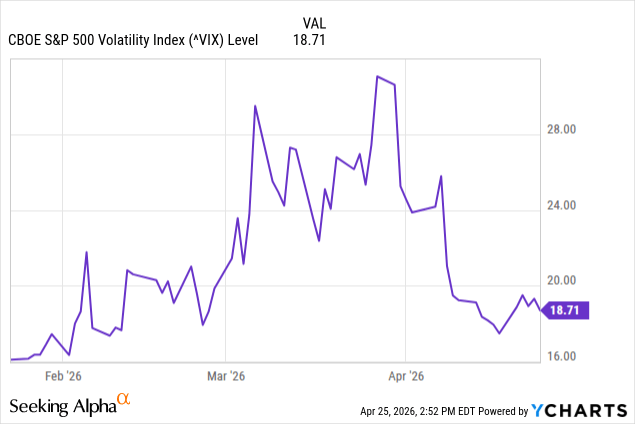
The S&P 500 has reclaimed its upward trajectory following a period of volatility triggered by the recent conflict involving Iran. The rapid recovery from a 9% drawdown suggests that market participants have largely priced in a de-escalation of regional hostilities. With the immediate geopolitical risk premium receding, the index is shifting its focus back to domestic economic indicators and corporate performance metrics.
Realigning with Earnings and Capital Expenditure
The narrative for the S&P 500 is now anchored by a combination of robust corporate earnings and sustained capital expenditure, particularly within the artificial intelligence sector. Companies are demonstrating an ability to maintain margins despite elevated interest rates, which has provided a floor for equity valuations. The current environment favors firms that can effectively deploy capital toward technological infrastructure, as this spending cycle remains a primary driver of index-level growth.
Investors are now evaluating whether the current valuation multiples are sustainable in the absence of further geopolitical shocks. The transition from a risk-off environment to one defined by fundamental growth suggests that the index is positioned to test previous resistance levels. If corporate guidance remains consistent with current expansionary trends, the path toward new highs appears supported by underlying cash flow generation rather than speculative sentiment.
Monetary Policy and the Neutral Rate Pivot
A critical component of the current market outlook is the expectation of a neutral Federal Reserve policy stance. The market is adjusting to a landscape where interest rates remain restrictive but stable, allowing businesses to plan for long-term investments with greater certainty. This stabilization is essential for maintaining the momentum seen in the broader stock market analysis over the last several weeks.
- Stabilization of regional geopolitical risks.
- Continuation of AI-driven capital expenditure cycles.
- Transition toward a neutral interest rate environment.
AlphaScala data currently reflects a nuanced view of the technology sector, which remains a significant weight within the S&P 500. For instance, ON Semiconductor Corporation holds an Alpha Score of 45/100, reflecting a mixed outlook as the broader sector navigates these shifting macro conditions. While individual components face varying degrees of competitive pressure, the aggregate index behavior suggests a return to fundamental valuation models.
The Next Marker for Index Stability
The next concrete indicator for the S&P 500 will be the upcoming round of quarterly earnings reports and the accompanying forward-looking guidance from index heavyweights. These filings will serve as the primary evidence for whether the current capital expenditure cycle is translating into tangible operational efficiency. Any deviation from the expected earnings trajectory will likely force a reassessment of the index's current valuation, particularly if inflation data begins to diverge from the Federal Reserve's target. Monitoring the divergence between sector-specific performance and aggregate index movement will be the primary task for the remainder of the quarter.