Genesis wants to move like a startup. Hyundai gives it the muscle to scale like an auto giant.
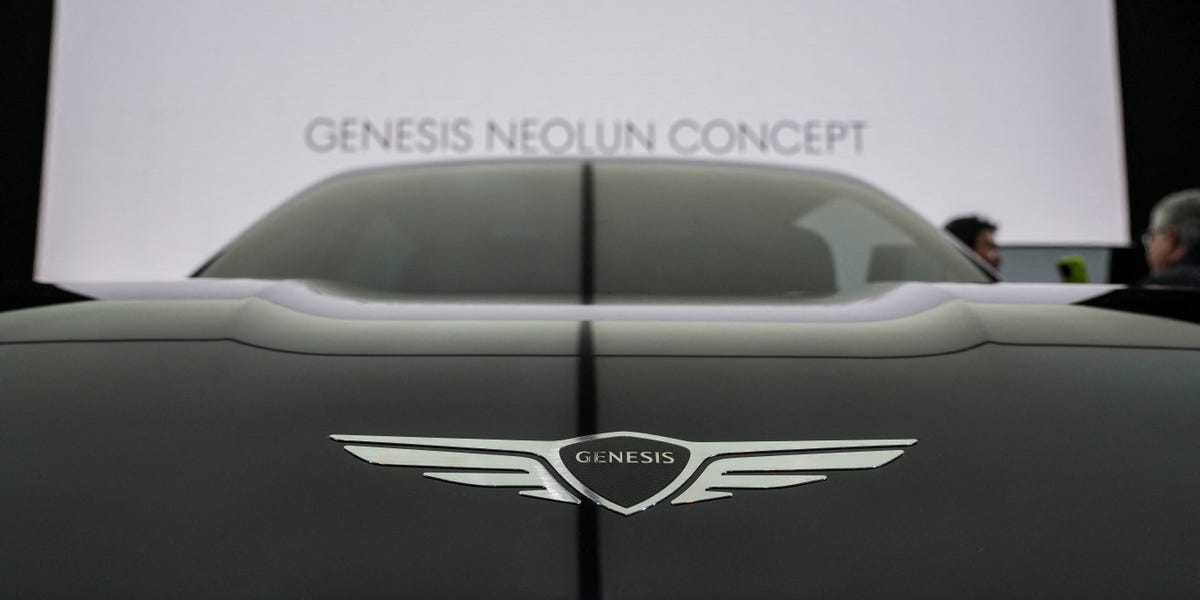
Genesis launched its first full-size SUV, the GV90, while its parent juggles startup ambition with the demands of a 4-million-vehicle production machine. The brand's COO describes the early years as a startup, backed by Hyundai's integrated manufacturing and logistics network.
Genesis unveiled its first full-size SUV, the GV90, on Wednesday. The brand sits inside Hyundai Motor Group, which has global production capacity of more than 4 million vehicles a year and owns Kia Corporation. The launch marks the latest step for a luxury offshoot that has grown from a 37-person team five years ago to roughly 200 employees today.
Ted Mengiste, an executive director of sales operations who joined Genesis in 2020, described the early years as "ground floor" work. His team had to build processes, go-to-market strategies, and the reports used to measure performance. "That's tough, but you find some bright minds that are eager to create something new – like a startup," Mengiste told Business Insider. "We were really a startup."
Genesis is not a startup. It draws on Hyundai's multibillion-dollar resources, including a dedicated design center in El Segundo, California, and a commitment to 22 new or "significantly enhanced" vehicles through 2030. Mengiste, who previously worked at Nissan, Infiniti, and Ford, said Hyundai's manufacturing network lets Genesis shift between models and powertrains faster than what he saw at other automakers. The brand also taps into the group's in-house advertising, engineering, and steel production. Its cars leave on ships owned by Hyundai's Glovis logistics arm. "When the cars are done, the ship is waiting right there – our ships," Mengiste said.
In 2025, Genesis sold a record 221,482 vehicles. Hyundai Motor Company sold 4.1 million over the same period. The luxury brand accounts for a small slice of the parent company's sales, but it has become an important part of Hyundai's push into higher-margin cars.
Yet the core business gets first call on capacity. Hyundai recently moved production of the GV70 SUV – Genesis' best-selling North American model – from Alabama back to South Korea. The shift came months after Genesis said it was "doubling down" on U.S. production. Mengiste said Hyundai's own growth in the United States tightened capacity at the Alabama plant, forcing the decision to free room for Hyundai-brand vehicles.
Uber COO Andrew Macdonald recently called that dynamic the "classic innovator's dilemma" – a massive core business can swallow the resources and management attention that newer ventures need. Mengiste acknowledged the tension. "The company will invest and maybe even be patient," he said of Hyundai. "At some point, you have to deliver. If you show signs of delivery and consistency, you get more investment, and you can then increase the speed of your growth."
The GV90 launch gives Genesis a full-size SUV to compete with the BMW X7 and Mercedes-Benz GLS. The brand's expansion into SUVs, EVs, and performance cars has broadened its lineup beyond the original sedans. A company spokesperson said Hyundai has increased support for Genesis as it has grown, pointing to investments in product development, design, manufacturing, and customer experience.
Drafted by a large language model from the source reporting linked above, then screened by automated publishing checks. It is not read by a journalist before publication. Some articles cite our Alpha Score. Verify prices and figures against the original source. Educational coverage, not personalized advice.