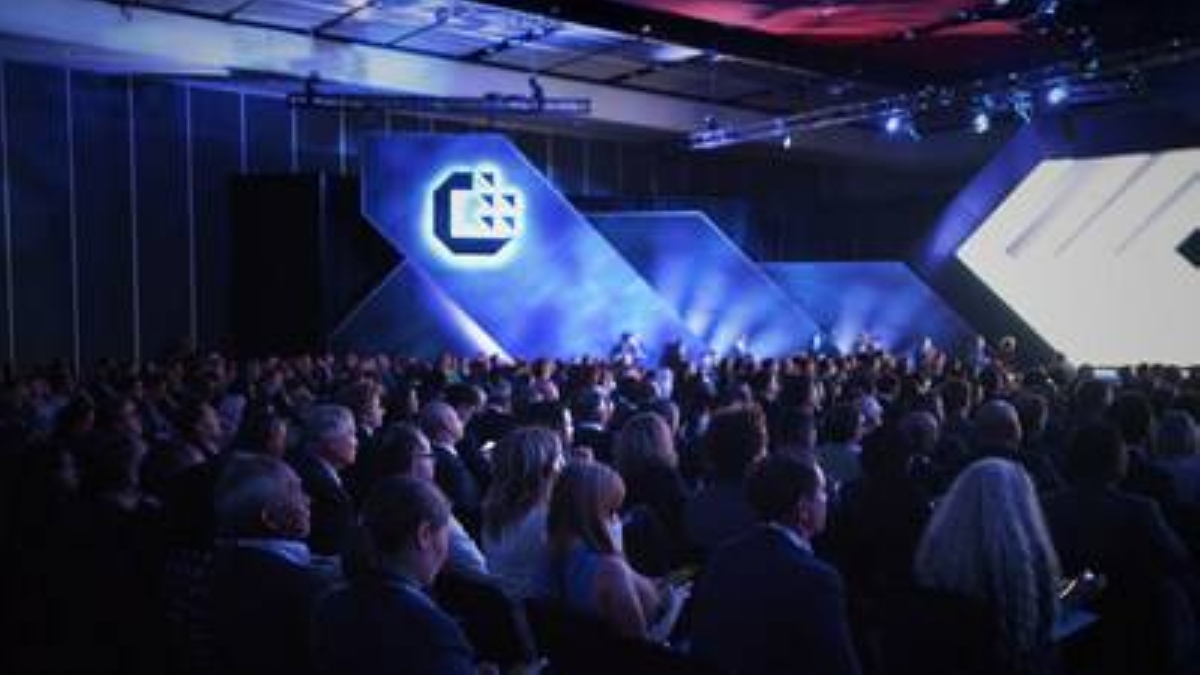
Gastech 2026, the world's largest gas and LNG conference, will convene in Bangkok next year. For traders holding Cheniere Energy (LNG) or watching the Japan-Korea Marker (JKM) , the event is a risk catalyst that will compress a year's worth of supply-demand signalling into a few days. The last edition in Milan facilitated over $60 billion in commercial agreements. The Bangkok edition, hosted by Thailand's Ministry of Energy and backed by national energy players EGAT, Gulf, and PTT, is explicitly designed to address the realities of fast-growing Asian economies and the infrastructure needed to support them.
The simple read is that a mega-conference in the heart of Asian demand is bullish for LNG. The better market read is that Gastech 2026 will test whether Asia's accelerating demand can absorb a wave of new supply, and whether the deals and policy signals that emerge can reset the outlook for natural gas prices, infrastructure investment, and equity valuations. For Cheniere Energy, which carries an Alpha Score of 66/100 (Moderate) on AlphaScala's proprietary scale, the event could be the catalyst that either confirms the structural demand thesis or exposes the bottlenecks that keep spot prices rangebound.
Bangkok as a Demand Signal Compressor
Gastech is not a talking shop. It is where long-term supply contracts are negotiated, where government-to-government energy diplomacy plays out in public, and where the capital allocation decisions that shape the next decade of LNG infrastructure are signalled. The 2026 edition arrives at a moment when the global gas market is wrestling with three overlapping pressures: supply disruption risk, rising Asian demand, and the need to build resilient grids that can handle electrification and AI-driven load growth.
Christopher Hudson, President of dmg events, framed the stakes directly:
"The global energy industry is operating in one of the most complex and pressured environments in recent history. Supply disruption, rising demand, affordability and infrastructure resilience have become defining priorities for governments and industry alike."
That complexity is what makes the conference a risk event. When thousands of decision-makers gather in one place, the market gets a concentrated dose of information that normally trickles out over quarters. A single ministerial speech on LNG import targets, a joint venture announcement between a producer and an Asian utility, or a shift in tone on long-term contract pricing can move the JKM and the equities tied to it.
For traders, the risk is not that the conference happens. It is that the market misprices the probability of a deal surge or a policy pivot before the first panel begins.
The Milan Precedent as a Baseline
The 2025 Milan edition set a high bar. More than $60 billion in commercial agreements and investment activity was facilitated, a figure that underscores how much capital allocation gets funnelled through this event. That number is not a forecast for Bangkok. It establishes the scale of what is possible. If the 2026 edition even approaches that level, it would represent a material injection of demand visibility for LNG producers and a potential re-rating for the equities that have been trading on uncertain Asian offtake.
AixEnergy: The AI Demand Wildcard
Gastech 2026 will also launch AixEnergy, a co-located conference and exhibition positioned at the intersection of artificial intelligence, electrification, and next-generation energy systems. The rapid buildout of AI data centres is creating a new and largely unmodelled source of baseload power demand. If AixEnergy produces concrete commitments from technology companies or utilities to secure dedicated gas-fired generation, it would add a demand layer that the current LNG forward curve is not fully pricing.
The $60 Billion Precedent and the AI Wildcard
The conference's location is the message. Thailand is not just a host; it is a microcosm of the Asian demand story. The country's national consortium partners – EGAT, Gulf, PTT, Ratch, EGCO, and the Energy Regulatory Commission (ERC) – represent the full value chain from generation to regulation. Their involvement signals that the discussions will move beyond aspirational targets and into the practical realities of grid integration, fuel procurement, and project finance.
Asia's LNG demand growth is the single most important variable for global gas balances. Most forecasters expect the region to absorb the majority of new liquefaction capacity coming online from the US, Qatar, and elsewhere. The risk is that demand growth disappoints because of slow infrastructure buildout, price-sensitive buyers switching to coal, or policy delays. Gastech 2026 will provide a real-time read on which of those scenarios is gaining traction.
The Infrastructure Bottleneck That Could Cap Upside
One of the conference's stated priorities is "accelerating infrastructure delivery." That language is not accidental. LNG import terminals, regasification capacity, and pipeline networks in emerging Asian markets are not keeping pace with the supply that producers want to ship. If the conference reveals that permitting, financing, or construction timelines are slipping in key markets like Vietnam, the Philippines, or India, the bullish supply-demand narrative weakens. Conversely, if new terminal projects are fast-tracked or if regional cooperation on pipeline sharing advances, the demand path becomes more credible.
Policy Signals: From Ambition to Implementation
The Gastech Strategic Conference will host ministers and CEOs across more than 200 sessions. The organisers have explicitly said the focus will be on moving "from long-term ambition towards implementation." For traders, that means watching for specific, near-term policy commitments: an updated LNG import target from a major buyer, a timeline for coal-to-gas switching in a large industrial economy, or a regulatory framework that enables long-term contract signing. General statements of support for natural gas are already priced in. Concrete, dated commitments are not.
Cheniere's Alpha Score and the Contract Visibility Trade
Cheniere Energy (LNG) , the largest US LNG exporter, is a direct beneficiary of any acceleration in Asian demand. The stock's Alpha Score of 66/100 (Moderate) on AlphaScala's platform reflects a balanced set of fundamental, technical, and sentiment signals. The score suggests the stock is not at an extreme, which means a catalyst like Gastech 2026 could tip the balance.
If the conference produces a flurry of long-term supply agreements with Asian buyers, Cheniere's contracted revenue backlog becomes more visible and more valuable. The market tends to reward LNG producers when they can demonstrate that their offtake is locked in with creditworthy counterparties, reducing exposure to spot price volatility. A series of deal announcements from Bangkok would do exactly that.
The Shipping Rate Link: A Secondary Trade
LNG shipping rates are a leveraged play on the same theme. When Asian demand pulls cargoes east, tonne-mile demand rises and spot charter rates can spike. The tanker market, including LNG carriers, is already on traders' radar after recent earnings calls. The TK Q1 Call highlighted rate setup dynamics for tankers, and Gastech 2026 could provide the demand-side catalyst that tightens the LNG shipping market further. A surge in long-haul volumes from the US Gulf Coast to Asia would directly benefit shipowners.
What the $60 Billion Milan Number Really Means
The $60 billion figure from Milan is not just a headline. It represents the aggregate value of contracts, memoranda of understanding, and investment commitments that were either signed or advanced at the event. For context, that is roughly equivalent to the market capitalisation of several mid-cap LNG producers combined. While not every dollar of that total translates into immediate revenue, the number signals the depth of the commercial pipeline that gets activated at Gastech. A similar or larger number in Bangkok would confirm that the industry's capital cycle is accelerating.
Assets on the Wire: LNG, Shipping, and JKM
Gastech 2026 does not yet have publicly confirmed dates. The event typically takes place in the second half of the year. The speaker roster already includes ministers, CEOs, and investors from across the energy value chain. The conference's 54th edition will feature more than 1,000 speakers and 200 sessions, making it a continuous news-flow generator over several days.
Traders should mark the following assets and instruments as exposed to the event risk:
- Cheniere Energy (LNG) and other US LNG exporters with significant Asian contract exposure.
- JKM futures and TTF-JKM spreads, which will reflect any shift in Asian premium.
- LNG shipping equities and spot charter rate indices.
- Asian utility stocks that are large LNG buyers, particularly in Japan, Korea, and Thailand.
- US natural gas futures (Henry Hub) , which can move on expectations of export demand.
The timeline risk is that positioning builds ahead of the event, only to unwind if the headlines fail to meet elevated expectations. The last edition's $60 billion deal tally sets a high bar, and the market may be pricing in a repeat before any ink is dry.
Scenarios That Deflate the LNG Trade
Not every Gastech edition produces a bullish outcome. Several scenarios would reduce the event's positive impact and could weigh on LNG-exposed positions:
- Deal flow disappoints. If the commercial agreements announced in Bangkok fall well short of the Milan total, the market may question whether Asian demand growth is as robust as forecast.
- Infrastructure timelines slip. If the conference reveals that key import terminals are facing delays or cost overruns, the near-term demand picture weakens.
- Policy rhetoric stays vague. If ministers and CEOs speak in generalities without committing to specific targets or timelines, the implementation gap remains and the market has nothing new to price.
- AI power demand fails to materialise as a near-term driver. If AixEnergy produces more hype than substance, the incremental demand thesis from data centres loses credibility.
In any of these scenarios, the risk is that the LNG complex gives back the premium that built up in anticipation of the event. Cheniere's Alpha Score of 66 suggests the stock is not overextended. A disappointment could still push it toward the lower end of its recent range.
Scenarios That Supercharge the Repricing
The flip side is that Gastech 2026 could produce a cluster of positive signals that force a rapid repricing of the entire LNG value chain:
- A wave of long-term SPAs (Sale and Purchase Agreements). If Asian buyers commit to 10-20 year contracts with US or Middle Eastern producers, it locks in demand visibility and de-risks the project pipeline.
- A concrete coal-to-gas switching roadmap. If a major economy like India or Indonesia announces a timeline and financing mechanism for displacing coal with gas in power generation, it opens a demand segment that the market currently treats as optional.
- Regional infrastructure cooperation. If Southeast Asian nations agree on shared pipeline or terminal infrastructure, it lowers the cost and risk of importing LNG for smaller markets.
- AI data centre offtake agreements. If technology companies sign direct gas supply deals for behind-the-meter generation, it creates a new and price-insensitive demand source.
For traders holding Cheniere Energy or watching the JKM curve, the practical decision is not whether to attend the conference. It is whether to size positions before the headlines start crossing the tape. The Alpha Score of 66 says the stock is in equilibrium. Gastech 2026 is the kind of event that breaks equilibriums.