France's economy grew 0.2% in the second quarter, rebounding from a 0.1% contraction in the first three months of the year, statistics agency Insee said Thursday. The reading matched the median estimate of analysts surveyed by Bloomberg.
The return to growth means the euro zone's second-largest economy avoided a recession. Consumer spending rose 0.2% after a 0.3% fall in the first quarter. Exports rebounded, and trade made a positive contribution to GDP. Investment shrank for a second consecutive quarter, declining 0.3%.
The data came as other euro zone countries, including Germany and Italy, prepared to release GDP figures. The region as a whole is expected to report expansion of 0.2% for the second quarter after avoiding a contraction in the first.
Oil price surges have driven up inflation and weighed on household budgets. Europe has largely weathered the fallout from the conflict in the Middle East.
The European Central Bank held interest rates steady at its July meeting. It warned of upside risks to inflation and downside risks to growth. Some officials are inclined to add to June's rate hike, and investors anticipate another move in September.
French consumer spending rose 0.4% in June from the previous month, Insee said in a separate report. That contrasted with the 0.1% contraction economists had forecast.
The French government has cut its growth forecast for this year and acknowledged that the goal of narrowing the fiscal deficit has become "difficult." A fractured parliament must now negotiate a budget. The process has toppled governments in recent years and is now more precarious as parties maneuver before presidential elections next spring.
Inflation data due Friday is expected to show consumer price gains accelerated slightly from June's 2.8%. Slovak central bank Governor Peter Kazimir said this week that the ECB will have to raise borrowing costs at least once more to ensure inflation risks don't spin out of control. The full effect of the initial energy shock has yet to play out, the ECB said.
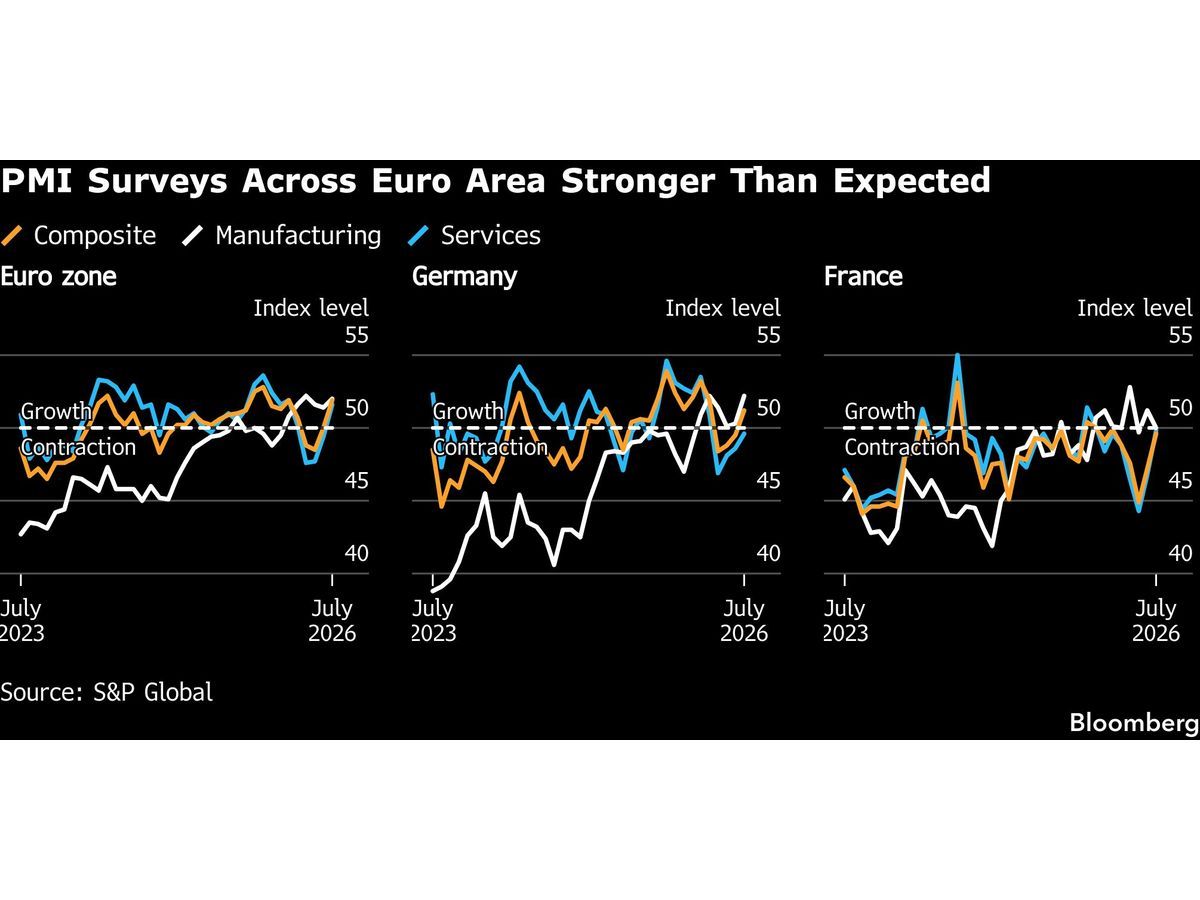
Recent indicators point to further improvement. Businesses proved more optimistic than anticipated in Germany and France in July, according to survey data.