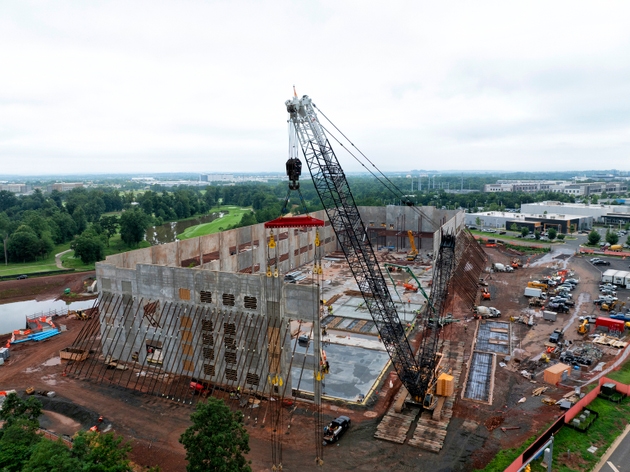
A cluster of industrial and transportation stocks pushed to 52-week highs on Wednesday, driven by investor rotation into companies tied to AI infrastructure spending and early signs of freight recovery. Dycom Industries (DY), Vicor (VICR), Shoals Technologies (SHLS), and Luxfer (LXFR) each touched new highs during the session. The move reflects a market narrative that data center construction, fiber deployment, power management, and lightweight materials are seeing real demand from the AI build-out. A separate tailwind came from logistics data suggesting the freight cycle may be turning.
Why AI Infrastructure Is Driving These New Highs
The mechanism is straightforward: AI models require massive data centers, which need fiber connectivity, high-efficiency power delivery, and physical infrastructure. Dycom installs fiber and broadband for telecom and data center clients. Vicor makes modular power converters used in server racks and cloud computing. Shoals Technologies provides electrical balance-of-systems for solar and energy storage, which increasingly support backup power for data centers. Luxfer supplies lightweight magnesium alloys used in drones, satellites, and aerospace parts tied to AI-related transport.
What changed this week was a convergence of signals. Earnings reports from several tech firms reiterated heavy capital expenditure plans for AI. Logistics indicators such as freight volumes and truck utilization ticked higher, suggesting the broader industrial economy may be gaining momentum. That combination lifted stocks that sit at the intersection of AI and cyclical recovery.
Dycom, Vicor, Shoals, Luxfer: The Affected Assets
Dycom (DY) is a direct play on fiber-to-the-home and data center connectivity. Its 52-week high signals that the market expects a steady pipeline of fiber deployment contracts driven by AI network demands. Vicor (VICR) powers high-performance computing; its stock moves on any indication that data center operators are upgrading power architectures. Shoals (SHLS) focuses on solar infrastructure, analysts have begun linking its equipment to data center backup power systems, broadening its addressable market. Luxfer (LXFR) produces advanced materials used in aerospace and defense; its 52-week high reflects optimism about AI-related drone and satellite programs.
What Confirms or Weakens the Setup
For these stocks to hold their highs, the next catalyst is Q3 capital expenditure announcements from major cloud providers. If Amazon, Microsoft, or Google confirm or raise their data center spending guidance, the trade gains momentum. A slowdown in U.S. broadband grants or a freight pullback could break the rotation. Dycom's revenue visibility depends on government infrastructure spending; Vicor and Shoals rely on corporate IT budgets. Luxfer faces direction from military aerospace procurement.
Investors should also watch inventory levels across fiber and power equipment distributors. A buildup would suggest demand is front-loaded; a drawdown supports a sustained cycle.
The Decision Point This Story Creates
The 52-week highs across these four names are not random. They reflect a thematic shift from pure-play AI hardware (chips, servers) to the supporting infrastructure that enables that hardware to operate. The risk is that the market has priced in too much growth too quickly. The reward is exposure to a structural demand wave that transcends a single quarter.
For traders building a watchlist, the question is whether the freight recovery signal is real. If it is, these stocks could see multiple expansion. If it fades, the AI infrastructure thesis will be tested on its own merits. The best signal to watch is the next round of data center lease announcements and fiber contract awards – both are leading indicators for the group.
For broader context on the AI trade, see our stock market analysis and the NVIDIA profile for how chip demand feeds into infrastructure plays.