Forex Markets
Live forex rates, analysis, and trading insights for major and cross pairs

Yen slides on Japan tax-cut plan; KOSDAQ triggers curb again
Yen slides to 157.70 as Japan's ruling party backs food tax cut; KOSDAQ curb activated for third straight session on KRW 354 bln institutional buying.
Australian Household Spending Beats Forecasts by Four Times in June
June household spending rose 0.8% against a 0.2% consensus forecast, the second straight upside surprise. Discretionary categories led the gain, reinforcing the case for further RBA tightening.
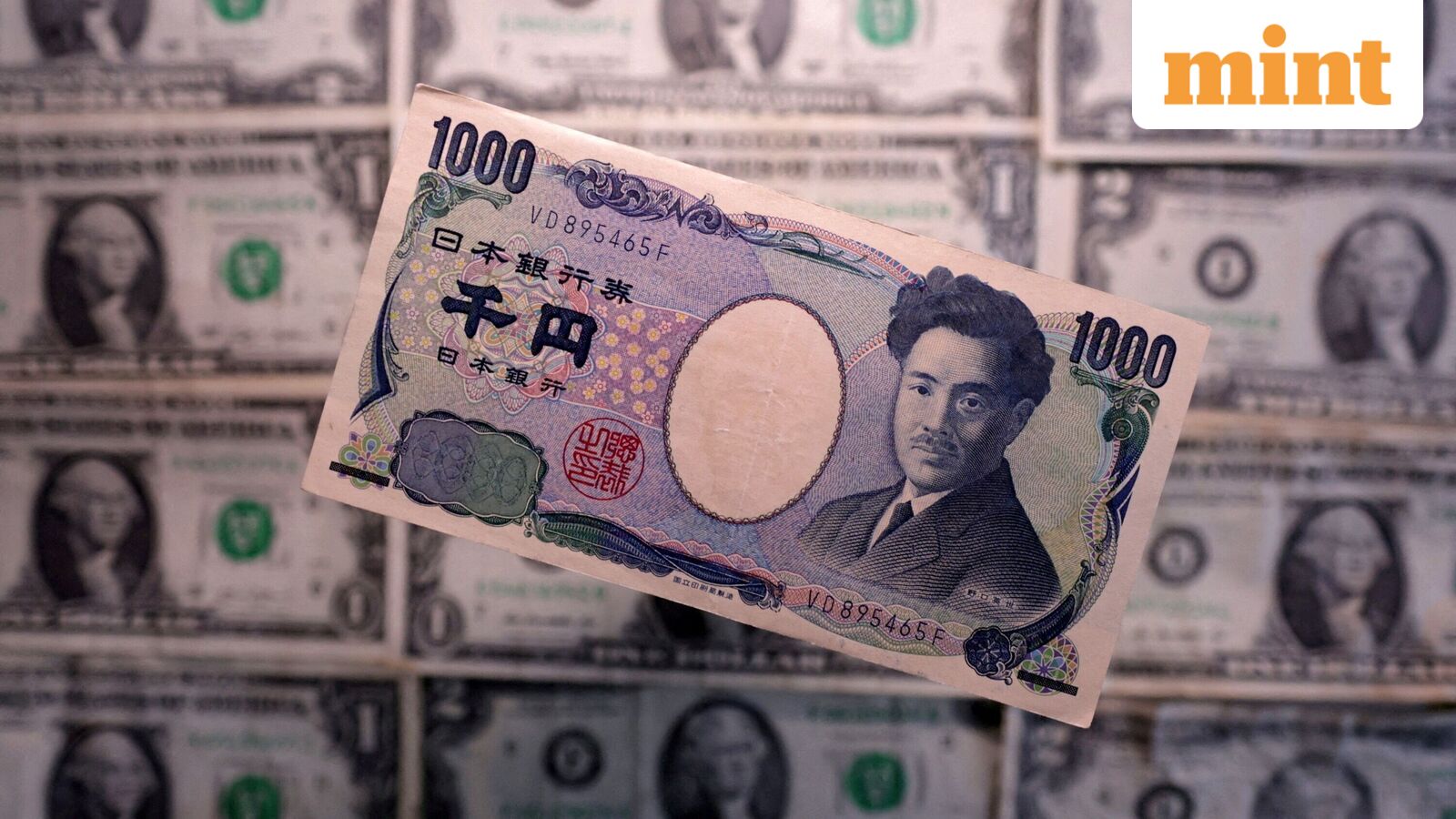
Plaza Accord déjà vu: is Japan's economic policy autonomy being cramped?
The US-Japan yen intervention echoes the 1985 Plaza Accord, raising questions about Japan's policy autonomy and the risk of Treasury liquidation.
South Korea Core Inflation Hits 2-1/2 Year High, BOK in Focus
Underlying price pressures build as core CPI hits fastest pace since Dec 2023, keeping the Bank of Korea on a tightening path despite softer headline inflation.
WTI, Brent Oil Dive as Trump Calls Off Iran Strikes, Strait Talks Advance
WTI oil dives 4.8% after Trump cancels strikes on Iran, as Tehran negotiates a Strait of Hormuz reopening. Brent slides below its 50-day moving average.
HSBC tops FCNR(B) deposit drive; ICICI leads private banks
Private banks raised $10.73 billion in FCNR(B) deposits under the RBI's dollar-rupee swap window, beating PSBs' $8.84 billion. HSBC led all lenders with $6.14 billion.
AMD, Intel, Nvidia: AI Profit Fears Hit Chip Stocks
The natural gas market has been choppy in early Monday trading, with traders looking to see if any momentum can return to this market.
Construction Spending Slips 0.1% in June, Prior Month Revised Lower
Construction spending slipped 0.1% in June, missing forecasts, and the prior month was revised down to flat, raising questions about sector momentum.

How capital gains on foreign shares are taxed for returning Indians
Returning residents must compute capital gains in USD, then convert to INR at SBI TT rate. No relief for rupee depreciation. LTCG taxed at 12.5% plus surcharge.

US-Japan Yen Intervention Sends Dollar to Multi-Month Low
The dollar posted its worst monthly performance since April after the US joined Japan in coordinated yen intervention, with $54 billion spent on the first day alone.
Oil Slides 6% After Iran Denies Strait of Hormuz Deal
WTI crude fell 6% to $79.56 after Iran refuted Trump's claim of an imminent deal. Bond yields dropped, dollar steadied, equities rose 1%.
Brent Retreats from $100 as Saudi Coalition Offer Eases Supply Risk
Saudi Arabia's maritime coalition proposal sent Brent crude below $100 as tanker traffic resumed. The technical setup shows a neutral RSI with support at $86.80 and resistance at $94.60.
Eurozone PMI at 3-Month High, Demand Still Lags Output
The final Eurozone PMI came in at 51.9, with output at 52.9, a 52-month high. The open question is whether new orders can replace backlog-driven growth.
Warsh's Silence Squeeze: Yen, Oil, and the NFP Countdown
Warsh's silence on the reaction function steepened the curve and weakened the dollar. Yen intervention, oil's 8% drop on Iran talks, and the ISM data set up Friday's NFP.
Oil Tumbles Below $84 as US-Iran Talks Resume
Brent crude falls $6 after Trump confirms Iran talks resume Monday. Euro area CPI edges higher, dollar weakens, and Japan intervenes on yen for first time in 30 years.
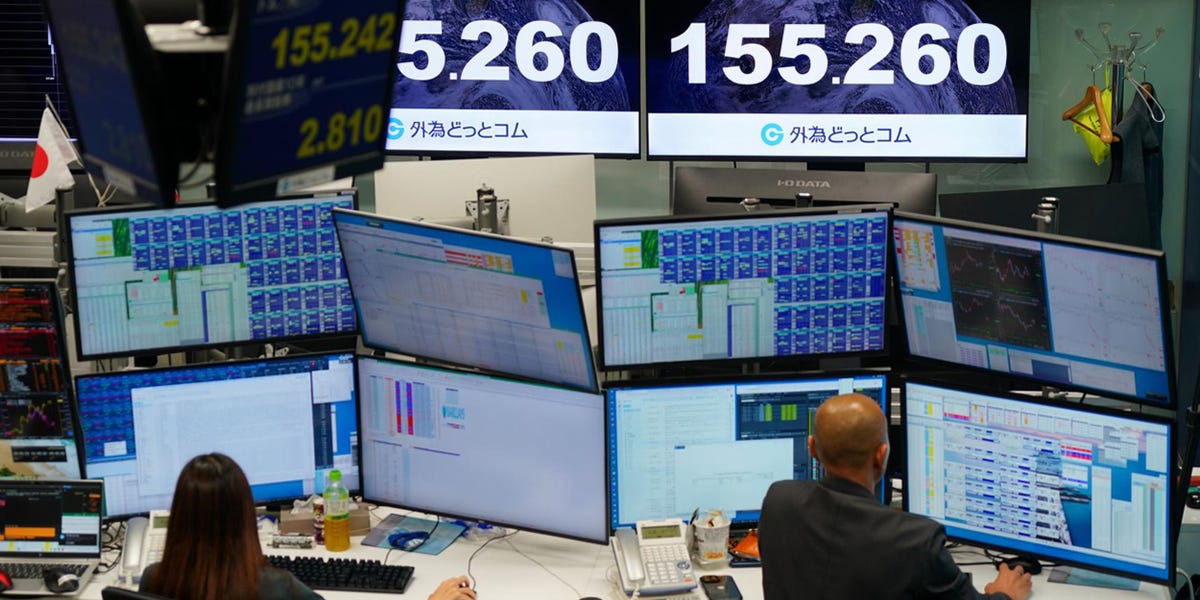
The yen carry trade is the one to watch after US-Japan intervention
US-Japan yen intervention puts the carry trade in focus. BofA sees a BOJ hike in October; MUFG says fundamentals must change for a durable move.
Oil Falls as US-Iran Resume Ceasefire Talks After Earlier Collapse
The US and Iran are back at the negotiating table, sending oil lower. The same red lines on enrichment remain. Shiptraffic data shows limited improvement through the Strait.
Oil Slumps 5% on Trump's Iran Claims; Yen Jumps on Joint Intervention
Oil slid nearly 5% after Trump claimed a Hormuz deal. The yen surged as the US and Japan confirmed joint intervention. China's factory PMI missed forecasts.
US, Japan Buy Yen in First Joint Intervention Since 1998
The US Treasury and Japan's MOF bought yen together for the first time since 1998, with Bessent saying the Trump administration will not hesitate to repeat the intervention.
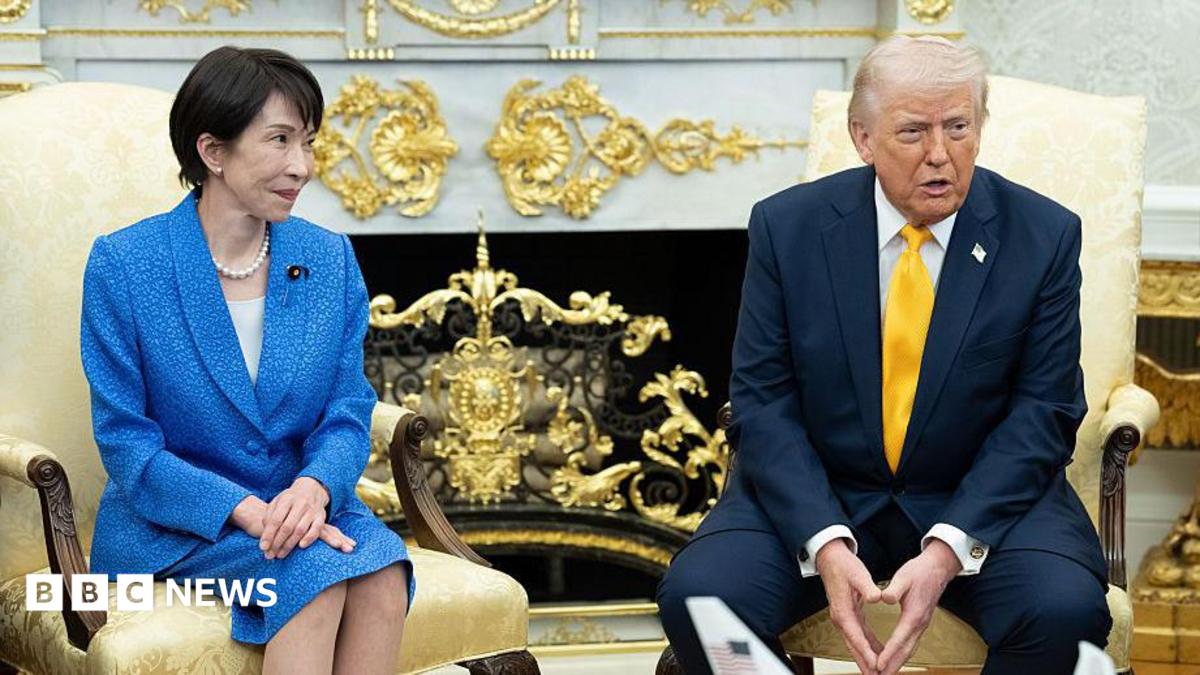
US, Japan Intervene Together to Halt Yen's Slide to 40-Year Low
First joint US-Japan yen intervention since 2011 confirmed; dollar dropped to 157.07 yen from a 40-year high of 164. More coordinated action is possible.
What is a pip in forex trading?
A pip is the smallest price move a currency pair can make in the forex market. The word stands for "percentage in point" or "price interest point." For most major pairs like EUR/USD or GBP/USD, one pip equals 0.0001 of the quoted price. For pairs involving the Japanese yen, one pip equals 0.01. That tiny tick is the building block for every profit, loss, spread, and position size calculation in forex trading. Why pips matter. They give traders a standard way to measure price movement and risk. Instead of saying "the euro rose 15 points," a trader says "EUR/USD moved 15 pips." Brokers quote spreads in pips. Stop losses and take profits are set in pips. The whole business of forex risk management starts with understanding what one pip is worth in your account currency. **The pip value formula** To know how much money a pip move gains or loses, you need the pip value. The formula depends on the pair and your lot size. Pip value = (one pip / exchange rate) * lot size One pip is 0.0001 for most pairs, 0.01 for yen pairs. The exchange rate is the current market price. Lot size is the number of units of base currency you are trading. A standard lot is 100,000 units. A mini lot is 10,000. A micro lot is 1,000. **Worked example: EUR/USD** Say EUR/USD trades at 1.1050. You buy one standard lot (100,000 euros). One pip is 0.0001. Pip value = (0.0001 / 1.1050) * 100,000 0.0001 divided by 1.1050 equals roughly 0.0000905. Multiply by 100,000 gives 9.05. So one pip is worth about $9.05 when the quote currency is USD. If the price moves from 1.1050 to 1.1060, that is a 10 pip gain. Your profit is 10 * $9.05 = $90.50. If the price drops 10 pips, you lose $90.50. **Worked example: USD/JPY** USD/JPY trades at 150.20. One pip is 0.01. You buy one standard lot (100,000 dollars). Pip value = (0.01 / 150.20) * 100,000 0.01 divided by 150.20 equals about 0.0000666. Multiply by 100,000 gives 6.66. So one pip is worth roughly 6.66 yen. To convert to dollars, divide by the exchange rate: 6.66 / 150.20 = about $0.044 per pip. That is a tiny value per pip because the yen is a low-value currency. Most traders use a pip value calculator or broker platform to avoid the math. **How pips relate to spread** The spread is the difference between the bid price and the ask price. Brokers quote it in pips. If EUR/USD has a bid of 1.1050 and an ask of 1.1052, the spread is 2 pips. That is the cost of opening a trade. A wider spread means you start with a small loss before the price moves in your favor. **Leverage and pip risk** Leverage multiplies the pip value. If you trade with 50:1 leverage, a $1,000 margin controls $50,000 notional. A 10 pip move on a standard lot is still $90.50, but your margin is only $1,000. That same 10 pip move represents a 9% gain or loss on your margin. A 100 pip adverse move wipes out the entire margin. This is why beginners often lose money fast. They see a small pip move and think it is harmless. But with leverage, a 20 pip loss can be 20% of their account. Always calculate pip value in your account currency before entering a trade. Know how many pips you can lose before hitting your maximum acceptable loss. **Checklist for using pips in your trading** 1. Identify the pair and its pip decimal. Most pairs: 0.0001. Yen pairs: 0.01. Some brokers quote fractional pips (fifth decimal) but the standard pip is the fourth or second. 2. Find the current exchange rate. Use your platform or a live feed. 3. Decide your lot size. Standard, mini, or micro. 4. Calculate pip value using the formula or a calculator. Many brokers show pip value in the trade ticket. 5. Set your stop loss in pips. Multiply stop loss pips by pip value to get dollar risk. That number should be a small percentage of your account. 6. Check the spread. A 1 pip spread is tight. A 3 pip spread is normal for some pairs. Anything above 5 pips on a major pair is expensive and eats into short term trades. **Common beginner mistakes** Confusing pips with points. Some platforms show a "point" as the fifth decimal. That is a fractional pip, not a standard pip. Always check your broker's definition. Ignoring pip value when trading cross pairs. For GBP/JPY or EUR/GBP, the pip value depends on the quote currency. If your account is in USD, you need to convert. A pip on GBP/JPY is worth a different amount than a pip on EUR/USD. Overlooking the spread as a cost. If you scalp for 5 pips but the spread is 3 pips, you only net 2 pips. That changes the risk reward ratio. **Risk note** Forex trading involves substantial risk of loss. Leverage can amplify gains but also losses. A small pip move can trigger a margin call if you are overleveraged. Never risk more than you can afford to lose. Use stop losses on every trade. Understand pip value before you trade real money. Pips are the language of forex. Learn to speak it fluently. Calculate pip value for every trade. Know your risk in dollars, not just in pips. That single habit separates disciplined traders from gamblers.
Best time to trade EUR/USD?
The best time to trade EUR/USD is during the overlap of the London and New York sessions, roughly 1:00 p.m. to 5:00 p.m. GMT (8:00 a.m. to 12:00 p.m. ET). This window produces the highest volume, tightest spreads, and most sustained movement. Outside those hours, liquidity thins and slippage rises. Session overlaps matter because two major financial centers are open at once. Banks, hedge funds, and corporates in Europe and the U.S. transact simultaneously. That concentration of orders creates deeper order books, which means less price distortion when a trade hits the market. Spreads on EUR/USD, which is already the most liquid pair, narrow to 0.3–0.5 pips during this overlap. Outside it, spreads widen to 0.8–1.5 pips, sometimes more on data days. Tokyo and Sydney sessions offer movement too, but it tends to be thinner and more erratic. The Asian session (midnight to 9:00 a.m. GMT) is dominated by Japanese and Australian flows. Eurozone news does not drop until 7:00 a.m. GMT or later, so EUR/USD often sits range-bound. The London session alone (8:00 a.m. to 4:00 p.m. GMT) is active, but the real velocity comes when New York joins at 1:00 p.m. GMT. That is when U.S. economic data (nonfarm payrolls, CPI, retail sales) hits the tape, and the two largest currency markets react to the same print simultaneously. There is one exception to the overlap rule. High-impact data releases can spike volume regardless of the hour. A Federal Reserve rate decision at 2:00 p.m. ET or a European Central Bank statement at 1:45 p.m. CET will move EUR/USD hard whether or not the sessions line up perfectly. The increased volatility, however, comes with wider initial spreads and potential slippage. Traders who enter on those prints should expect the first few seconds to be messy. Beginners often ask whether the session matters more than the day of the week. The answer is yes on average. Tuesday through Thursday during the London-New York overlap are the most predictable. Monday mornings are slower because markets are positioning after the weekend. Friday afternoons are unpredictable because traders close positions ahead of the weekend, and liquidity evaporates after 5:00 p.m. GMT when New York winds down. Friday's London-New York overlap is still active, but momentum can reverse sharply into the close. A practical routine for a retail trader with a 9-to-5 job in the Americas: trade the first two hours of the London-New York overlap (1:00 p.m. to 3:00 p.m. GMT). That period captures the initial reaction to U.S. data and the most liquid part of the European close. A trader in Europe gets a longer window: 8:00 a.m. GMT for London open, then the overlap from 1:00 p.m. to 4:00 p.m. GMT. A trader in Asia trades against lower liquidity and wider spreads, but can focus on the London open (8:00 a.m. GMT), which falls in the late afternoon for Asian time zones. Risk context: tighter spreads do not equal lower risk. The London-New York overlap can see breakouts of 50 to 100 pips in minutes after a U.S. data print. Stop-loss orders placed too close to entry get hit. Position size should account for the expected range of the session, not the spread width. A 0.3 pip spread on a 5 lot trade means a $1.50 transaction cost per side. A 50 pip stop means $500 of risk per trade. The spread is noise; the stop distance matters. One more point about news. The best time to trade EUR/USD is also the time when news releases are concentrated. U.S. economic data drops at 8:30 a.m. ET, 10:00 a.m. ET, and 2:00 p.m. ET. That means the overlap from 8:00 a.m. to 12:00 p.m. ET is packed with scheduled catalysts. Trading without checking the calendar is a easy way to get caught in a spike that was entirely foreseeable. Check the economic calendar before every session for high-impact events. Worked example: A trader based in New York wants to scalp EUR/USD on a nonfarm payrolls Friday. The report is at 8:30 a.m. ET, which is 1:30 p.m. GMT. London is open, New York opens at the same moment. The trader sets a limit order 10 pips above the pre-release price with a stop 15 pips below, targeting a 25 pip move. Volume spikes from 30,000 contracts per minute to 150,000 in the first minute. The trade fills within 0.2 seconds. That is the overlap working as designed. Same trade attempted at 5:00 a.m. ET (10:00 a.m. GMT, London only) would see thinner fills and wider spreads. Summed up: the best time is 1:00 p.m. to 5:00 p.m. GMT (8:00 a.m. to 12:00 p.m. ET). Trade those hours for liquidity. Trade news spikes with caution. Avoid Monday opens and Friday closes unless position management is part of the plan. Trading EUR/USD carries risk. Leverage magnifies both gains and losses. Spread betting and CFD products carry additional costs. No session guarantees profit. Risk only what you can afford to lose.
How do central banks affect forex markets?
Central banks shape forex markets mainly through interest rate decisions, open market operations, and occasionally direct intervention. The core mechanism is simple: higher interest rates attract foreign capital, which lifts the currency. Lower rates push capital out, weakening the exchange rate. But the actual effect depends on expectations, timing, and what other central banks are doing. ## The Interest Rate Channel A central bank sets a benchmark rate. Say the Federal Reserve raises the federal funds rate by 25 basis points to 5.5%. Foreign investors see higher yields on U.S. bonds and Treasury bills. They buy dollars to invest, driving the dollar up against other currencies. But markets are forward looking. The move matters most if it surprises traders. If the Fed raises by 25 bps and the market expected 50 bps, the dollar might fall because the hike was smaller than anticipated. The actual number matters less than the gap between expectations and reality. ## Rate Differentials and Carry Trades Forex traders do not look at one central bank in isolation. They compare rates across countries. If the Reserve Bank of Australia pays 4.5% and the Bank of Japan pays 0.25%, the interest rate differential is 4.25 percentage points. Traders borrow yen cheap, buy Australian dollars, and earn the spread. That is a carry trade. Central banks widen or narrow these differentials with each policy move. A rate hike by one bank while another holds steady widens the gap. The currency with the higher rate tends to strengthen. When the differential shrinks, the carry trade unwinds and the higher yielding currency falls. ## Forward Guidance and Market Expectations Central banks signal future moves through statements, press conferences, and meeting minutes. These signals can move currencies before any actual rate change hits the wires. Take the European Central Bank. If its president says inflation is proving persistent, traders price in a rate hike three months out. The euro rises immediately, even though the rate change has not happened. This is forward guidance at work. The reverse also happens. If a central bank signals it will cut rates next quarter, the currency weakens in anticipation. Markets often front run the decision by weeks or months. ## Open Market Operations and Quantitative Tightening Beyond rate decisions, central banks influence exchange rates through asset purchases and sales. Quantitative easing means a central bank buys government bonds with newly created money. That increases the money supply, which tends to weaken the currency. Quantitative tightening is the opposite. The central bank sells assets or lets bonds mature without reinvesting. That removes money from the system and often supports the currency. These effects are less direct than rate moves but can be powerful over months. The Bank of Japan's large-scale bond buying kept the yen weak for years, even while other central banks raised rates. ## Direct Currency Intervention Sometimes a central bank enters the forex market directly. It sells its own currency to buy foreign reserves, pushing the exchange rate lower. Or it sells reserves to buy its own currency, pushing the rate higher. This is rare for major currencies like the dollar or euro. The Federal Reserve has not intervened directly since 2000. But smaller economies do it more often. The Bank of Japan intervened repeatedly in 2022 and 2023 to support a falling yen. It sold dollar reserves and bought yen in large amounts. The effect was temporary, lasting hours or days, unless the intervention was sustained or coordinated with other central banks. Direct intervention works best as a shock to slow momentum. It rarely reverses a long term trend without changes in the underlying rate differential or economic outlook. ## Political Independence and Credibility Markets trust central banks that act independently of political pressure. A central bank with strong credibility can move markets with words alone. A bank viewed as politically influenced gets less respect. Turkey's central bank under President Erdogan pressured rates lower despite high inflation. The lira collapsed against major currencies for years. The institutional weakness of the bank became part of the currency's valuation. Credibility is earned over decades. It amplifies every rate decision and every public statement. ## Interaction with Inflation Data Central banks target inflation, usually around 2%. When inflation runs above target, markets expect tighter policy. That expectation lifts the currency. When inflation falls below target, markets price in cuts, and the currency weakens. Real world example: In July 2024, the Bank of Canada cut rates after inflation fell to 2.7%. The Canadian dollar weakened against the U.S. dollar on the announcement because traders expected further cuts. The rate differential with the Fed widened, and the carry trade shifted against the loonie. ## Trading Risks Central bank policy can move forex markets sharply and fast. A single surprise decision may swing a currency pair 2% or more in minutes. Stop losses get triggered. Margin calls happen. Leverage amplifies these moves. A trader using 50:1 leverage on EUR/USD can lose their entire position on a 2% adverse move. That is a real risk, not theoretical. Trading based on central bank expectations requires discipline. Do not bet a large position on a single data point or statement. Use stop losses. Keep position sizes small enough that one wrong call does not blow up the account. ## Practical Checklist for Central Bank Events Check these before trading around a rate decision or press conference: 1. Check the consensus forecast. What rate change does the market expect? 2. Read the previous statement. What language did the bank use last time? 3. Look at the rate differential. How does this bank's rate compare to others? 4. Set stop losses wider than normal. Currency pairs often whip back and forth during central bank releases. 5. Reduce position size. A 50% smaller position means half the stress. 6. Wait for the first spike to settle. Do not jump in the second the number hits the wire. 7. Watch the governor's press conference if available. The tone matters more than the initial rate move.
What is a carry trade in forex?
A carry trade in forex is a strategy that aims to profit from the difference in interest rates between two currencies. A trader borrows money in a currency with a low interest rate (the funding currency) and uses it to buy a currency that pays a higher interest rate (the target currency). The profit, known as the carry, comes from the net interest earned each day the position is held, provided the exchange rate does not move against the trade by more than that interest gain. This daily credit or debit is applied through a swap or rollover mechanism built into most forex broker platforms. While the mechanics are straightforward, carry trades carry substantial risk because adverse currency movements can quickly wipe out months of interest earnings and lead to large capital losses, especially when leverage is used. How a Carry Trade Works Every currency has an overnight interest rate set by its central bank. When a trader goes long one currency and short another, they effectively borrow the short currency and lend the long currency. The net interest received or paid is the difference between the two rates, adjusted by the broker. If the long currency has a higher rate, the trader earns a positive swap each day at rollover (typically 5 p.m. New York time). If the long currency has a lower rate, the trader pays a negative swap. The swap amount is calculated on the notional position size and can be a small but steady stream of income. The Interest Rate Differential and Swap Points Brokers convert the interest rate differential into swap points, which are added to or subtracted from the account balance. For example, if the Reserve Bank of Australia has a cash rate of 4.35% and the Bank of Japan has a rate of -0.10%, a long AUD/JPY position would earn roughly the 4.45% annualized differential, minus the broker's markup. On a standard lot of 100,000 units, that could mean around $10 to $15 per day in positive swap, depending on the broker's formula. Swap rates are typically quoted in pips or in the account currency and are tripled on Wednesdays to account for the weekend. A Worked Example Suppose a trader believes the Australian dollar will remain stable or appreciate against the Japanese yen. They go long 1 standard lot of AUD/JPY (100,000 AUD) at an exchange rate of 95.00. The broker's long swap for AUD/JPY is +12.5 AUD per day (converted to the account currency). Over one month (30 days), the trader would collect 30 x 12.5 = 375 AUD in swap, assuming the rate and swap remain constant. If the exchange rate stays exactly at 95.00, the trader's profit is 375 AUD, a return of about 0.375% on the notional 100,000 AUD in one month, or roughly 4.5% annualized, close to the interest differential. Now consider a less favorable scenario. The trader holds the position for three months and earns 1,125 AUD in swap. However, during that period, the AUD/JPY rate falls from 95.00 to 90.00, a drop of 500 pips. For 1 standard lot, each pip is worth approximately 1,000 JPY (since 100,000 x 0.01 = 1,000 JPY). With the exchange rate at 90.00, that 1,000 JPY per pip converts to about 11.11 AUD per pip. A 500-pip loss equals 500 x 11.11 = 5,555 AUD. The swap income of 1,125 AUD is completely overwhelmed by a capital loss of 5,555 AUD, resulting in a net loss of 4,430 AUD. This illustrates the core risk: the carry is a small, fixed return, while exchange rate moves can be large and unpredictable. Why Currencies Move: The Risk Carry trades work best in low-volatility environments where interest rate differentials are the dominant driver. They tend to perform poorly during periods of market stress, when investors flee risky assets and unwind carry positions, causing the target currency to depreciate sharply. This is often called a carry trade crash. The Japanese yen is a classic funding currency because of its historically low rates; sudden yen strengthening can trigger massive losses for those short yen. Political events, economic data surprises, and shifts in central bank policy can all cause rapid exchange rate moves that dwarf the carry. Leverage Amplifies Both Gains and Losses Forex brokers offer high leverage, sometimes up to 30:1 or more for retail traders. In the example above, a trader might only need $3,333 of margin to control a $100,000 position (30:1 leverage). The swap income of 375 AUD per month on a $3,333 margin deposit is an 11.25% monthly return, which looks attractive. However, the same leverage means a 500-pip adverse move causes a loss of 5,555 AUD, which is 166% of the initial margin. The trader would face a margin call long before that point. Leverage makes carry trades extremely sensitive to exchange rate fluctuations and can lead to rapid account depletion. Carry Trade in Practice: Checklist Before entering a carry trade, a trader should consider: - The current central bank rates for both currencies and the outlook for rate changes. - The broker's swap rates for long and short positions, including any markups or triple-swap days. - The historical volatility of the currency pair. A pair with a wide interest differential but high volatility may not be suitable. - The overall risk sentiment in markets. Carry trades often correlate with equity market strength and low VIX levels. - A clear exit plan, including a stop-loss order to limit losses if the exchange rate moves against the position. - Position sizing that accounts for the possibility of a sharp adverse move, ensuring that even a 5-10% move does not wipe out the account. Risk Management and Context Carry trades are not a set-and-forget strategy. They require monitoring of economic calendars, central bank announcements, and geopolitical developments. Many traders use a basket of carry trades to diversify, but in a risk-off event, correlations can spike and all carry trades may lose simultaneously. The strategy is often employed by institutional investors and hedge funds, but retail traders can access it through forex and CFD accounts. However, CFDs are complex instruments and come with a high risk of losing money rapidly due to leverage. The swap income is taxable in many jurisdictions, though tax treatment varies. Traders should understand that past interest rate differentials do not guarantee future swap income, as central banks can change rates unexpectedly. Finally, a carry trade that looks profitable on paper can turn into a loss if the broker's swap calculation includes a wide spread or if the account currency fluctuates against the trade currencies.
What are forex trading sessions?
Forex trading sessions are the periods when major financial centers are open for business, creating overlapping windows of high liquidity and volatility. The market runs 24 hours a day from Monday morning in Asia to Friday evening in New York, but it is not equally active at all times. Activity clusters around the open hours of four main hubs: Sydney, Tokyo, London, and New York. Each session has distinct characteristics. The Asian session (Tokyo and Sydney) is often quieter, with narrower ranges and lower volatility. The London session brings a surge in volume as European banks and institutions start trading. The New York session overlaps with London for several hours, producing the highest liquidity and largest price moves of the day. A beginner should know that trading during a session's overlap — especially London-New York from 8 a.m. to noon Eastern Time — typically offers the tightest spreads and the most predictable price action. Trading during the Asian session, by contrast, may involve wider spreads and slower movement, which can frustrate day traders but suit position traders who hold for days. **Session times in Eastern Time (approximate)** Sydney opens at 5 p.m. Sunday and closes at 2 a.m. Monday. Tokyo opens at 7 p.m. and closes at 4 a.m. London opens at 3 a.m. and closes at noon. New York opens at 8 a.m. and closes at 5 p.m. **Overlap periods** London and New York overlap from 8 a.m. to noon Eastern Time. Tokyo and London overlap from 3 a.m. to 4 a.m. — a brief window. Sydney and Tokyo overlap from 7 p.m. to 2 a.m. The Asian-European overlap is short but can see sharp moves when European news hits while Asian liquidity is still present. **Why sessions matter for risk** Leverage amplifies moves in any session, but thin liquidity magnifies the effect. A trader using 50:1 leverage during the Sydney session might see a 20-pip move produce a 1% account swing, while the same move during London-New York overlap might produce a 0.5% swing because spreads are tighter and slippage lower. Beginners often blow up accounts by trading high leverage during low-liquidity hours, not because the trade was wrong but because the execution cost was higher than expected. **One practical scenario** A trader wants to short EUR/USD. If they enter during the Asian session at 2 a.m. Eastern, the spread might be 1.2 pips and volume thin. A news event from Europe at 3 a.m. could spike the pair 15 pips against them before they can exit, and the slippage could add another 2 pips. If they wait until 8 a.m. Eastern, the spread might be 0.6 pips and volume deep. The same 15-pip move would cost less to exit. The difference is not the trade idea but the session. **Session-based strategy checklist** Check the current session before placing a trade. If the session is Asian, expect slower movement and wider spreads. If it is London-New York overlap, expect higher volatility and tighter spreads. If it is a session transition (e.g., 4 a.m. to 5 a.m. Eastern when Tokyo closes and London is mid-session), expect erratic price action as liquidity shifts. Avoid trading during the first 30 minutes of a new session — the opening range is often false and gets retraced. **CFD and crypto session differences** CFD brokers follow the same session patterns because they price off the underlying forex market. Crypto markets run 24/7 with no session breaks, but volatility still clusters around the same hours — Bitcoin often moves most during London and New York afternoons. Crypto also sees heightened activity during Asian hours when Chinese and Korean retail traders are active. The lack of a central exchange means spreads can widen dramatically during any hour, especially on smaller coins. **Tax and regulation note** Session timing can affect tax treatment in some jurisdictions. A trade opened during the London session but closed during the New York session may span two trading days, which matters for same-day trading rules in certain countries. Check your local tax authority's definition of a day trade. Some regulators also restrict leverage during certain hours — the European Securities and Markets Authority (ESMA) caps retail leverage at 30:1 for major pairs regardless of session, but brokers may apply tighter limits during low-liquidity windows. **The bottom line** Forex sessions are not just time zones. They determine liquidity, spreads, and volatility. A trader who ignores sessions is trading blind. Match your strategy to the session: scalping works best during London-New York overlap, swing trading can work in any session, and position trading is least affected by session choice. Always check the session before entering a trade, and adjust position size for the liquidity conditions you will face.
Do I need a license to trade forex?
For most retail traders trading forex with their own capital through a regulated broker, no license is required. You simply open an account with a broker, deposit funds, and start trading. However, the regulatory environment varies by country and the type of trading activity. If you trade for others, manage client funds, or operate as a professional, you likely need a license or registration. ### Retail Traders and Personal Accounts Retail traders trading for their own account do not need a forex license in any major jurisdiction. This includes the United States, United Kingdom, European Union, Australia, Canada, and most other countries. The broker you use must be licensed and regulated in your country, but you as the end user are not required to hold a license. For example, a U.S. resident can open an account with a broker regulated by the Commodity Futures Trading Commission (CFTC) and National Futures Association (NFA) without any personal license. ### When a License May Be Required A forex license becomes necessary in specific situations: - **Managing third-party funds**: If you manage trading accounts for other individuals or entities (e.g., as a commodity trading advisor or fund manager), you generally need to register with the relevant regulatory body. In the U.S., this means registration with the CFTC and NFA. In the EU, an Alternative Investment Fund Manager (AIFM) license or equivalent may be required. - **Operating a forex brokerage**: Starting a forex brokerage firm requires a license in the country of operation. For instance, brokers in Cyprus need a license from the Cyprus Securities and Exchange Commission (CySEC). Unauthorized brokerage is illegal and carries severe penalties. - **Professional or institutional trading**: Some jurisdictions require professional traders who exceed certain trading volumes or capital thresholds to register. However, this is rare; most retail traders are exempt. - **Trading as a business entity**: If you trade forex as a company rather than an individual, you may need specific business licenses or financial services authorizations, depending on local laws. ### Country-Specific Rules - **United States**: Retail forex traders do not need a license. But the broker must be registered with the CFTC and be a member of the NFA. The broker must also comply with strict leverage limits (50:1 for major pairs, 20:1 for minors). No personal license for trading own account. - **United Kingdom**: Regulated by the Financial Conduct Authority (FCA). Retail traders need no license. However, if you provide investment advice or manage funds, you need FCA authorization. - **European Union**: Under MiFID II, retail forex trading does not require a license. Brokers must be authorized in an EU member state. Some countries like Germany (BaFin) and France (AMF) have additional requirements for brokers but not for traders. - **Australia**: The Australian Securities and Investments Commission (ASIC) regulates brokers. Retail traders are unlicensed. But if you act as a financial adviser, you need an Australian Financial Services (AFS) license. - **Canada**: No personal license for forex trading. However, brokers must be registered with provincial regulators like the Ontario Securities Commission (OSC). - **Offshore jurisdictions**: Many brokers are licensed in places like the British Virgin Islands, Seychelles, or Vanuatu. Traders using these brokers are not required to hold a local license, but they should be aware of lower regulatory protections. ### Practical Scenario: Opening a Retail Forex Account 1. Choose a regulated broker in your country. Verify the license number via the regulator's website. 2. Complete the application: provide ID, proof of address, and answer financial experience questions. 3. Fund the account with your own capital. 4. Start trading. No license needed on your end. ### Risk Context Even without a license requirement, forex trading carries high risk. Leverage amplifies gains and losses. For example, with 50:1 leverage, a 2% move against you can wipe out your entire capital. Many retail traders lose money. CFDs and crypto forex pairs are particularly risky due to extreme volatility. Short selling also involves unlimited loss potential if the market moves against you. Always use stop-losses and never risk more than you can afford to lose. ### Key Terms - **Leverage**: Borrowing capital from a broker to control larger positions. Amplifies both profits and losses. - **CFD (Contract for Difference)**: A derivative that allows you to speculate on price movements without owning the underlying asset. Often used in forex trading. - **Regulated broker**: A broker that holds a license from a financial authority, ensuring minimum standards of conduct, client fund segregation, and dispute resolution. ### Checklist: Do You Need a License? - Are you trading only your own money? → No license needed. - Are you trading for friends/family and receiving compensation? → Likely need a license. - Are you starting a brokerage? → Yes, you need a license. - Are you giving paid trading advice? → License usually required. - Is your trading part of a business entity? → Check local business and financial regulations. If you are uncertain, consult a legal or financial advisor in your jurisdiction. Unlicensed activity can lead to fines, lawsuits, or even criminal charges in some countries. In summary, for the vast majority of individual traders, no license is required to trade forex. The burden falls on the broker. Always ensure your broker is properly licensed to protect your funds. Remember that trading involves substantial risk and is not suitable for everyone.
Everything you need for forex trading on AlphaScala.