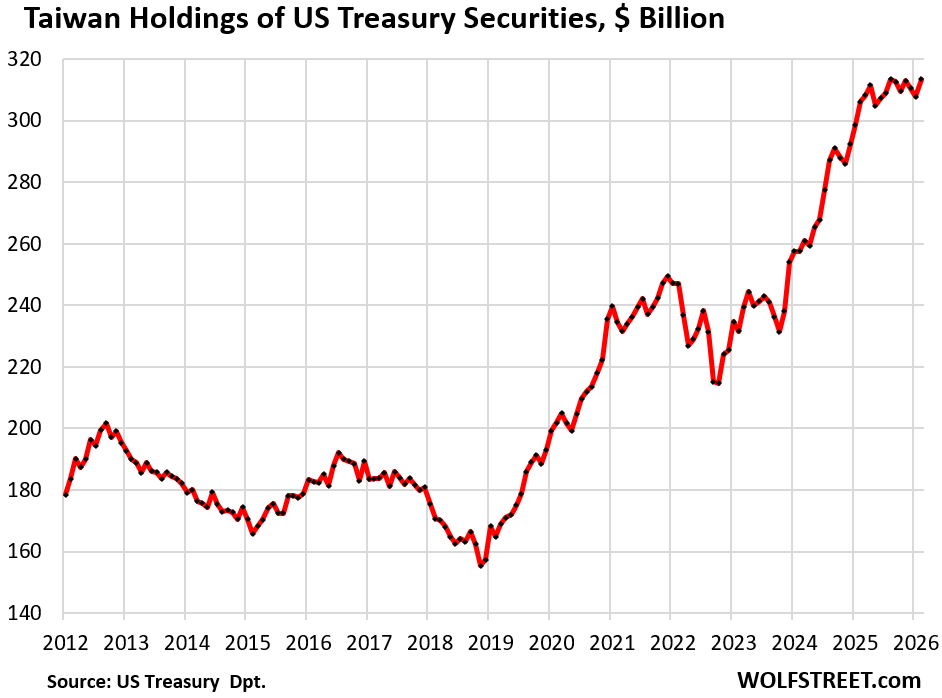
Foreign entities now hold a record $8.5 trillion in US Treasury securities, a figure that serves as a primary barometer for global demand for sovereign debt. However, this headline number masks a growing structural distortion driven by the basis trade, where financial institutions use offshore entities to arbitrage price differences between cash Treasuries and futures contracts.
The Offshore Illusion
Traditional analysis treats foreign holdings as a proxy for geopolitical appetite and central bank reserve management. Yet, a significant portion of the growth in holdings from jurisdictions like the Cayman Islands and Luxembourg suggests that domestic hedge funds are merely using offshore vehicles to execute levered strategies. When a US-based fund moves capital into a Cayman-domiciled entity to facilitate high-frequency arbitrage, the Treasury International Capital (TIC) data classifies those purchases as foreign, effectively inflating the actual level of international participation.
This trend complicates the outlook for the SPX and IXIC as traders attempt to gauge the true cost of capital. If foreign demand were purely driven by sovereign stability, the yield curve might behave differently. Instead, we see a feedback loop where the basis trade drives demand for T-bills and notes, keeping yields depressed despite rising issuance.
Impact on Liquidity and Volatility
The basis trade has become a dominant force in the Treasury market, transforming how we interpret foreign ownership data and creating a layer of hidden leverage that regulators are struggling to quantify.
This hidden leverage creates a liquidity trap. If a sudden market shock forces a rapid unwinding of the basis trade, the resulting selling pressure could overwhelm the Treasury market, regardless of what the latest TIC report suggests about foreign buyers. Traders should look at the following data points to separate true foreign demand from arbitrage-driven inflows:
- Central Bank Net Buying: Focus on Japan and China, as their holdings remain tied to currency intervention and reserve policy rather than hedge fund arbitrage.
- Offshore Jurisdiction Growth: Watch for disproportionate increases in holdings from tax havens, which serve as a leading indicator of hedge fund participation in the basis trade.
- Futures-Cash Basis Spread: A tightening spread often signals that the arbitrage opportunity is shrinking, which could lead to a quick exit from these positions.
Market Implications
For those monitoring the macro backdrop, the implications are clear. The US Treasury market is increasingly sensitive to the internal mechanics of levered funds rather than external geopolitical sentiment. This makes the market more prone to sudden liquidity crunches when funding costs spike.
Traders should also track the correlation between these holdings and the USD index. When basis trade activity intensifies, the dollar often experiences artificial strength due to the cross-currency swaps used to fund these positions. If you are tracking the XAU/USD as a safe-haven asset, remember that the