Macro● Neutral
Central Employees Press Finance Ministry Over Stalled DA Hike
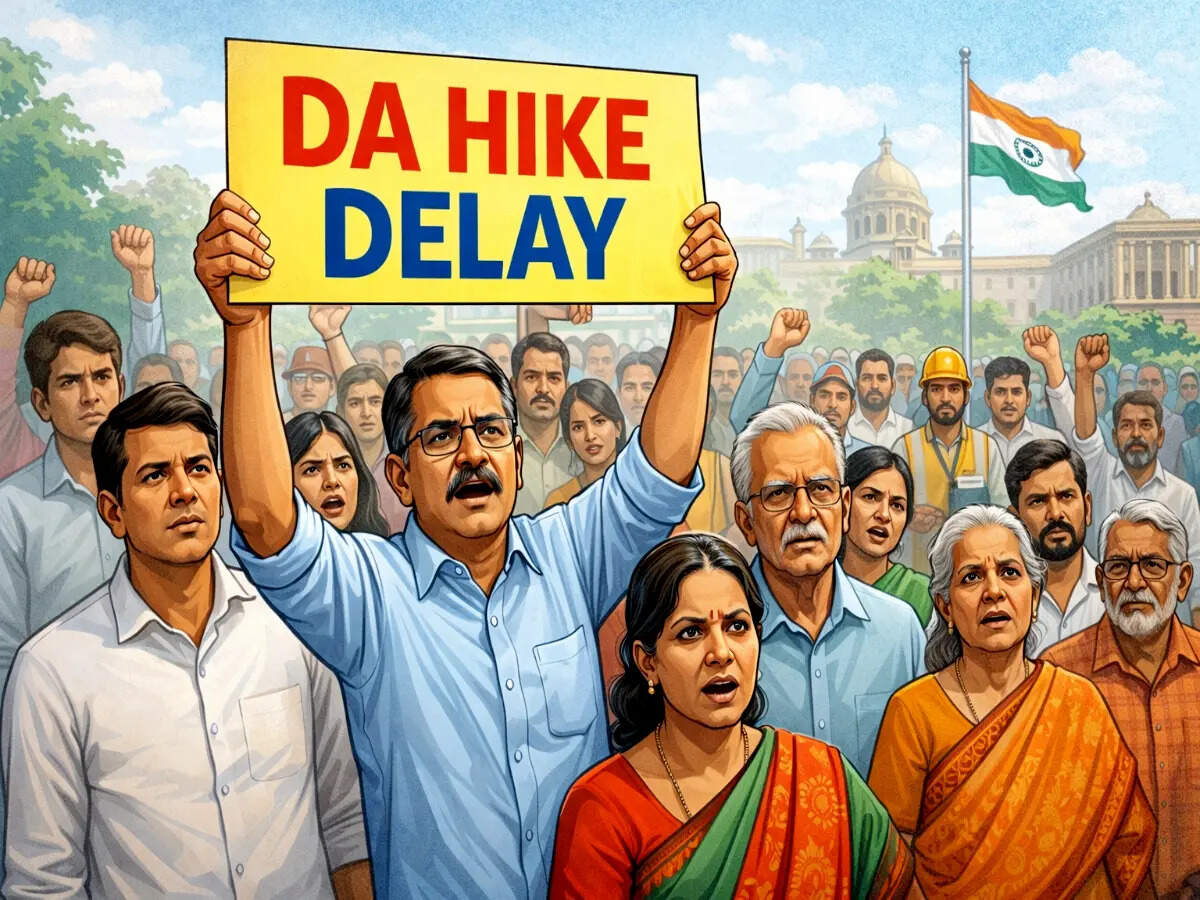
Delayed inflation adjustments threaten morale and consumption, signaling potential fiscal tightening. Watch for the official notification in coming weeks.
Continue with
The Growing Pressure on the Finance Ministry
Discontent is brewing within the ranks of India’s civil service as a palpable delay in the announcement of the Dearness Allowance (DA) and Dearness Relief (DR) triggers widespread concern. On April 8, 2026, the Confederation of Central Government Employees and Workers formally escalated the issue, with Secretary General SB Yadav addressing a direct appeal to Finance Minister Nirmala Sitharaman. The letter serves as a stark warning: the silence from the Ministry of Finance regarding the routine inflation-adjustment mechanism is fostering significant apprehension among millions of active employees and pensioners.
For the average government employee, the DA is not merely a benefit; it is a critical buffer against the erosion of purchasing power caused by persistent inflation. The Confederation’s communication underscores that the administrative delay is no longer being viewed as a standard procedural lag, but rather a source of "severe discontent" that threatens morale across government departments.
Understanding the DA Mechanism
To understand why this delay is causing market-level ripples of anxiety, one must look at the function of the Dearness Allowance. The DA is calculated based on the All India Consumer Price Index for Industrial Workers (AICPI-IW) and is adjusted twice annually—typically in January and July. These adjustments are designed to insulate the fixed-income sector from the volatility of consumer price inflation.
When the government delays these announcements, it creates a vacuum of certainty. For traders and macro-observers, this signals potential friction in fiscal planning or a shift in the government’s approach to managing the public wage bill. While the government often cites administrative review processes as the cause for such delays, the lack of a clear timeline leaves pensioners—who rely entirely on DR for their fixed monthly sustenance—in a precarious financial position.