Commodities● Neutral
Fed Warns Iran Conflict Risks Embedding Energy Inflation
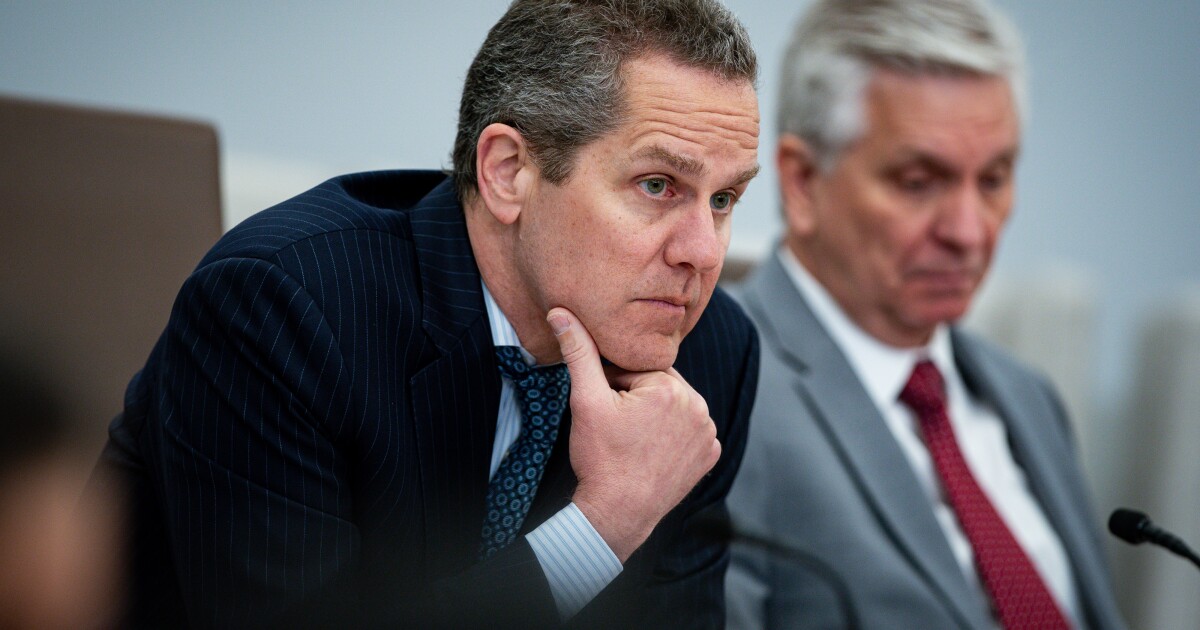
Fed Governor Barr warns that rising gasoline and fertilizer costs could embed inflation, keeping rates at 3.5% to 3.75% if the Strait of Hormuz remains closed.
Continue with
Federal Reserve Governor Michael Barr has identified a critical transmission mechanism for energy-driven inflation, noting that rising costs for gasoline and fertilizer are beginning to permeate the broader U.S. economy. While the U.S. energy sector maintains a degree of structural insulation due to its domestic natural gas production capacity, the persistence of the conflict with Iran threatens to erode these protections. The core of the risk lies in the potential for temporary price spikes to transition into permanent inflationary pressure, a shift that would force the Federal Open Market Committee to reconsider its current policy stance.
The Strait of Hormuz and Global Supply Constraints
The primary geopolitical variable remains the operational status of the Strait of Hormuz. As one of the world's most vital maritime chokepoints, the strait facilitates the transit of approximately 20% of global oil supplies. Governor Barr and Governor Christopher Waller have both signaled that the duration of the conflict is the decisive factor in whether the current inflationary impulse remains transitory or becomes structural. If the strait remains constrained, the resulting supply-side shock will likely force the Federal Reserve to balance its dual mandate of price stability and maximum employment under increasingly difficult conditions.
For traders, the distinction between a short-term disruption and a prolonged closure is paramount. Governor Waller explicitly stated that if trade flows return to normal, the Federal Reserve can effectively look through the recent energy price volatility. However, a prolonged closure would likely necessitate maintaining the current benchmark interest rate range of 3.5% to 3.75% for an extended period, effectively removing the possibility of rate cuts even if labor market conditions soften. This creates a binary outcome for interest-rate-sensitive assets, as the Fed's policy path is now tethered to the geopolitical reality of Middle Eastern shipping lanes.
AI Demand and Infrastructure Bottlenecks
Beyond the immediate geopolitical risks, Governor Barr highlighted that energy markets were already under significant strain prior to the outbreak of the conflict. The rapid expansion of artificial intelligence infrastructure has created an insatiable demand for electricity, placing an unprecedented load on aging power grids. This structural demand floor means that even in the absence of geopolitical shocks, energy prices face upward pressure from domestic consumption patterns. When this baseline demand is layered on top of the volatility in global oil markets, the sensitivity of the U.S. economy to energy price fluctuations increases substantially.