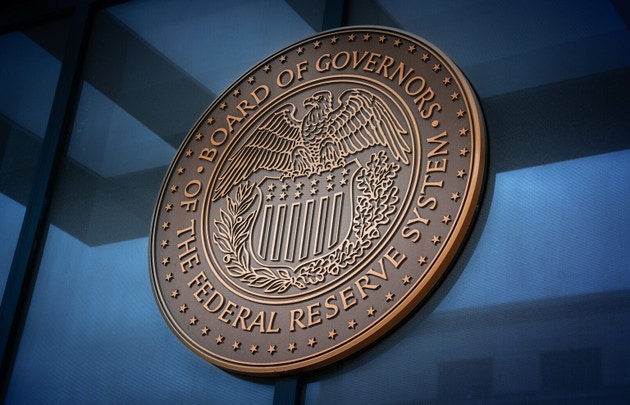
The Department of Justice has officially closed its criminal investigation into Federal Reserve Chair Jerome Powell, removing a significant layer of legal uncertainty surrounding the central bank's leadership. This development has triggered an immediate repricing in betting markets regarding the timeline for Kevin Warsh to potentially succeed Powell as Fed Chair. The resolution of the probe clarifies the path for the current administration to manage the transition of monetary policy leadership without the complication of an active federal investigation.
Transmission to Monetary Policy Expectations
The shift in leadership expectations directly impacts how markets perceive the future trajectory of the federal funds rate. Jerome Powell has maintained a policy stance defined by data dependency and a cautious approach to inflation management. A transition to Kevin Warsh is widely interpreted by market participants as a potential pivot toward a different framework for interest rate adjustments and balance sheet management. The acceleration of these confirmation bets suggests that institutional investors are beginning to price in a change in the Federal Reserve's reaction function sooner than previously anticipated.
This repricing occurs against a backdrop of broader market analysis where bond yields remain sensitive to any signal regarding the terminal rate. If the transition process gains momentum, the yield curve may reflect a risk premium associated with the uncertainty of a new leadership style at the central bank. The market is currently balancing the existing policy signal of a steady-state Fed against the prospect of a more aggressive or rule-based approach under new management.
Impact on Asset Classes and Volatility
Equity and fixed-income markets are reacting to the increased probability of a leadership change by recalibrating expectations for liquidity conditions. The prospect of a new chair often leads to a re-evaluation of the Fed's dual mandate priorities, specifically regarding the tolerance for higher inflation in exchange for labor market stability. As confirmation timelines shorten, the volatility in short-term interest rate futures is likely to increase as participants hedge against potential shifts in the dot plot or forward guidance.
AlphaScala data currently reflects a period of consolidation across several sectors, with ON Semiconductor Corporation (ON stock page) holding an Alpha Score of 45/100, Amer Sports, Inc. (AS stock page) at 47/100, and Bloom Energy Corp (BE stock page) at 46/100. All three are currently labeled as Mixed, reflecting the broader uncertainty in the macroeconomic environment as leadership transitions loom.
Investors are now looking toward the next concrete marker in this transition, which will be the formal announcement of the nomination timeline and the subsequent Senate confirmation hearing schedule. The speed at which the administration moves to formalize this process will serve as the primary indicator for how quickly the market must adjust its terminal rate assumptions. Any delay in the confirmation process would likely lead to a reversal of the recent spike in betting activity and a return to the status quo of the current policy regime.