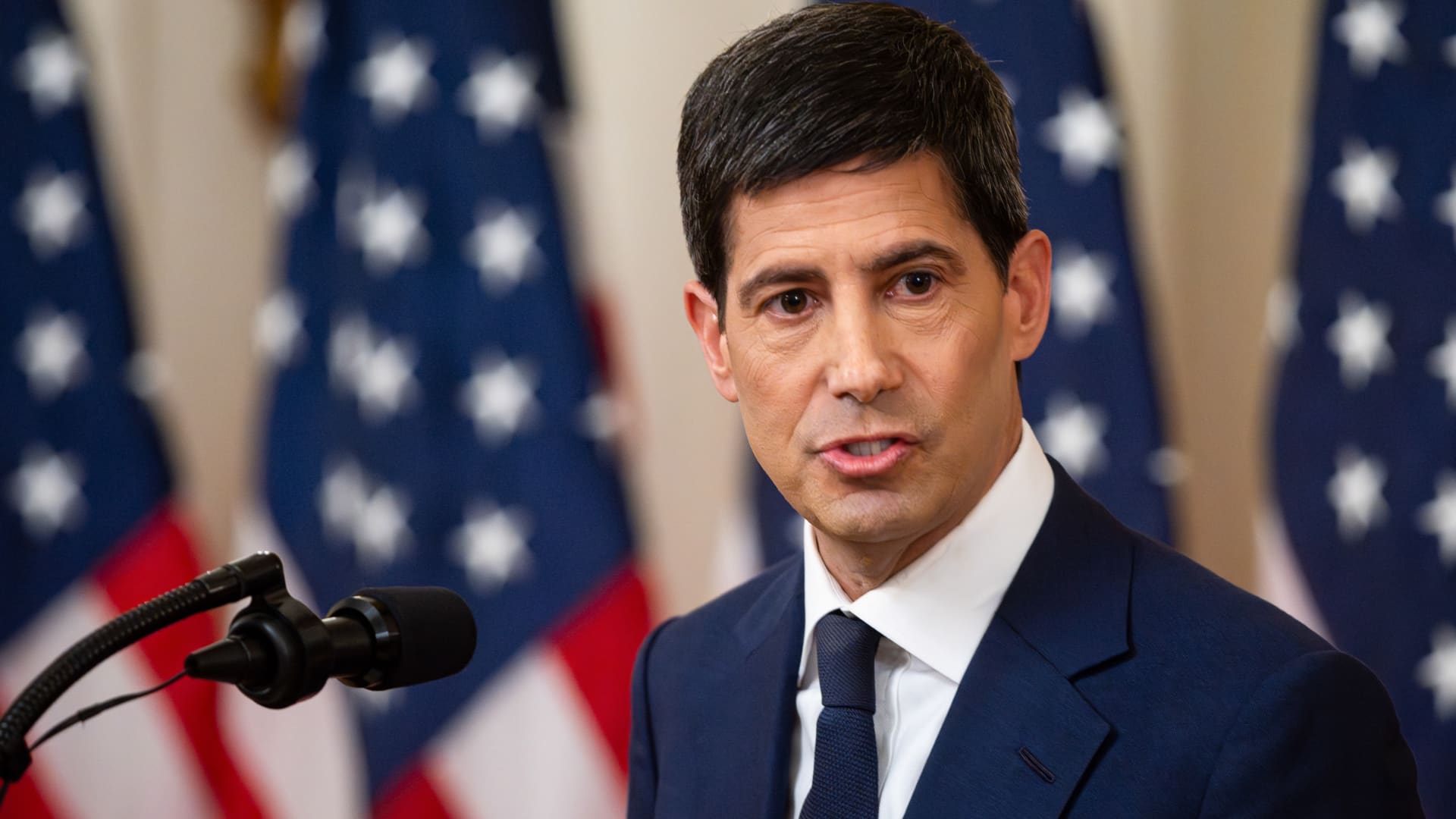
Kevin Warsh's first meeting as Federal Reserve chairman ended Wednesday with no change in interest rates. The Federal Open Market Committee voted unanimously to keep the benchmark overnight borrowing rate at 3.5% to 3.75%, where it has sat since the central bank cut by three-quarters of a point in late 2025.
The real signal came from the post-meeting statement. At 130 words, it was less than half the length of the April 29 release. Gone was the language pointing toward future cuts. Instead the statement offered a brief summary of economic conditions and a vow to control inflation. "The Committee will deliver price stability," it read, a line that replaced paragraphs of forward guidance.
Warsh has been a critic of the Fed's tendency to overcommunicate. The shorter statement and the removal of the easing bias matched what he signaled during his confirmation hearing. The statement also noted the Fed would maintain "ample reserves" in the banking system, suggesting no immediate plans to shrink the $6.7 trillion balance sheet – another issue Warsh has flagged. The 130-word communique drew unanimous approval. That contrasted with the April meeting, when three regional bank presidents dissented over forward guidance they wanted to make two-sided.
The dot plot told a similar story to the statement. The median estimate for the fed funds rate at the end of 2026 rose to 3.8%, up from 3.4% in March. That implies at least one rate hike this year. Meeting participants split eight for no change, one for a cut, and nine expecting at least one hike. The projections were missing one participant's submission. Fed watchers widely suspect Warsh did not submit his outlook. Some believe he may try to end the Summary of Economic Projections altogether. The dot plot is an anonymous compilation, so there is no way to confirm which member did not participate.
The inflation outlook shifted sharply. The committee raised its 2026 headline inflation forecast to 3.6%, up from 2.7% in March. Core inflation was revised to 3.3% from 2.7%. The GDP growth projection was trimmed to 2.2%, down 0.2 percentage point. The unemployment rate forecast was cut to 4.3%, down 0.1 point.
The inflation surge has been driven by supply shocks tied to the Iran war. The May consumer price index showed annual inflation at 4.2%. The core measure, excluding food and energy, came in at 2.9%. Inflation has run above the Fed's 2% target for five years.
Warsh has argued that supply-shock inflation should generally be looked through when setting policy. He has also maintained that artificial intelligence will eventually have a disinflationary impact, as rising productivity eases the cost of goods and services. The case for cutting rates has been complicated by a resilient labor market. Nonfarm payrolls rose 172,000 in May. The unemployment rate held at 4.3%, unchanged over the past year.
Market pricing aligns with the FOMC's new stance. The CME FedWatch gauge, which draws on fed funds futures, shows no cuts expected in 2026. A quarter-point hike is priced in by year-end. That shift in rate expectations typically supports short-term Treasury yields and the dollar. Gold, which tends to fall when real yields rise, could face headwinds if the hike materializes. Growth stocks, sensitive to higher discount rates, may also see pressure.
The next scheduled FOMC meeting falls in late July. By then, the June CPI report will be available. That data point will test whether the supply shock from the Iran war is fading or deepening. The July meeting will also reveal whether Warsh submits a dot or pushes toward ending the Summary of Economic Projections entirely.
CME Group, which operates the FedWatch tool, carries an Alpha Score of 55 out of 100, a mixed label that reflects neutral sentiment on the exchange operator as rate uncertainty continues.
For traders, the core takeaway is that the Fed has removed the safety net of an easing bias. The dot plot now leans lift, not cut. That changes the risk profile for duration, the dollar, and commodities from the prior stance.