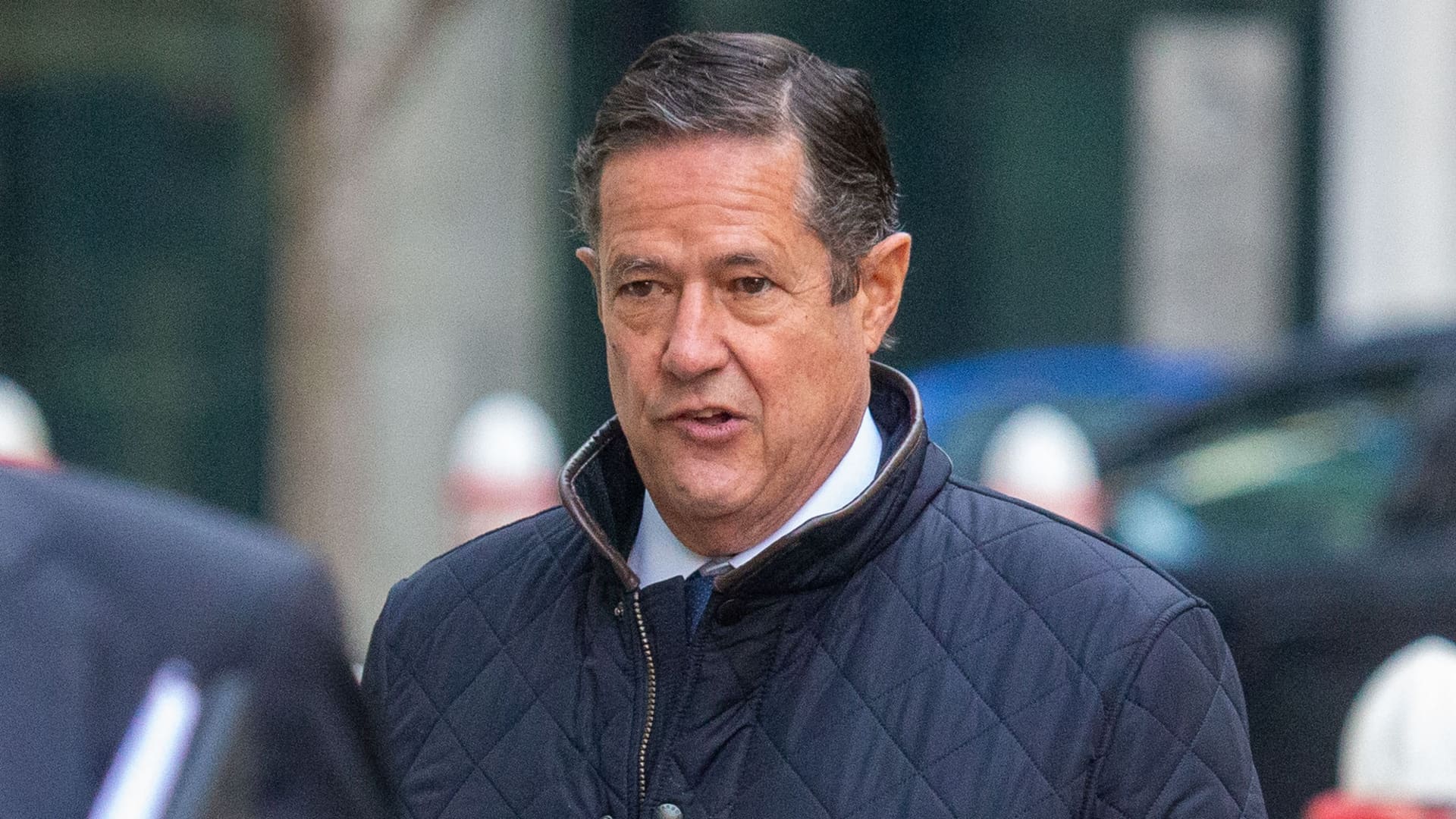
Jes Staley, the former JPMorgan Chase executive and ex-Barclays CEO, agreed to a voluntary transcribed interview about his relationship with Jeffrey Epstein before the House Oversight and Government Reform Committee on July 23. A panel spokesman confirmed the date Sunday. The Financial Times first reported the acceptance of an invitation extended three weeks ago by Chairman Rep. James Comer (R-Ky.).
The Oversight panel has been running a series of Epstein-related interviews that already include former President Bill Clinton, former Secretary of State Hillary Clinton, Commerce Secretary Howard Lutnick, and former Attorney General Pam Bondi. Microsoft co-founder Bill Gates is scheduled for June 10. Billionaire Leon Black is reportedly set for June 26. Goldman Sachs general counsel Kathryn Ruemmler is reportedly scheduled for July 15. Each interview adds a potential volatility node for the banks tied to Epstein’s network.
Staley ran JPMorgan’s private wealth and asset management divisions when Epstein was a major client. He later served as Barclays CEO from October 2015 until his resignation in late 2021. The UK Financial Conduct Authority fined Staley more than $2 million in 2023 and permanently banned him from holding a management role in the sector. The regulator found that Staley had mischaracterized his relationship with Epstein to Barclays. Barclays noted at the time that the investigation “makes no findings that Mr Staley saw, or was aware of, any of Mr Epstein’s alleged crimes, which was the central question underpinning Barclays’ support for Mr Staley following the arrest of Mr Epstein in the summer of 2019.”
Staley’s July 23 Testimony: The Risk Catalyst
The July 23 date is the last publicly scheduled interview in the current Oversight Epstein series. Staley accepted the invitation three weeks ago, meaning preparation has been underway. The session is voluntary and transcribed, so his statements will enter the public record. His past characterizations of the Epstein relationship have already cost him his career and a regulatory penalty. The risk for JPMorgan Chase (JPM) and Barclays (BCS) depends on whether Staley’s testimony adds new details about internal bank knowledge, client due diligence, or compliance failures.
The committee has already received testimony from Bondi and will hear from Gates, Black, and Ruemmler before Staley. Each interview can generate documents or allegations that shift the narrative. If Staley contradicts his prior FCA testimony, perjury risk rises. If he confirms internal warnings that were ignored, legal exposure multiplies.
JPMorgan’s $365 Million Settlement Overhang
JPMorgan in 2023 agreed to pay $290 million to settle a lawsuit filed by Epstein victims alleging the bank facilitated sex trafficking by keeping Epstein as a client. The same year, the bank paid $75 million to settle a similar claim by the government of the U.S. Virgin Islands. In both settlements, JPMorgan did not admit wrongdoing.
The bank also agreed to a confidential settlement with Staley to resolve claims that he was responsible for civil damages and costs from Epstein-related litigation. That settlement removed JPMorgan’s direct financial exposure from Staley’s actions. Still, the Oversight interviews keep the story alive for investors, regulators, and the press. JPMorgan’s stock trades at $299.31, up 0.87% today, with an AlphaScala Alpha Score of 43/100 (Mixed). The Mixed label reflects fundamental earnings strength offset by governance overhang.
| Entity | Settlement / Fine | Year |
|---|
| JPMorgan Chase | $290 million (victims) | 2023 |
| JPMorgan Chase | $75 million (US Virgin Islands) | 2023 |
| Barclays (via Staley) | $2 million+ FCA fine | 2023 |
Barclays’ FCA Fine and Reputational Tail
Barclays faced no direct lawsuit from Epstein victims. The FCA probe focused on how Staley described the relationship to Barclays and how the bank relayed that to regulators. The regulator fined Staley and banned him permanently. Barclays stock carries an Alpha Score of 59/100 (Moderate) on AlphaScala’s proprietary framework, indicating better fundamental positioning than JPMorgan on the governance axis but still exposed to regulatory tail risk.
The Oversight interview could draw Barclays back into the story. The committee may ask Staley about Barclays’ internal processes, his disclosures to the board, and whether the bank had any knowledge beyond what it reported. Barclays has already lost a CEO and absorbed reputational damage. New disclosures could erode investor confidence further.
Timeline: A String of Epstein-Related Interviews
The committee’s schedule creates a clear sequence of catalysts for bank stocks.
- June 10: Bill Gates interview
- June 26: Leon Black interview (reportedly)
- July 15: Kathryn Ruemmler interview (reportedly)
- July 23: Jes Staley interview
Each date is a potential data point. If any interview produces new details about bank oversight, money laundering controls, or client due diligence failures, the legal risk for JPMorgan and Barclays could increase. Conversely, if the interviews yield no significant new allegations, the risk premium in bank stocks may fade.
What Would Reduce the Risk
- Staley’s interview produces no new substantive allegations about bank complicity
- The committee concludes its hearings without referring findings to the DOJ or SEC
- JPMorgan and Barclays report Q2 earnings with stable legal reserves and no new provisions for Epstein-related claims
- The narrative shifts to other committee priorities, reducing media attention
What Would Make It Worse
- Staley contradicts his prior FCA testimony, raising perjury or obstruction concerns
- The committee releases documents showing that JPMorgan or Barclays had internal warnings about Epstein that were ignored
- Bill Gates or Leon Black provide testimony that implicates JPMorgan’s handling of Epstein accounts
- The DOJ uses the hearing transcripts as a basis for a new investigation
Proprietary AlphaScala Data
AlphaScala’s scoring system assigns JPM a 43/100 (Mixed) rating, reflecting balanced strengths in earnings and revenue growth offset by governance concerns. Barclays carries a 59/100 (Moderate) score, suggesting slightly better fundamental positioning still exposed to regulatory tail risk. Both stocks are accessible through most major brokerages. For a full list of platforms, see AlphaScala’s guide to the best stock brokers. For a broader view of how geopolitical and regulatory events affect sector rotation, read Three Signals Point to a New Global Investment Cycle.
Staley’s July 23 interview is the last scheduled hearing in the current Oversight Epstein series. It may not be the last word. The committee has demonstrated its willingness to call top-tier business and political figures. If Staley’s testimony matches what he has already told the FCA, the risk to JPMorgan and Barclays may be contained. If it diverges or produces new documents, the legal exposure could expand. Traders watching JPM and BCS should treat each interview date as a potential volatility event, with the July 23 session representing the highest concentration of bank-specific risk in this cycle.