Crypto▲ Bullish
El Salvador Crypto Remittances Hit 0.7%, Up 39.1% YoY
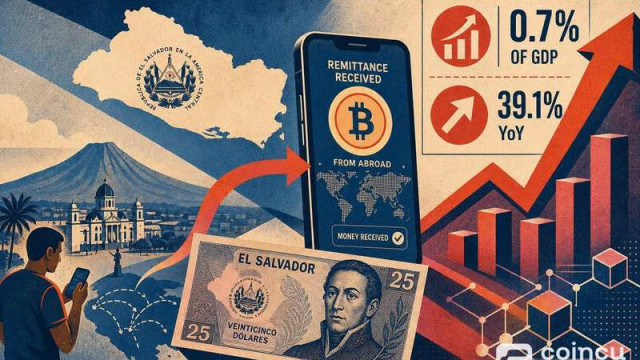
Crypto remittances hit 0.7% of El Salvador's total, up 39.1% YoY. The sub-1% share signals early-stage adoption, not dominance. Next central bank release will show whether growth holds.
Continue with
Crypto-based transfers accounted for 0.7% of El Salvador’s total remittances in the latest central bank data. That figure rose 39.1% year over year, according to the country’s remittance operations series.
Remittances are one of El Salvador’s largest sources of household income. The bulk of those transfers continue to arrive through traditional money-transfer channels. At 0.7%, digital assets occupy a narrow slice of that market.
Share-of-total data is a cleaner adoption signal than raw transaction counts. It benchmarks crypto against the full remittance market. A 0.7% reading places the story in early-stage territory rather than a completed shift.
The 39.1% year-over-year increase applies to a base well under 1%. Fast percentage growth and a small overall share can coexist when the starting point is low. The growth rate describes how quickly crypto remittance volume is changing. The adoption rate describes how much of the market it holds. The data shows the first accelerating and the second still limited.