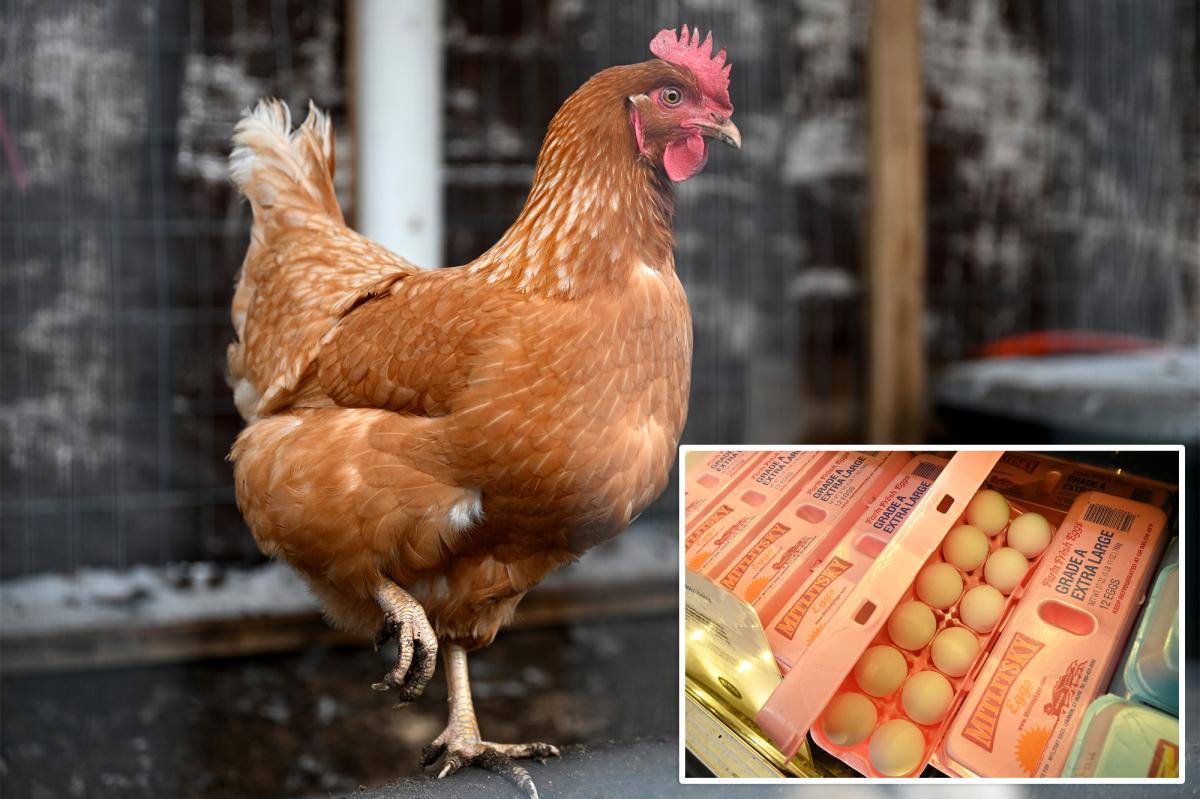
Three of the country's largest egg producers agreed to pay $3.3 million and donate 53 million eggs to settle a federal price-fixing investigation. The Justice Department and 17 states accused Cal-Maine Foods, Versova, and Hickman's Egg Ranch of secretly coordinating bids to inflate the daily egg price index from June 2022 through March 2025. The settlement, announced Monday by New York Attorney General Letitia James, requires the companies to adopt compliance measures and cooperate with state oversight. A federal judge must still approve the terms.
The scheme exploited how the benchmark egg price is set. Every day, producers submit bids to a reporting agency. The aggregated numbers become the index that retailers and food-service buyers reference. Prosecutors said the egg companies used what the Wall Street Journal described as "spoofing-like tactics" – placing orders meant to push the index higher, then canceling them. A December 2022 email caught Hickman's CEO urging Versova and Cal-Maine executives to submit "strong bids, early and often" to boost prices. The coordination happened while bird flu outbreaks had already pushed egg supplies to historic lows. Midwest large egg prices hit $5.36 a dozen in late 2022, then climbed past $9 in January 2025.
The settlement money is small relative to the companies' revenue – Cal-Maine alone reported $3.5 billion in sales its last fiscal year. The real exposure lies in what the DOJ complaint signals. Cal-Maine, the largest US egg producer, saw its shares drop 4% on the announcement. The company denied wrongdoing in a statement. "We are pleased that this agreement enables us to move forward," President and CEO Sherman Miller said, framing the settlement as a way to focus on "delivering affordable, high-quality eggs." Versova also denied the allegations. Hickman's, acquired by meatpacking giant JBS and Brazilian egg supplier Mantiqueira in late 2025, said the conduct happened before the takeover.
The risk for Cal-Maine goes beyond the $3.3 million. Civil class-action suits from consumers and businesses that paid inflated prices are a real next step. James' office led the investigation with the DOJ – the same office has pursued other food-price cases. For JBS, the settlement adds another layer of regulatory scrutiny to a company already facing antitrust challenges in beef and poultry. JBS's Alpha Score of 75, a proprietary AlphaScala measure of fundamental health, reflects the company's size and diversification but also its exposure to litigation risk.
What would reduce the residual risk. Full implementation of the mandated compliance program. No further evidence of coordination in the industry. The DOJ has not charged individuals, which limits personal liability. What would make it worse. New whistleblower claims or emails showing post-settlement coordination. The DOJ's complaint mentioned "spoofing-like tactics" – language that could draw attention from the SEC or CFTC if egg futures are involved. For now, the settlement closes the case for these three companies. The 4.9 million eggs headed to New York food banks are a tangible reminder of the price fixing's real cost.