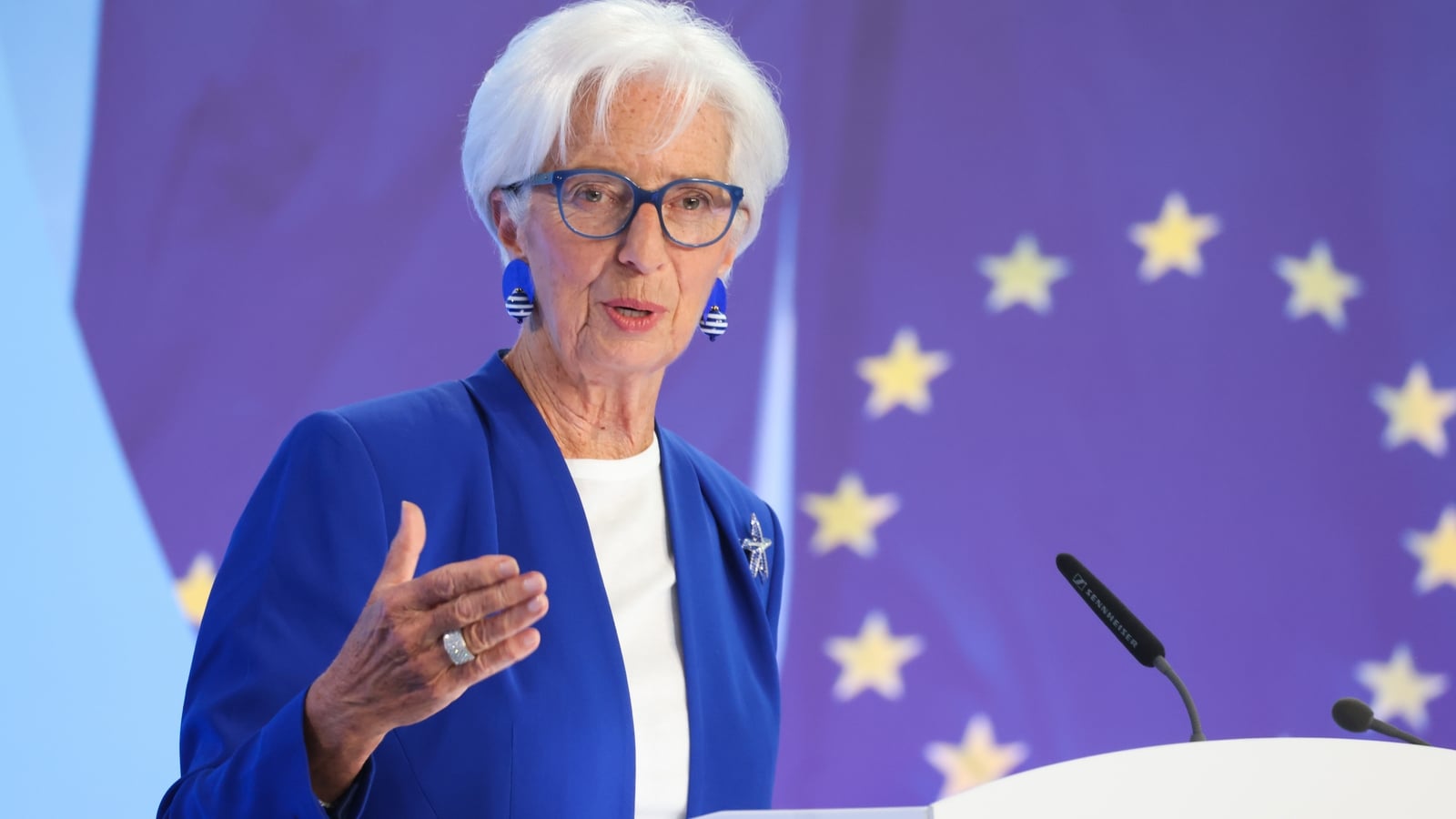
ECB President Lagarde opens the door to an early exit before 2027, introducing fresh political risk for the euro and rate path as the September meeting nears.
European Central Bank President Christine Lagarde said she could leave before her term ends in late 2027 to weigh in on French politics ahead of next year's presidential election.
Responding to a question from French newspaper Les Échos, she said: "It's possible. I believe that a European voice needs to be heard in the French presidential debate."
Lagarde has previously played down resignation rumours, saying a ship's captain would not leave during turbulent times as inflation surged on an oil-price spike triggered by the Iran war. She said then that her baseline was to remain in the job until her term expires at the end of October 2027.
She did not repeat this line now. She appeared to rule out running in the French election next spring, saying this was not on the agenda.
"I would speak with a French and a European voice, because I am profoundly both," Lagarde said on her possible role in the election. "I would tell them that France must play a decisive role in the economic future of our continent. And that without this European environment and anchoring, our economic prospects would, at the very least, be unclear."
The shift in tone opens a new layer of political risk for the ECB just as the central bank works through the tail end of its tightening cycle. Lagarde's departure, even if not immediate, would inject uncertainty into the rate path and the euro's trajectory. Markets have priced in a final rate hike in September. A leadership vacuum could delay that timeline or shift the hawkish bias.
For traders, the immediate read is on the euro. A Lagarde exit would remove a steady hand at a time when the ECB is still fighting inflation above 5%. The euro has already weakened 3% against the dollar this quarter on growth concerns. An early departure could accelerate that move, particularly if the frontrunner to replace her is perceived as less hawkish.
French bonds also face a risk premium. The spread between French OATs and German Bunds has widened 15 basis points since the Iran war triggered the oil spike. A political vacuum at the ECB could push that spread wider, raising borrowing costs for Paris just as the election campaign heats up.
Lagarde's comments come as the ECB prepares for its September meeting, where the debate is whether to hike 25 or 50 basis points. The market has priced in a 25-basis-point move, the political uncertainty could tilt the balance toward a smaller hike if the governing council wants to avoid compounding instability.
The ECB meets again September 14 for the next rate decision.
Prepared with AlphaScala editorial tooling from the source reporting linked above. Indexable analysis may include a cited Alpha Score value. Publishing checks screen each story before release. Educational coverage, not personalized advice.