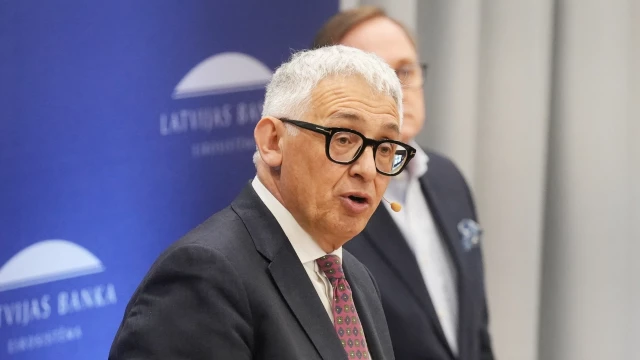
European Central Bank board member Piero Cipollone told a gathering of Italian cooperative bankers on Friday that allowing euro stablecoins to circulate freely would thin out the retail deposits that flow into traditional banks. The fix, he argued, is already in the digital euro the bank plans to launch.
Speaking in Rome to Italy's Federation of Cooperative Credit Banks, Cipollone said the recently popular modes of digital payments have already hit banks' payment fees and customer transaction data. Add stablecoins, and the slope gets steeper.
"The digital euro would both preserve the role of public money and ensure banks remain involved in the payments ecosystem while continuing to meet their customers' needs," Cipollone said.
The comments landed three days after the ECB moved its digital euro closer to reality. On Tuesday, the central bank named 36 payment service providers for a 12-month pilot, drawn from more than 50 applicants and spanning banks, fintechs and payment firms from across the euro area. The list runs from Germany's Deutsche Bank and Italy's UniCredit to the neobank Revolut. The trials will be hosted by the ECB alongside 19 of the region's 21 national central banks, according to Cryptopolitan. Malta and Bulgaria are the two eurozone members not represented.
Cipollone, who chairs the ECB's High-Level Task Force on the digital euro, said at the time that strong interest showed the private sector was ready to move. The pilot is set to begin in the second half of 2027 and will test a beta version of the currency that carries no legal tender status.
The politics are moving in parallel. In June, the European Parliament's Committee on Economic and Monetary Affairs backed the digital euro legislation by 43 votes to 14 with one abstention, part of a package that also guarantees the future of physical cash.
Even so, the ECB has said it does not expect to issue a digital euro before 2029 at the earliest. Banks worried about their deposits, and stablecoin issuers eyeing the euro market, have a few years yet to watch how the fight plays out.
The global stablecoin market is worth roughly $320 billion, led by Tether's USDT at about $188 billion and Circle's USDC near $75.8 billion. The largest euro stablecoin, Circle's EURC, has a supply of around $543 million.
Cipollone's Friday remarks reiterate the same position the ECB has held for months. Isabel Schnabel, speaking on June 1 at a Bank of Korea conference in Seoul, said that stablecoins threaten financial stability and monetary sovereignty. The board member compared them to the 1970s scenario where money market funds pulled deposits away from banks, as Cryptopolitan reported.