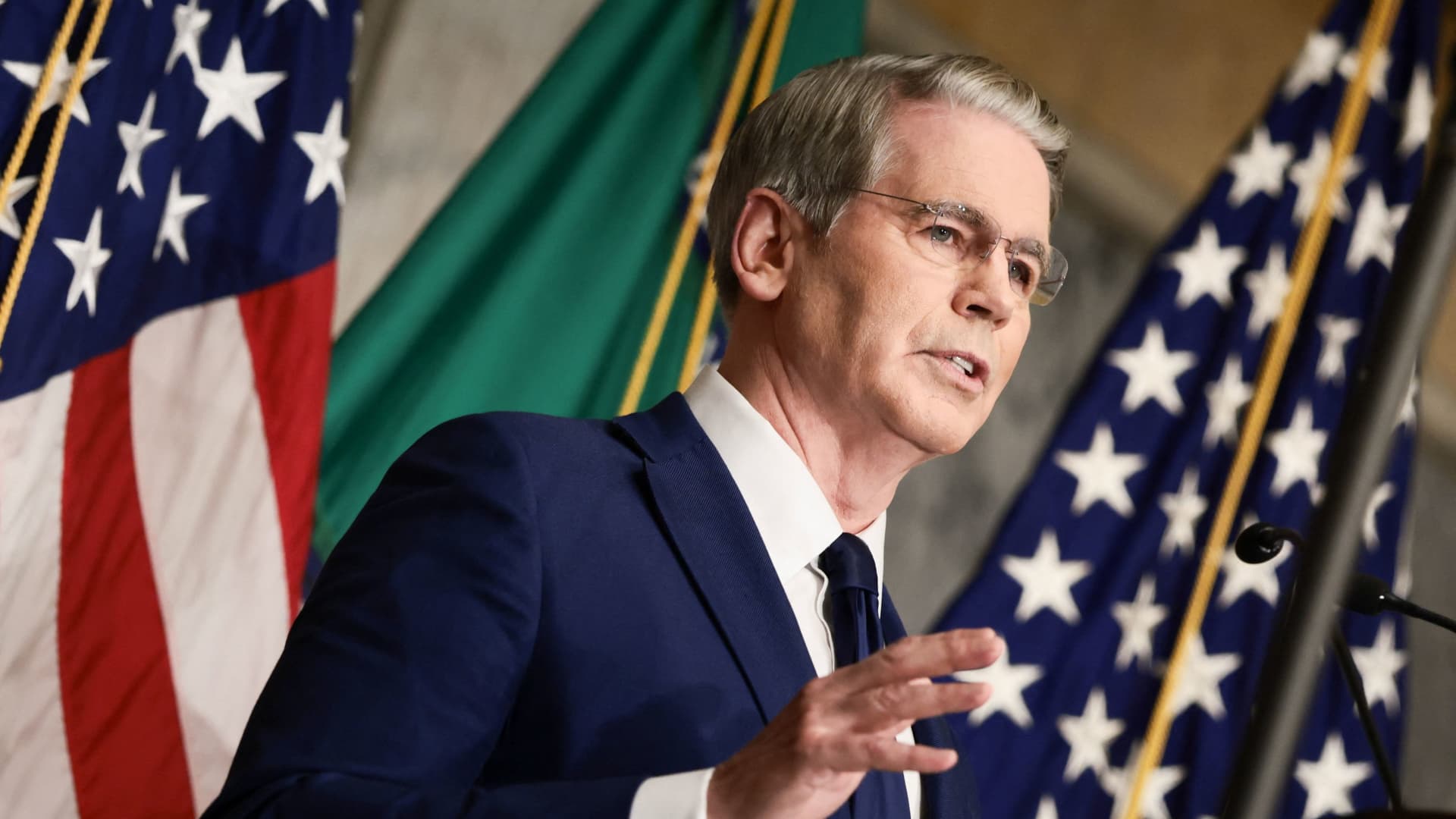
Treasury Secretary Scott Bessent's plan to double buybacks of longer-dated debt has drawn sharp criticism from his own investing mentor, Stanley Druckenmiller, and a growing list of Wall Street strategists who say the effort lacks the firepower to suppress yields and may backfire.
Wall Street has broadly questioned whether Treasury can manage a fixed income market that issued roughly $4.7 trillion in debt in 2025, a level that could be exceeded this year. Bessent has proposed doubling the department's usual $2 billion buybacks of off-the-run securities, a program started under predecessor Janet Yellen. Treasury sources told CNBC this week the department also could tap its $935 billion general account to fund purchases.
The moves have pushed longer-dated yields off recent peaks that were the highest since before the 2008 financial crisis. But critics see the efforts as doomed without addressing a fiscal picture in which total debt just passed $40 trillion and the budget deficit is on track to top $2 trillion for 2026.
Druckenmiller, who along with Bessent and George Soros famously bet against the British pound in the early 1990s, laid out his case in a Wall Street Journal op-ed titled "Let the Bond Market Speak."
He urged Bessent to abandon the buyback scheme announced Aug. 19 and let the market price government debt without official interference.
Governments defending prices against fundamentals always lose, he added. "The only variable is how much they spend before conceding."
Treasury did not immediately respond to a CNBC request for comment on the column.
Other market participants echoed the skepticism. Ryan Swift, chief strategist at BCA, said in a client note that without Federal Reserve involvement, Treasury's efforts will fail and could prove counterproductive.
Swift thinks Fed Chairman Kevin Warsh will stay out. Warsh has stressed the importance of price discovery, saying after the July Fed meeting that "market participants are learning to play the ball, not the referee."
Swift does not see the recent rise in yields as alarming. The 30-year bond trades slightly above its 50-year average around 5.16%. The 10-year note on Tuesday morning traded exactly in line with its 4.64% historical average going back to the early 1960s. Swift called the long bond near "fundamental fair value" based on the Fed's benchmark rate and expectations for inflation, unemployment and volatility.
Nohshad Shah, head of fixed income sales for Europe, the Middle East and Africa at Citadel Securities, wrote that the bond market's message is straightforward: fiscal or monetary policy should be tighter. "Preventing Treasuries from clearing at lower prices does not eliminate that pressure," he said. "It merely shifts it elsewhere."
Krishna Guha, head of economics and central bank policy at Evercore ISI, said Warsh faces a difficult choice when he speaks Friday at the Fed's Jackson Hole symposium.
The Fed's next meeting is Sept. 15-16. Markets price about a 40% chance of a rate hike, according to CME Group calculations. Warsh speaks Friday.