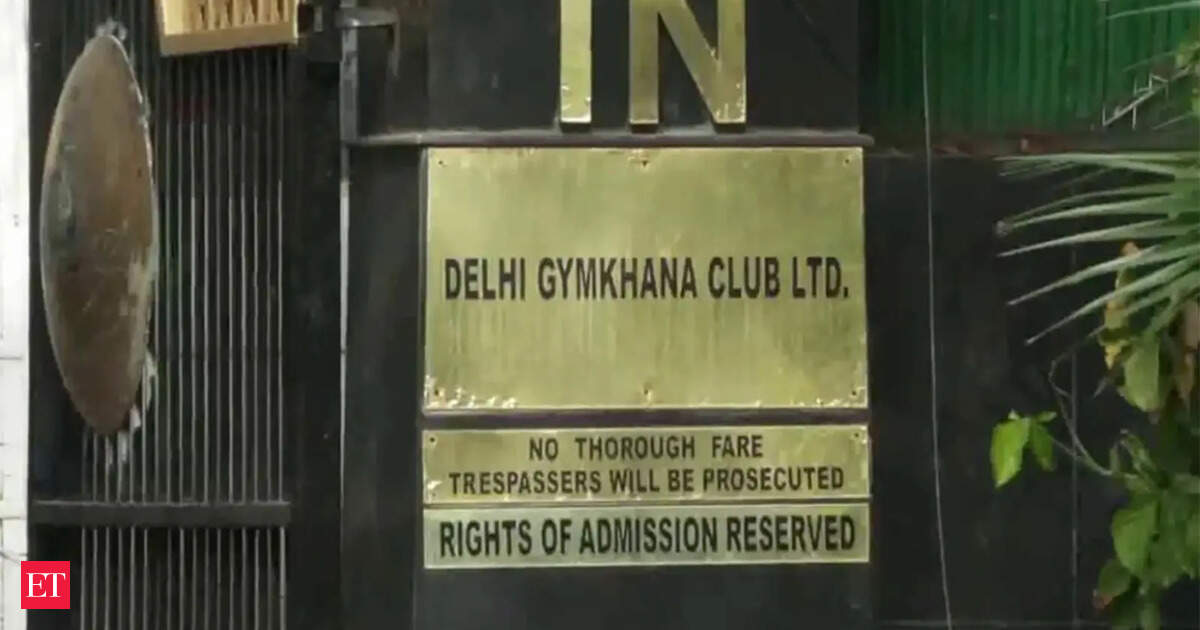
Members of the Delhi Gymkhana Club have filed a petition in the Delhi High Court to block the central government's order to vacate the club's 27.3-acre Safdarjung Road premises. The government intends to use the land for public-interest projects. The club has asked the court to prevent dislocation until all issues are addressed. The court will hear the matter tomorrow.
What Changed: The High Court Challenge
The vacate order targets one of Delhi's oldest members' clubs, located on a prime parcel in central Delhi. The Safdarjung Road site sits in an area where government land acquisition has historically faced legal pushback. By moving the court, the club is forcing a pause on any eviction process until a ruling on procedural grounds.
The club's argument does not directly contest the public-interest rationale. Instead, it seeks judicial protection on due process, adequate justification, and a clear relocation timeline. This distinction matters for other institutional landholders in Delhi–clubs, trusts, and diplomatic enclaves–that hold long-term leases on central government land. The court's procedural handling will set a precedent for those entities.
Why This Land Matters Now
The 27.3-acre parcel is one of the last large, underutilized tracts in central Delhi with a private-style use. The government's abrupt vacate order signals a shift toward faster land repurposing for infrastructure projects. The court's response will test the government's eminent domain power in the national capital.
For traders monitoring Indian real estate and infrastructure policy, the outcome affects the redevelopment timeline of a high-value site. A stay from the court would slow down the government's ability to accelerate similar land grabs. A denial of stay would clear the path for a public project–possibly a park, road widening, or office complex–that could boost land values in adjacent neighborhoods. The case also feeds into broader stock market analysis of Indian infrastructure plays, because the same legal logic applies to larger land parcels targeted for roads, metro projects, and housing schemes.
Affected Assets and Read-Throughs
No publicly traded company holds a direct stake in the Delhi Gymkhana Club. The case has an indirect read-through for Delhi-based real estate developers and infrastructure contractors that rely on government land allocation. A fast resumption and redevelopment would open bidding for construction work. A prolonged legal fight defers that opportunity.
More broadly, the case tests the government's eminent domain power in prime central Delhi. If the court upholds the vacate order on procedural grounds but allows fair compensation negotiations, the model could be applied to other club lands–the India Habitat Centre, Golf Club, or India International Centre. All sit on large leasehold plots. That scenario would disrupt long-term valuations for these institutions. It would not directly affect equity markets unless a listed entity is involved in the redevelopment contracting.
Decision Point: Tomorrow's Hearing
The court hearing tomorrow is the only concrete catalyst in this story. The judge's two initial rulings will define the risk: whether to issue a stay on the eviction pending a full hearing, or to set a schedule for arguments while allowing the vacate order to remain in effect.
For anyone tracking Delhi's real estate policy, this hearing offers an early read on judicial temperament toward government land acquisition for public-interest projects. A stay would confirm that procedural challenges still have teeth. A denial of stay would signal that the court is willing to fast-track infrastructure over legacy land-use rights.
The case is a single-asset legal dispute with no listed company exposure. The mechanics of the vacate order, the court's procedural handling, and the speed of any redevelopment all feed into the broader narrative of Delhi's land market. The hearing tomorrow is the nearest decision point. Until then, the only move is to watch the court's calendar and the government's next filing. For traders who want to understand the execution risk in government land projects, the Gymkhana case is a mini case study in what happens when a legacy user pushes back–and how the courts manage the timeline.