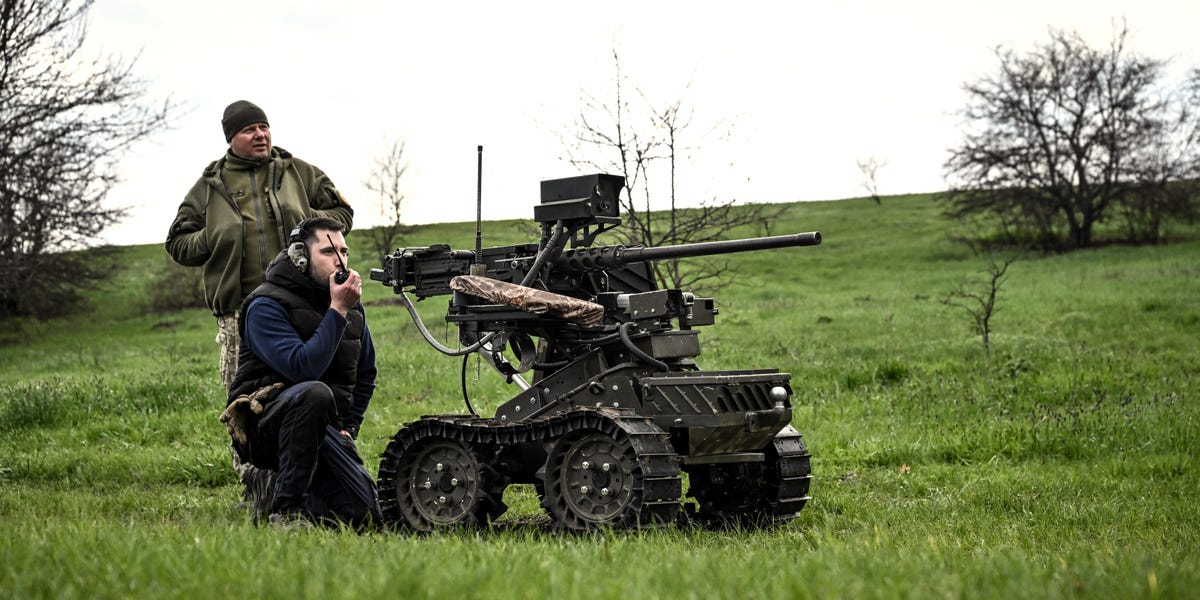
The ongoing conflict in Ukraine has forced a fundamental reassessment of Western military procurement strategies. While heavy armored vehicles and main battle tanks have long served as the backbone of conventional land warfare, their high replacement costs and vulnerability to modern anti-tank systems are prompting a shift in focus. Defense manufacturers are increasingly highlighting the necessity of integrating low-cost ground robots to perform high-risk missions that currently deplete expensive, irreplaceable hardware.
The Strategic Shift from Heavy Armor to Attrition-Resistant Robotics
The primary driver for this pivot is the reality of long-duration, high-intensity attrition. Western military doctrine has historically prioritized sophisticated, high-cost platforms designed for technological superiority. However, the operational environment in Ukraine demonstrates that when equipment loss rates are high, the industrial base struggles to replenish complex assets at the speed required by the front line. Ground robots offer a solution by decoupling the mission from the risk to human operators and expensive platforms.
By deploying smaller, cheaper autonomous systems, militaries can maintain a persistent presence in contested zones without the same level of capital risk. These systems are designed to be expendable, allowing for a higher tolerance for losses in missions such as reconnaissance, logistics support, and mine clearance. This transition suggests that future defense budgets may prioritize mass-produced, modular robotics over the incremental upgrades of traditional heavy armor fleets.
Industrial Base Constraints and Scalability
The reliance on heavy armor creates a bottleneck in the supply chain that is difficult to overcome during a protracted conflict. Manufacturing a modern tank involves complex supply chains and long lead times, making it an inefficient tool for absorbing the shocks of a multi-year war. In contrast, the integration of ground robots leverages commercial-off-the-shelf technology and more flexible manufacturing processes.
This shift carries significant implications for defense contractors that have historically focused on large-scale platform production. Companies that can successfully pivot to autonomous systems may find themselves better positioned to meet the demands of modern procurement cycles. The move toward robotics is not merely a technological upgrade but a response to the economic realities of modern warfare, where the ability to sustain operations is as critical as the performance of the individual unit.
Market Context and Future Procurement Markers
Investors should monitor how defense departments allocate funding in upcoming budget cycles. The transition from legacy platform sustainment to autonomous system development will likely be reflected in research and development contracts and procurement priorities. As Western militaries move toward integrating these systems, the focus will shift from the sheer number of armored vehicles to the density and capability of autonomous fleets.
For those following stock market analysis, the divergence between traditional heavy equipment manufacturers and emerging robotics firms will be a key trend to track. The next concrete marker for this shift will be the release of updated defense procurement guidelines, which will clarify whether current budgets are being reallocated toward scalable, autonomous ground platforms. This will serve as the primary indicator of how quickly Western militaries intend to integrate these systems into their core operational structures.