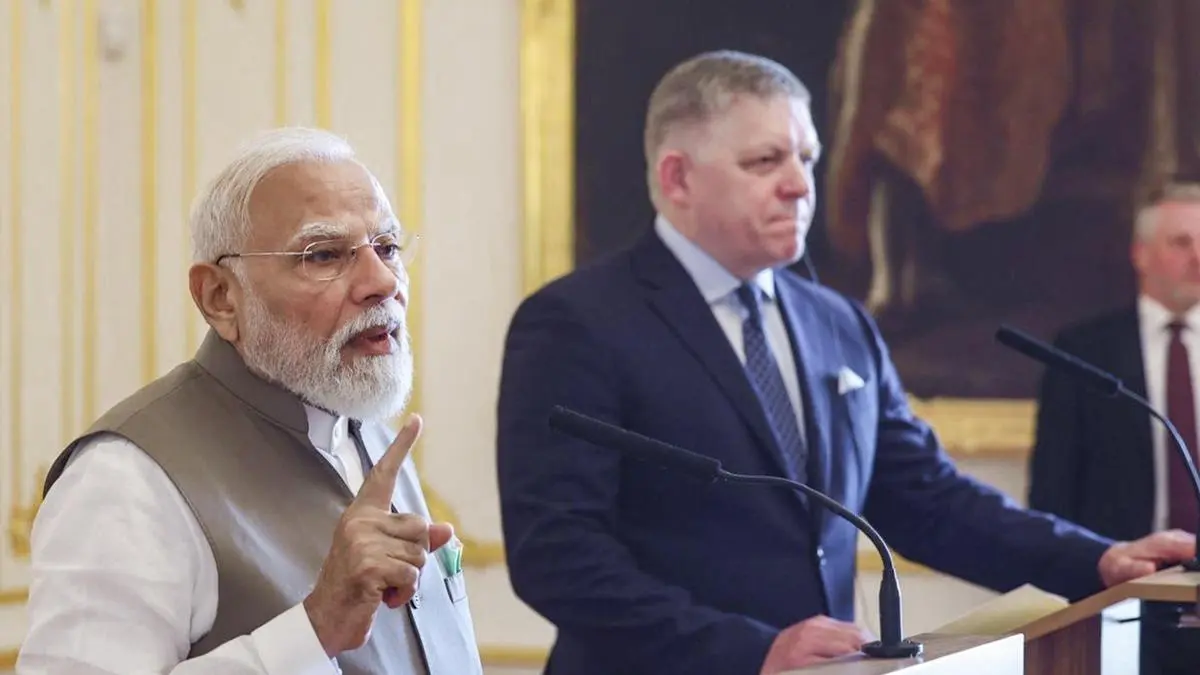
Prime Minister Narendra Modi and Slovak PM Robert Fico signed a Letter of Intent on defence cooperation on Monday, part of a broad push to deepen ties in defence, cybersecurity, and critical infrastructure. The agreement, detailed in a joint statement, is the first visit by an Indian Prime Minister to Slovakia since the country's independence in 1993.
The LoI covers joint development, joint production, and defence industry collaboration. Modi described it as a “testament” to mutual trust and strategic convergence. For Indian defence companies, the pact opens a formal channel to Slovakia’s defence industrial base, which includes plants for military vehicles and electronics.
Two state-run firms, Hindustan Aeronautics (HAL) and Bharat Electronics (BEL), are the usual candidates for bilateral defence deals. Mazagon Dock (MDL) also has related exposure. Larsen & Toubro (L&T) has a defence division that could participate. The LoI does not guarantee contracts. It sets a framework for future cooperation. The real catalyst will come when specific requests for proposal emerge or when Indian firms bid for Slovak tenders. Traders watching this should look for follow-on announcements from the defence ministry or company statements.
On cybersecurity, the two sides agreed to cooperate on post-quantum cryptography and critical information infrastructure protection. A separate Memorandum of Cooperation was signed on these fronts. Indian IT services firms–TCS, Infosys, Wipro, HCL Technologies–all have cybersecurity practices that could win consulting or implementation work. Post-quantum cryptography is a niche but growing area as governments and enterprises prepare for quantum computing threats. The agreement signals that India and Slovakia intend to align their security standards, paving the way for joint projects.
The leaders also discussed connectivity, automotive and railway joint ventures, and direct air links. Slovakia’s position as a Central European transport hub complements India’s large-scale manufacturing base. Auto component makers like Bharat Forge or Motherson Sumi could eventually find opportunities, though the timeline remains long.
The agreement follows a separate labour pact signed earlier this year, covering talent corridors for tech firms. India-Slovakia Labour Pact Opens Talent Corridor for Tech Firms
Fico said he is “also interested in cooperation in the field of the defence industry.” The next concrete marker will be the formation of joint working groups and any tenders issued under the LoI.