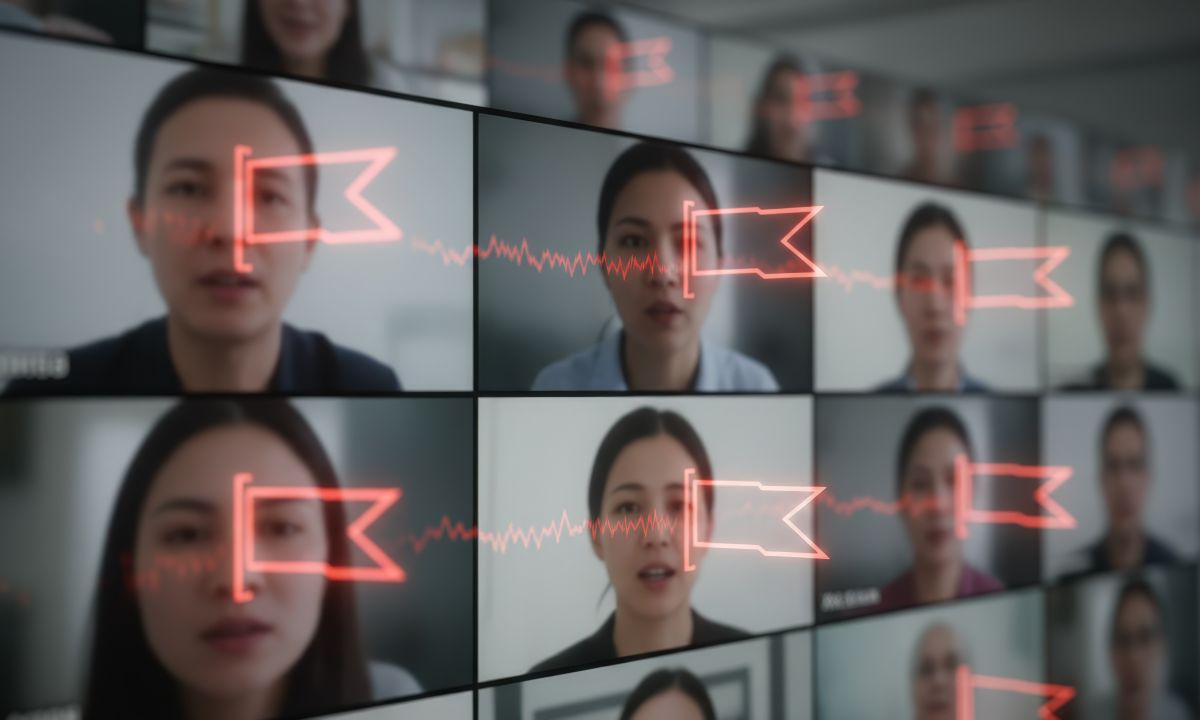
Hany Farid has spent decades as the world's leading digital forensics expert, helping governments, law enforcement, and human rights groups separate real photos and videos from fakes. Now the rise of AI deepfakes has him questioning his own ability to tell the difference, according to a New York Times profile published Sunday.
"I feel like I'm going blind," Farid said in the report. He and his wife are planning to leave Silicon Valley for a rural Vermont farm, partly because of the toll the work takes.
Farid's research shows most people can no longer distinguish real media from AI creations. He has begun failing his own tests. The problem is not just accuracy – it is speed. Farid told a Berkeley class that each investigation takes time, while the half-life of an average social media post is under 90 seconds.
"Within 20 minutes, the whole ballgame's basically over," he said. By the time he finishes an analysis, a fake can become fact in the public mind.
One student summed up the asymmetry: "The creation of deepfakes is easy, cheap, fast and reliable. Detection is costly and difficult."
That same asymmetry is hitting financial fraud. PYMNTS reported last week that lenders face a new category of synthetic borrower – a persona built from deepfake video, cloned voices, fabricated employment histories, and AI-generated financial behavior.
"These synthetic borrowers are not merely fake identities in the traditional sense," the report said. "They are algorithmically optimized consumers designed to survive onboarding checks, satisfy underwriting models and disappear once loans are funded."
The shift inverts the old assumption that fraudsters eventually trip themselves up through inconsistency. Digital finance was built around the idea that more data creates more certainty. Synthetic borrowers flip that: in an AI-saturated environment, more data can mean more convincing illusions.
A PYMNTS Intelligence report found that 55% of companies are turning to AI-powered cybersecurity measures. Open-source generative AI tools keep cutting the cost of attack for criminal organizations, even as lenders spend millions on defense.
Farid's personal conclusion is bleak. "AI was distorting reality and hurting democracies," the profile said, while taking its own toll on him. The expert who taught the world how to spot fakes now doubts he can keep up.
For investors tracking the NYT stock page, the profile underscores a broader theme: the gap between AI creation and detection is widening, and the companies building detection tools face an uphill race against the speed and cost of generation. The same dynamic applies to fraud prevention in financial services, where the cost of attack keeps falling while the cost of defense keeps rising.