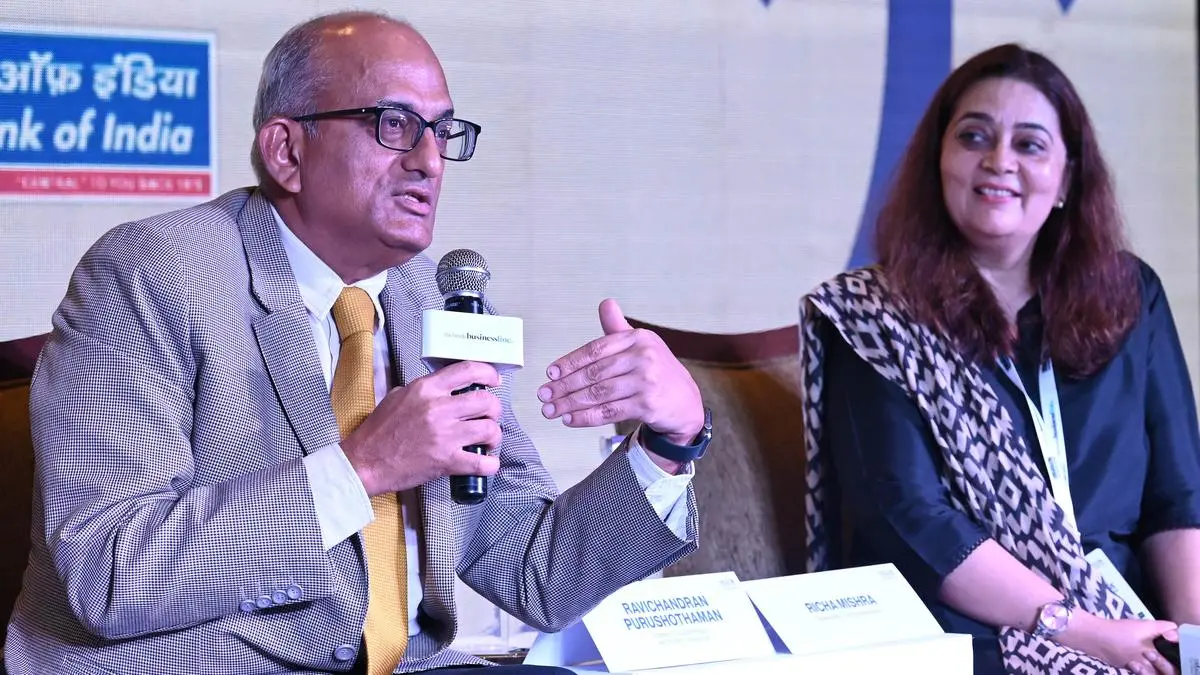
“It’s all about new money for MSMEs today.” Ravichandran Purushothaman, President of Danfoss India and Chairman of CII Southern Region, told an MSME conclave that the old formula – building physical assets, chasing top-line revenue – no longer works. The new money comes from profit margins, cash flow, intellectual property, and scalable business models that do not require a warehouse full of inventory.
That advice lands at a moment when Indian MSMEs face a triple squeeze. Skilled manpower is getting harder to find. Electricity costs are climbing. Order inflows are turning unpredictable. Purushothaman named all three in a fireside chat with The Hindu businessline. His answer to each is technology: digital tools, automation, energy-efficient equipment. He called them the only path to raising productivity while keeping operating costs under control.
He pushed back on the instinct to hoard physical assets. “Don’t focus on the top line,” he said. “Focus on cash generation and profit margins.” That is a direct challenge to how many Indian manufacturing MSMEs have operated for decades – measuring success by how many machines they own, not how much cash they generate. Purushothaman’s frame flips that: leadership, mindset, and the ability to create value through knowledge will determine whether MSMEs can power India’s ambition to become a $30 trillion economy.
The West Asia war exposed how brittle global supply chains have become. Indian exporters performed better than expected over the past three months, helped by government credit support and faster customs clearances, Purushothaman said. The underlying vulnerability remains. Companies are re-examining lower-tier suppliers. Several MSMEs have started routing cargo through the new deepwater port at Vizhinjam in Kerala. They are also exploring alternative transshipment hubs in Thailand, Singapore, and Colombo. The goal is to reduce dependence on traditional routes that a single regional crisis can choke off.
Cost pressures are real. Logistics costs have risen. Purushothaman said there is no one-size-fits-all solution. Danfoss passed on some price increases. It absorbed others to protect supplier relationships that stretch back decades. That is a nuanced tradeoff – preserve the relationship now, accept thinner margins, and hope for volume or loyalty later. For MSMEs that lack Danfoss’s balance sheet, the math is harder.
Skilled manpower tops the list of bottlenecks. Tamil Nadu is losing engineering talent to other states, Purushothaman noted. Automation and vocational training can offset the outflow. Both require investment that many small firms cannot fund from current cash flows. Electricity costs are the second drag. India’s industrial power tariffs are not competitive with Southeast Asia, and the gap is widening. The third is order visibility. Without a steady pipeline, firms cannot commit to automation or digital upgrades – they are stuck in short-term survival mode.
Purushothaman sees a generational shift underway. MSMEs are entering defence, electronics, and electric mobility – sectors that India’s policy framework is deliberately opening to domestic suppliers. He urged companies to move beyond traditional metal-based manufacturing into sensors, electronic components, and full ecosystems. “India must go deeper into high-value manufacturing,” he said. He pointed to Coimbatore’s pump industry and Mysuru’s defence ecosystem as examples of clusters that could become globally competitive if they build specialised capabilities and stronger brands.
For someone watching the Indian manufacturing story, the structural shift matters. The winners will be the MSMEs that prioritise cash flow over plant size, invest in automation while rivals hesitate, and enter the defence and electronics supply chains early. The companies that cling to old-money assets will find margins squeezed until they cannot reinvest.
Purushothaman’s advice to entrepreneurs was direct: do not chase revenue for its own sake. Build a business that generates cash, owns its intellectual property, and can scale without adding bricks and mortar. That is the new money. Everything else is a legacy cost.