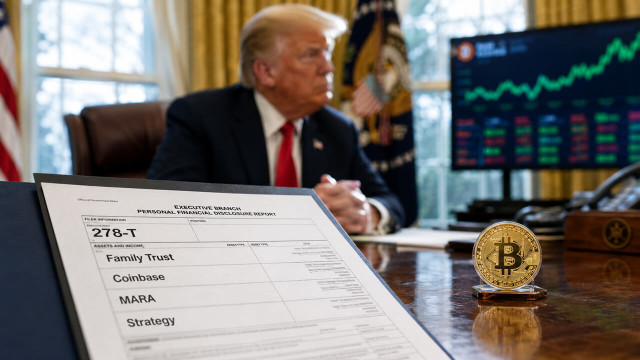
An ethics disclosure from the first quarter of 2026 shows the Trump family trust executed hundreds of millions of dollars in transactions, including the purchase of Coinbase Global (COIN) and other stocks tied to digital assets. The disclosure lands while the administration is pushing sweeping pro-cryptocurrency regulatory changes. Market attention shifts immediately from policy direction to conflict-of-interest optics, because a sitting president’s family buying shares in companies that benefit directly from White House policy adds a political risk premium to those equities.
The Governance Discount and Why It Spreads
The naive interpretation treats the purchase as a bullish signal: a president buying crypto stocks suggests confidence and may accelerate deregulation. The better market read identifies the trade as a liability for the sector’s equity narrative. Every regulatory win for crypto now comes with a built-in ethics question. That invites congressional scrutiny, media focus, and a potential political pushback that can stall the very tailwinds the administration promised (see crypto’s regulatory tailwind runs into a potential rates reset). Over time, markets price the probability of a clean policy path lower, and that discount hits the stocks that depend on regulatory clarity most directly.
Exposure: Coinbase and the Wider Crypto Equity Basket
Coinbase is the most conspicuous name because its revenue is tightly coupled to US regulatory decisions on token classification, staking, and custody. The filing does not list every holding, so the exposure radius extends to other exchange operators, publicly traded miners, blockchain infrastructure firms, and fintech platforms with material digital-asset revenue. The risk is sector-wide. An ethics inquiry would not freeze just one ticker. It would force investors to reassess whether the entire US crypto-equity rally rests on a compromised policy foundation.
A Clean Divestiture or Arms-Length Structure
Market sensitivity to this disclosure would decrease if the administration demonstrates an arms-length decision-making process. A statement that the purchases were executed by an independent trustee, or that the president was not consulted, would lower the conflict premium. The same effect could come from a subsequent filing that shows a sale or a move into a blind trust, removing the direct link between White House policy and family portfolio gains.
What Amplifies the Scrutiny Premium
Risk escalates if the filing triggers investigative hearings on Capitol Hill, or if a future disclosure reveals additional, larger positions in crypto names. The initial news may be absorbed, however a drip of revelations about other digital-asset holdings would harden the perception that policy is being written for personal profit. In that scenario, the equities would begin to trade with a permanent governance discount, and institutional flows into the sector could slow alongside it.
Next Decision Point: Congressional Scrutiny and the Q2 Filing Window
The immediate flashpoint is whether members of the House Financial Services Committee or Senate Banking Committee call for a review. Quarterly financial disclosures from the executive branch arrive on a known schedule, so the next filing window becomes the obvious event risk. Any subpoena, ethics committee referral, or leaked memo with additional details would compress the timeline for these stocks. For now, the market’s task is to price the probability that the governance story turns from a footnote into a factor that reshapes crypto’s US regulatory runway.