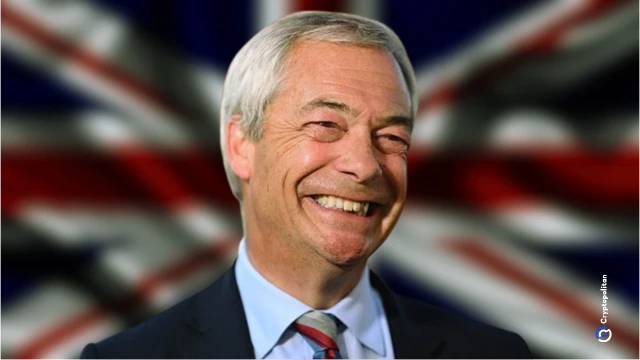
Reform UK raised £9.3 million in private donations during the first three months of 2026, more than double what either Labour or the Conservatives managed in the same period, according to Electoral Commission figures published on June 4. Two cryptocurrency investors – Ben Delo, co-founder of the BitMEX trading platform, and Christopher Harborne, a British-Thai early backer of Tether – supplied the bulk of that total.
Delo gave up to £4 million across two payments in January and March. Harborne contributed just over £3 million in a single January donation. Together, the two donors accounted for roughly 75% of Reform UK's Q1 haul. The party has now topped UK fundraising for three consecutive quarters, a streak built almost entirely on crypto-derived wealth.
The Donors: Two Crypto Fortunes Behind the Surge
Ben Delo: BitMEX Co-Founder with a Pardon
Delo co-founded BitMEX, a derivatives exchange that processed billions in crypto trades without adequate anti-money-laundering controls. He pleaded guilty in 2022 to violating the US Bank Secrecy Act, received 30 months' probation, and was pardoned by President Donald Trump last year. His £4 million in Q1 donations to Reform UK represent a direct pipeline from crypto exchange profits into British politics.
Christopher Harborne: Tether's Early Backer
Harborne has an estimated fortune of £18.2 billion, most of it from crypto-adjacent investments including a stake in Tether. His cumulative donations to Reform UK over the past year now exceed £15 million. Harborne's single £3 million Q1 payment was part of a longer pattern: he previously gave Farage a £5 million personal gift before the 2024 general election, which is now under investigation by the Parliamentary Standards Commissioner.
The Mechanism: Crypto Liquidity Becomes Political Influence
The chain is straightforward: crypto founders accumulate large, liquid positions – often in Bitcoin or Tether – convert to fiat, and donate to a party that accepts such funding. Reform UK is the only British party that has taken crypto donations. The concentration of funding in two individuals creates a structural vulnerability: if either donor faces legal or reputational trouble, or if the regulatory environment shifts, Reform UK's fundraising model breaks.
The Regulatory Risk: Moratorium on Crypto Donations
In March 2026, the Labour government announced a moratorium on cryptocurrency donations to political parties and a £100,000 cap on overseas donor contributions. At the time, Reform UK was the only party that had accepted crypto donations. The proposed reforms are part of the Representation of the People Bill, which is currently moving through Parliament.
Timeline and Exposure
| Party | Q1 2026 Donations | Top Donor(s) | Amount from Top Donor(s) |
|---|
| Reform UK | £9.3M | Ben Delo, Christopher Harborne | £7M combined |
| Labour | £4.0M | Lord David Sainsbury, Gary Lubner | £550k each |
| Conservatives | £4.2M | Mary V Doran | £1.1M |
| Total (all parties) | £24.7M | – | – |
Total UK party donations rose 214% year-over-year, driven almost entirely by Reform UK's crypto-fueled surge. If the moratorium becomes law, Reform UK would lose its primary funding channel. The bill's progress is the single most important regulatory catalyst for the party's finances.
What Would Confirm the Regulatory Risk
- The Representation of the People Bill passes with the crypto donation moratorium intact.
- The Electoral Commission begins enforcement actions against parties accepting crypto donations.
- Harborne or Delo face new legal scrutiny that deters further donations.
What Would Weaken the Thesis
- The bill stalls or is amended to exclude the moratorium.
- Reform UK successfully challenges the cap on overseas donations in court.
- Delo or Harborne increase donations before any ban takes effect, front-running the regulation.
The Farage Investigation: £5M Gift and Potential By-Election
The Parliamentary Standards Commissioner is investigating whether Nigel Farage should have declared a £5 million personal gift from Harborne received before the 2024 general election. Parliamentary rules require MPs to declare all donations relevant to their political life from up to a year before taking office.
The Facts
Farage initially stated the funding was for lifetime personal security. He later called it a “reward” from Harborne for his Brexit campaigning. Reform UK says the money qualifies as a personal gift and does not require declaration. Prime Minister Keir Starmer pressed Farage during Prime Minister's Questions, asking why he kept the donation secret.
The Consequence
If the investigation results in a suspension of 10 sitting days or more, it could trigger a recall petition and force Farage into a by-election for his Clacton seat. A by-election would drain party resources and focus attention on the crypto-donation controversy at a time when Reform UK is trying to build mainstream credibility.
The Mechanism: Political Risk Feeds Back Into Funding
A by-election campaign would require significant spending. If the moratorium on crypto donations passes before the by-election, Reform UK would have to fund the campaign from other sources – which are thin. The party's reliance on two donors means that any disruption to those flows creates immediate operational risk.
What Would Confirm or Break the By-Election Risk
Confirm:
- The Standards Commissioner recommends a suspension of 10+ days.
- A recall petition succeeds, forcing a by-election.
- Farage loses the by-election or wins by a reduced margin, signaling weakened support.
Break:
- The investigation clears Farage or results in a suspension under 10 days.
- Farage steps down as leader before the investigation concludes, defusing the issue.
- The government drops the moratorium, allowing continued crypto donations to fund a by-election defense.
Next Decision Point for Traders and Observers
Three concrete catalysts to track:
- Parliamentary Standards Commissioner ruling – expected within weeks. A suspension recommendation would be the most immediate risk event for Reform UK's political trajectory.
- Representation of the People Bill – watch committee stage amendments. If the crypto donation moratorium survives, Reform UK's funding model faces a hard cap.
- Q2 2026 donation data – due in September. If Delo and Harborne continue donating at Q1 levels, the party is front-running regulation. If donations drop, the moratorium is already having a chilling effect.
The intersection of crypto wealth and UK politics is not a niche story. It is a live test of how digital asset fortunes translate into political influence, and how regulators respond when the sums become large enough to reshape a party's finances. For anyone tracking the regulatory trajectory of crypto, the Reform UK case is the most concrete example in a developed market today.
Disclosure: The information provided is not trading advice. AlphaScala holds no liability for any investments made based on the information provided on this page. We strongly recommend independent research and/or consultation with a qualified professional before making any investment decisions.