Commodities● Neutral
CRR Probes 5km Pegmatite Trend for 2026 Lithium Targets
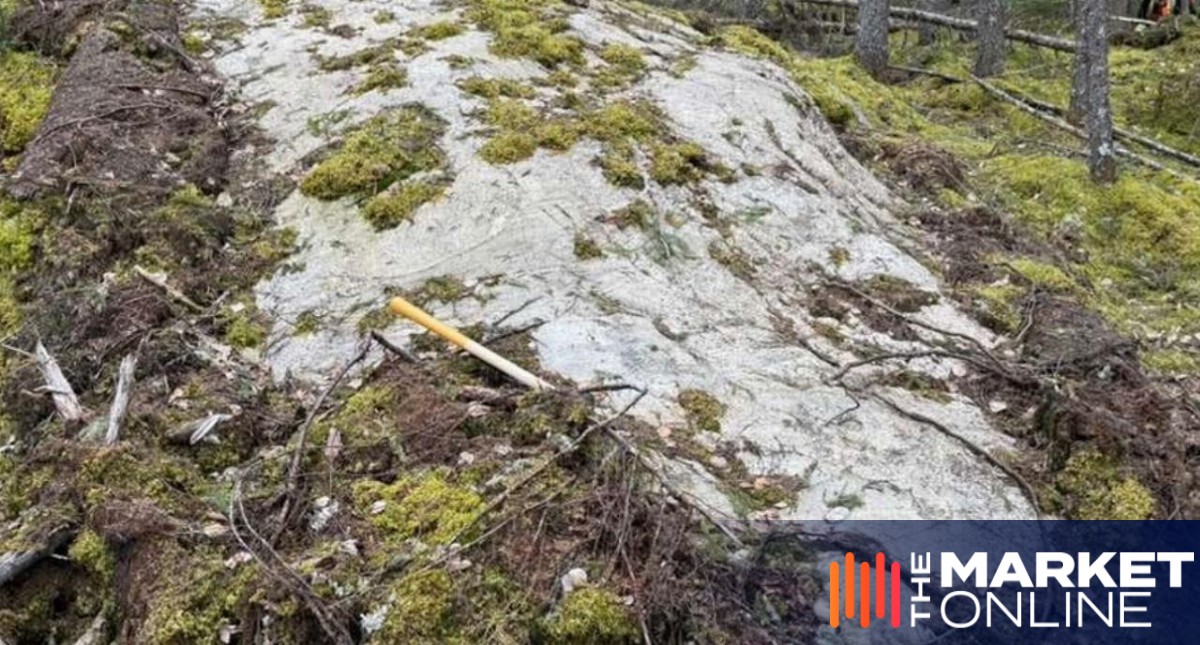
Field crews are mapping a 5km trend 4km north of the Mavis Lake resource. The two-week program aims to define drill targets that could transform the project into a multi-deposit district.
Continue with
Critical Resources (ASX: CRR) has mobilised field crews to the Corona pegmatite field, a 5-kilometre trend roughly four kilometres north of its Mavis Lake lithium resource in Ontario. The two-week prospecting and mapping program is the first step toward generating drill targets for a 2026 campaign.
Management frames Corona as the catalyst that could transform Mavis Lake from a single-deposit asset into a multi-deposit lithium district. MD Tim Wither said the area sits within the same LCT pegmatite corridor as the existing resource and that wide pegmatites mapped at surface hint at concealed systems.
"Mavis Lake has the potential to evolve from a single-deposit asset into a multi-deposit lithium district. Corona has the potential to be a key part of that story," Mr Wither said.
The market has heard district-scale narratives before. What matters now is whether the surface work produces defined targets that justify the cost of mobilising drills. Critical Resources is not drilling yet. It is spending two weeks on boots-on-the-ground prospecting, outcrop mapping, and geochemical sampling. That is a capital-light step that can either sharpen the 2026 program or save the company from drilling blind.
The 5km Corridor and the District Thesis
The Corona trend lies within the same lithium-cesium-tantalum (LCT) pegmatite corridor that hosts the Mavis Lake deposit. Critical Resources has compiled an integrated dataset including geochemistry, lithogeochemistry, LIBS-based pegmatite fractionation, and high-resolution aeromagnetics. That data supports the idea that the corridor is prospective. Surface outcrop is limited. Much of the pegmatite system could be hidden beneath overburden, making systematic fieldwork essential to vector toward drill targets.
The district thesis rests on proving that Mavis Lake is not an isolated deposit. If Corona yields additional pegmatite bodies with lithium grades, the project's resource base could expand materially. For a junior explorer, resource scale is the primary driver of project economics and takeover appeal. The existing Mavis Lake resource already provides a foundation; Corona could add tonnes that lower the overall strip ratio or extend mine life. Lithium demand remains structurally supported by EV adoption, yet oversupply from new projects has pressured prices. Advancing a project in this environment requires demonstrating scale and grade that can compete in a lower-price scenario. The Corona corridor offers a low-cost pathway to potentially add that scale.
What the Two-Week Program Actually Tests
The program is a targeting exercise, not a drill campaign. Field crews will prospect for pegmatite outcrops, map lithologies, and collect samples for geochemical analysis. The goal is to identify zones where fractionation signatures and pathfinder elements point to lithium-rich pegmatites at depth. Critical Resources has engaged an experienced crew with prior knowledge of the project, which reduces the learning-curve risk.
The output will be a ranked set of drill targets. Those targets will then feed into the 2026 exploration program. The market will not see assay results from this program; it will see a decision on whether and where to drill. That decision is the first real catalyst. If Critical Resources announces a substantial drill program with specific collar locations, it signals that the surface work found enough encouragement to commit capital. A small or deferred program would weaken the thesis.